
About two decades ago, the idea of carrying a phone with a flexible display in your pocket seemed like a science fiction script. The technology industry considered it practically unfeasible to design a touch-sensitive panel that could withstand the constant opening and closing movement without showing permanent cracks or failures.
The scenario changed drastically in 2019, when the South Korean manufacturer materialized this bold concept. The launch of the original Galaxy Fold not only opened an unprecedented category of products, but also shook up a global market that was suffering from stagnant sales of traditional bar-shaped devices. At that moment, Samsung took a colossal engineering risk by creating a device capable of moving fluidly between the dimensions of a common cell phone and the visual breadth of a tablet.

From this historic milestone, the Galaxy Z family consolidated the brand’s ability to transform experimental projects into indispensable tools for everyday life. With a portfolio that has evolved from the classic book format to the compact versatility of the Flip model, culminating in the recent complex multi-hinged TriFold, the Asian company continues to push the boundaries of what a mobile device can accomplish.
During the annual updates, engineering focused on refining essential pillars for daily usability:

- Reinforced articulation mechanisms: The central gears have received constant updates to withstand daily wear and tear in complete safety.
- Refined aesthetics and reduced weight: The engineers managed to reduce the thickness of the chassis, optimizing the use of the display without sacrificing structural strength.
- Intelligent software integration: The addition of tools based on artificial intelligence has transformed interaction, making the ecosystem much more intuitive for the end consumer.
The pioneering of the first Galaxy Fold in the technology market
Presenting a previously unprecedented usage dynamic, the pioneering model changed the way people consumed media and worked on their cell phones. Thanks to a revolutionary hinge system for the time, owners could manage quick notifications on the external display and, moments later, unfold the device to edit documents or run multiple applications simultaneously on the main screen.
Bet on portability with the debut of the Flip format
The following year, the manufacturer’s strategy took a turn towards fashion and practicality with the introduction of a device that fit in the palm of your hand. With a shell-shaped closure reminiscent of cosmetic cases, the device could be stabilized at different angles on the table. This launch also made history for being the first to use Ultra Thin Glass, a patented ultra-thin glass that guaranteed the commercial viability of the project.

Improved mechanics and new software functions for creators
Still on the 2020 calendar, updates to both lines brought the so-called hidden hinge, a piece of engineering that kept the chassis halves firmly connected and protected against debris. This hardware advancement allowed the creation of a flexible usage mode, where the user was able to place the phone on flat surfaces to record videos of themselves or participate in virtual meetings without needing additional supports.
This software functionality automatically adapted the interface, dividing the viewing area as soon as the sensors detected the bend. Working together with application developers, the company has optimized essential tools; In photography software, for example, the upper viewfinder displayed the frame in real time, while the lower half contained all the shooting buttons and lens adjustments.

Water resistance and reinforced materials reach devices
Due to their very mobile nature, flexible displays have always faced suspicion regarding their fragility in the face of everyday accidents. To break this stigma, the third generation of the book format version introduced an unprecedented sealing system, protecting the internal components and central joint against accidental dives.
The mobile structure has also been coated with chemical compounds that prevent corrosion, complemented by an internal design designed specifically to repel moisture before it reaches the motherboard.

Another leap in structural quality came with the adoption of a metal alloy called Armor Aluminum, which allowed the edges of the product to be thinned without compromising rigidity, shielding the chassis against falls and severe scratches.
That year’s compact model followed the same robustness guide, gaining the same metal alloy on the sides and Gorilla Glass Victus glass on the external areas to withstand the urban pace. The main screen received a much more resistant factory film than previous versions, and the IPX8 certification finally brought the peace of mind that consumers demanded when investing in a premium category product.

Focus on ergonomics and extreme visual customization options
Following a strict diet, the fourth generation of the larger model arrived on the market weighing significantly less than its predecessor, prioritizing comfort during long reading or browsing sessions. The secret behind this lightness was a complete redesign of the bending axis, which eliminated unnecessary parts and streamlined the overall dimensions without losing the brand’s characteristic firmness.
For the public that sees technology as an extension of their own style, the special edition of the pocket model delivered a level of customization unprecedented in the industry. Brazilian buyers could access a virtual studio and combine dozens of aesthetic variations, mixing vibrant tones for the rear glass panels with different metallic finishes for the edges of the chassis.
Drastic enlargement of the external panel changes the dynamics of use
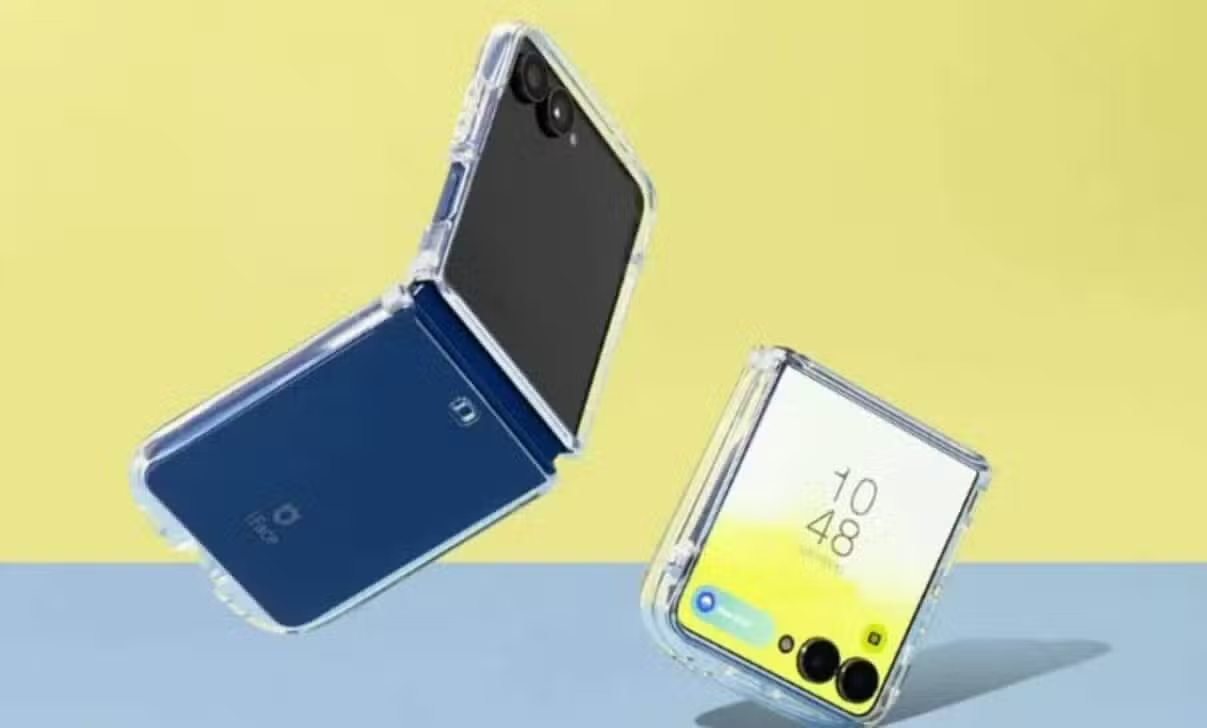
The year 2023 marked one of the biggest visual transformations of the compact line, thanks to the implementation of a front display that now occupies almost the entire upper area of the closed chassis.
This gain in space allowed users to interact with complex applets, check financial quotes and control media players without having to open the phone. The inclusion of a full virtual keyboard in the external area made it immensely easier to quickly respond to emails and text messages during the daily rush.

The enlarged screen also revolutionized the production of content for social networks, as it transformed the main lenses into powerful selfie cameras with high definition image return. Advanced optical stabilization systems and improved night algorithms ensured flawless recordings on the move, while optimized digital zoom enabled detail-rich captures under any lighting conditions.
The era of generative artificial intelligence embedded in devices
The turn to 2024 has cemented the fusion between flexible hardware and cutting-edge machine learning algorithms. The brand’s suite of intelligent services has been deeply integrated into the operating system, opening a chapter focused on automating repetitive tasks and expanding users’ creative capabilities.
With even straighter and more elegant design lines, the sixth generation of foldables transformed complex functions into single-touch actions. Native image editing and automatic text formatting tools have started to save hours of work for professionals and students who depend on their cell phones to produce reports or visual arts.
The strengthening of commercial ties with the search giant resulted in the implementation of proactive virtual assistants, capable of understanding the context of the screen and delivering accurate answers to everyday questions in a matter of seconds.
The look of the interface also took on a life of its own through generative algorithms. Dynamic screensavers now react to the user’s environment, changing colors, shadows and graphic elements according to the transition from day to night or local weather changes.
Professional camera specs come to flexible displays
Upon reaching the year 2025, the manufacturer decided to unify the best of its traditional high-end devices with flexible engineering. The seventh iteration of the larger model inherits ultra-high-resolution photo sensors, boasting a 200 megap main lens for the first time in the category.