Scientists locate oldest and largest whale cemetery with 10 million carcasses

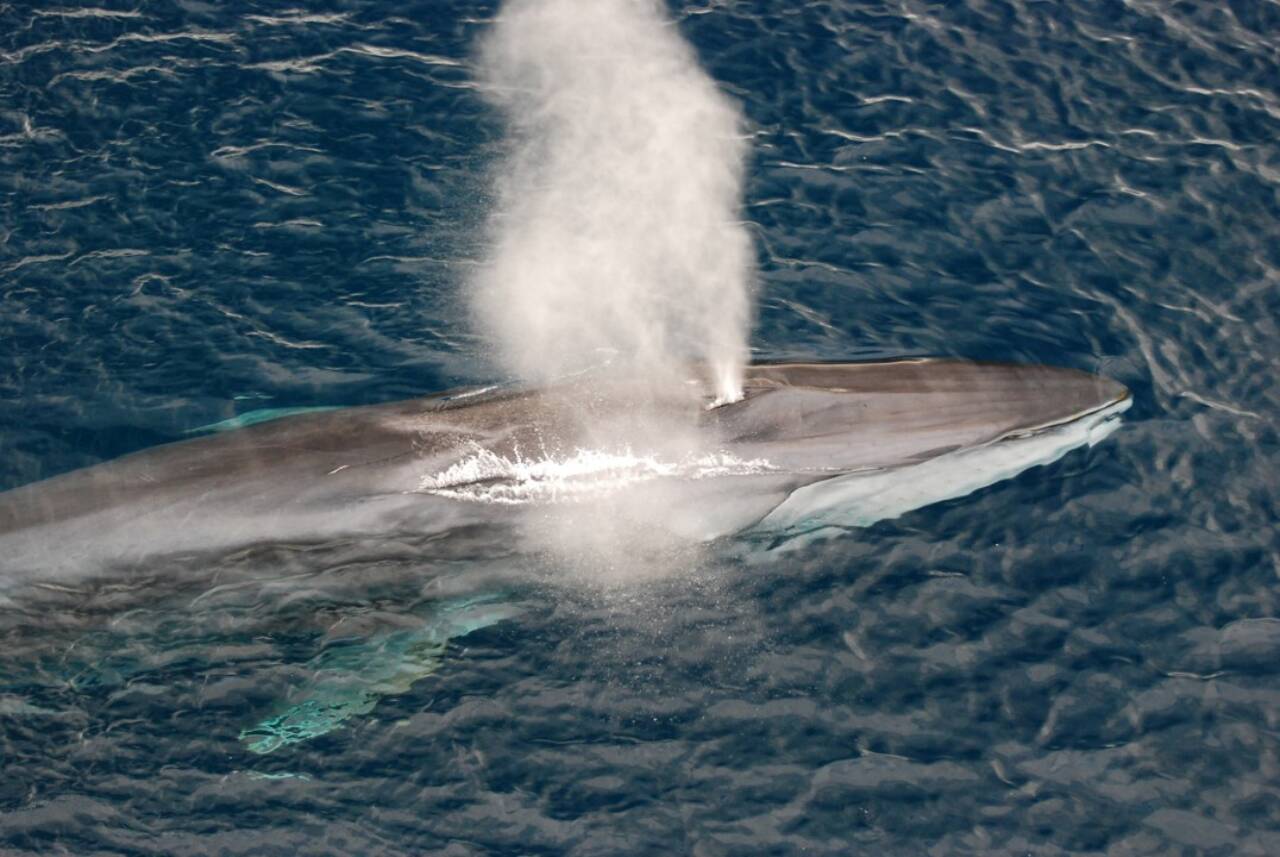
The vastness of the ocean, which covers more than 70% of the Earth’s surface and hides countless mysteries, revealed a find of monumental proportions. An international team of scientists, made up of researchers from China, Italy and New Zealand, announced the discovery of what is considered the largest and oldest whale cemetery ever found. The revelation, details of which were updated on July 28, 2026, surprised the scientific community by revealing a thriving ecosystem almost 7,000 meters deep in the Indian Ocean.
The grandeur of the underwater discovery
The underwater cemetery is located in the Diamantina area, a remote region on the west coast of Australia. The discovery was made during a series of dives in 2023 aboard the research vessel Tansuoyihao. The expedition examined around 1,200 kilometers of the area, where 485 different species of marine organisms were catalogued. What stood out was the extraordinary density of whale remains: a staggering 759.5 individuals per square kilometer. Based on this data, researchers estimate that up to 10 million whale carcasses could rest on the seabed of this trench.
The skeletons found range from long-extinct species to more recent ones, some dating back 5.3 million years. This time span spans a significant period in the history of marine life, offering scientists a unique opportunity to study the evolution of whales and the impact of their demise on deep ocean ecosystems over millennia. The scale of the cemetery indicates that the region has been a final resting place for these marine giants for millions of years, maintaining a detailed fossil record in an environment that rarely preserves such structures.
How whale carcasses create life in the depths
The presence of these whale carcasses is not only a record of past life, but also the basis for a vibrant and unexpected underwater ecosystem. In an environment where sunlight doesn’t reach and resources are scarce, “whale falls” – as events in which whale bodies sink to the bottom of the ocean are called – become oases of nutrients. They provide food and shelter for countless organisms that have adapted to survive the extreme conditions of the depths.
Scientists observed, from a small submersible, a variety of strange animals, many of them unknown, feeding on the remains. This direct observation was crucial to understanding the dynamics of these communities. The study, signed by Xiaotong Peng, a researcher at the Institute of Deep Sea Science and Engineering of the Chinese Academy of Sciences (IDSSE), and colleagues, reinforces a central hypothesis about deep sea biology. The authors explain that “the findings support the hypothesis that deep-sea whale falls act as evolutionary hotbeds and biogeographic springboards for sulfide-dependent fauna in the deep ocean.” This means that these places are crucial for the diversification of life and the dispersal of species in isolated habitats on the seabed.
- Among the species that thrive in these natural feasts are:
- Jellyfish
- Worms specialized in consuming bones
- Deep-sea bivalves
- Serpent stars
These organisms have developed unique mechanisms to extract energy from the nutrients present in carcasses, often using sulfide compounds as a primary source, in a process known as chemosynthesis, fundamental for life in abyssal environments.
Extraordinary preservation and its role in the carbon cycle
One of the biggest mysteries surrounding the whale cemetery is the remarkable preservation of the skeletons. Typically, whale remains would be expected to degrade and erode quickly due to the corrosive action of salt water and microbial activity. However, the specific conditions of the Indian Ocean floor in this region, possibly linked to low bacterial activity, constant temperature or the chemical composition of the sediment, allowed the carcasses to remain intact for millions of years, offering a unique, detailed fossil record.
In addition to being pillars for deep-sea ecosystems, whale carcasses play a significant role in the global carbon cycle. Sinking biomass, including soft tissue and lipids, represents a substantial amount of carbon that is removed from the surface and sequestered in the deep ocean. Researchers estimate that whale remains in the broader study area could contain the equivalent of about 7.4 million tons of sequestered carbon. This natural phenomenon has important implications for understanding the planet’s carbon balance and for climate change mitigation strategies, showing how natural biological processes act as long-term carbon sinks.
Future perspectives of oceanographic research
The discovery is not only an achievement in itself, but it also opens doors for future investigations and new revelations. Scientists believe this whale graveyard may be just one of many “hidden archives” spread across the world’s vast, unexplored deep oceans. The recovery of similar fossils from trawl fisheries in other regions already suggests this possibility, fueling the expectation that many more discoveries await. Continued exploration of these areas could reveal even more about the evolution of species and life’s ability to adapt to extreme conditions.
The relevance of this finding has been widely recognized by the global scientific community. Amy Baco-Taylor of Florida State University described the discovery to the press as “extraordinary” and emphasized that it “is likely to provide a lot of new knowledge” about deep-sea life and geology. American paleontologist Stephen Godfrey, in turn, called it a “truly unique” find, comparing it to other major paleontological discoveries of the past that have transformed our understanding of life on Earth. Continued research and exploration of extreme environments like this whale graveyard are critical to unlocking our planet’s remaining secrets and to deepening understanding of biodiversity and the geological and biological processes that shape Earth.