
How to observe comets: what to expect from the upcoming phenomena and practical tips

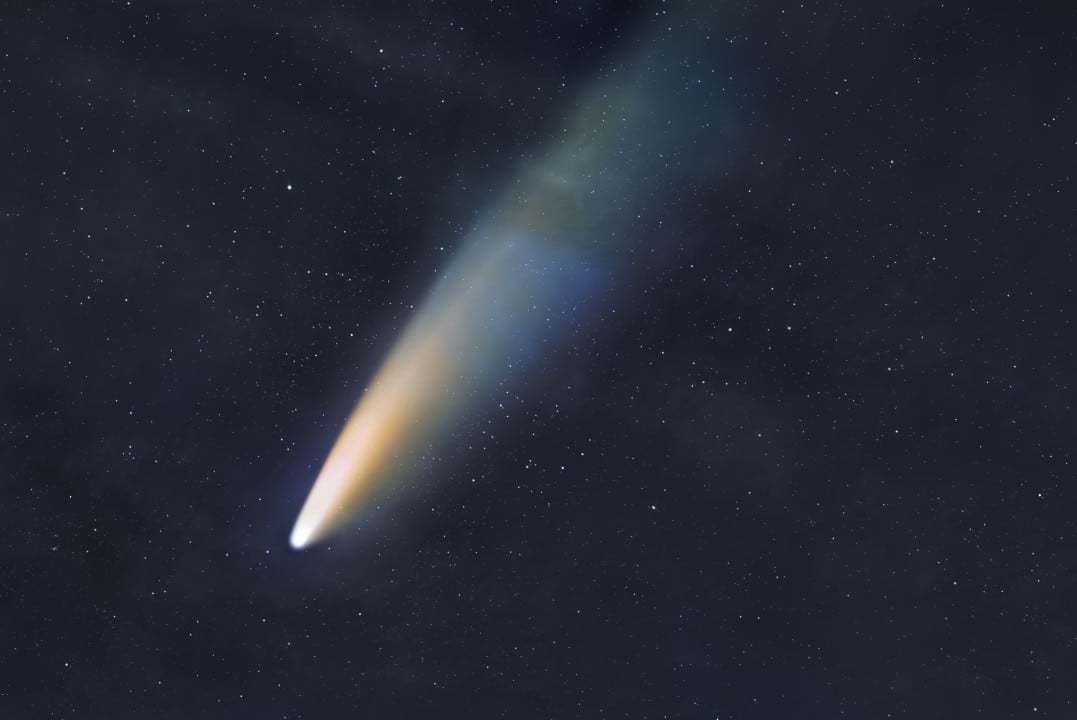
The observation of a comet in April 2026, especially C/2025 R3 (Pan-STARRS), offered astronomy enthusiasts in the Northern Hemisphere an opportune moment to view a pre-dawn celestial phenomenon. On April 13, 2026, the comet’s brightness reached its peak, although its identification and appreciation required an unobstructed horizon and, often, the aid of binoculars for better viewing.
For those who followed Pan-STARRS, location in the sky was an important factor. On April 14, 2026, the comet was positioned in the constellation Pegasus, below the Great Square and close to the star Markab. Knowing these stellar references is essential for locating comets and other celestial objects.
The best window for observing comet C/2025 R3 (Pan-STARRS) was about 90 minutes before sunrise, a period that extended for nearly a week before sunlight hampered visibility. A clear view of the eastern horizon was essential for a complete experience, allowing the comet to emerge unobstructed.
On the morning of April 14, 2026, the presence of a waning crescent Moon with 12% illumination in the comet’s vicinity provided additional context. In addition, Mercury and Mars were also visible in the same region, with the possibility of exceptional observation depending on atmospheric conditions.
Data at the time indicated that the comet registered a brightness close to magnitude +4.5. In ideal conditions of extremely dark skies, viewing with the naked eye could be possible, but most observers opted for binoculars to identify and monitor the intensification of their brightness in the following days, a common indicator for observing comets.
Comet Pan-STARRS was discovered in September 2025 by the project that bears its name, based in Hawaii. Astronomical calculations reveal that its orbit around the Sun has an estimated period of approximately 170,000 years, making it a rare visitor to our solar system.
Its closest point to the Sun, known as perihelion, occurred on April 19, 2026, at a safe distance of around 0.5 astronomical units. The closest approach to Earth occurred on April 27, 2026, but, during this period, the comet was no longer observable for inhabitants of the Northern Hemisphere.
For residents of the Southern Hemisphere, the opportunity to see the comet arose from the end of April 2026, shortly after sunset, with the western horizon serving as the main reference point for observation.
Pan-STARRS trajectory details for observers in April 2026
On April 14, 2026, comet Pan-STARRS was about 0.78 astronomical units (equivalent to 117 million kilometers) from Earth and 0.52 astronomical units (78 million kilometers) from the Sun. Solar heating intensified the comet’s activity on those days, a natural phenomenon that precedes perihelion and increases its brightness.
In the period from April 2026, Pan-STARRS had a brightness of approximately +5 magnitude. It remained low in the eastern sky, in the constellation Pegasus, near the star formation known as the Great Square. For good visibility, it was crucial to have an unobstructed horizon, and celestial maps were useful tools to assist in the precise location of the star.
Best Practices for Photographing Comets
Despite the challenge of observing a comet with the naked eye, photographing it can be a more accessible task. Even when the star appears faint to human vision, a camera, including a smartphone’s, can capture sharper and improved details.
To obtain quality images, it is recommended to use a tripod to stabilize the equipment. It is advisable to use the camera’s night or manual mode, adjusting the exposure time between 5 and 20 seconds. DSLR or mirrorless cameras, with wide-angle lenses (close to f/2.8) and ISO between 800 and 3200, generally record the comet as a discreet greenish glow, with a subtle tail. A practical tip is to focus on a bright star initially, then reframe and adapt settings as the sky begins to brighten due to rapidly changing conditions at dawn.
In practice, even a brief photographic exposure has the potential to transform a barely noticeable spot into a clear and recognizable image of the comet.
Understanding the visibility of comets
Although comets are often described as “dirty snowballs,” their striking appearance is due to a relatively straightforward astrophysical process that makes them visible to us.
When approaching the Sun, the intense heat causes the frozen gases present inside the comet to pass directly into the vapor state, in a process known as sublimation. This release of gas and dust into space creates a bright cloud around the nucleus, called a coma.
Subsequently, light and solar wind interact with this expelled material, propelling it and forming a tail that can extend for millions of kilometers in space, which is one of the most striking and visible characteristics to observers.




