
NASA space vehicle suffers technical failure before rescuing Swift observatory

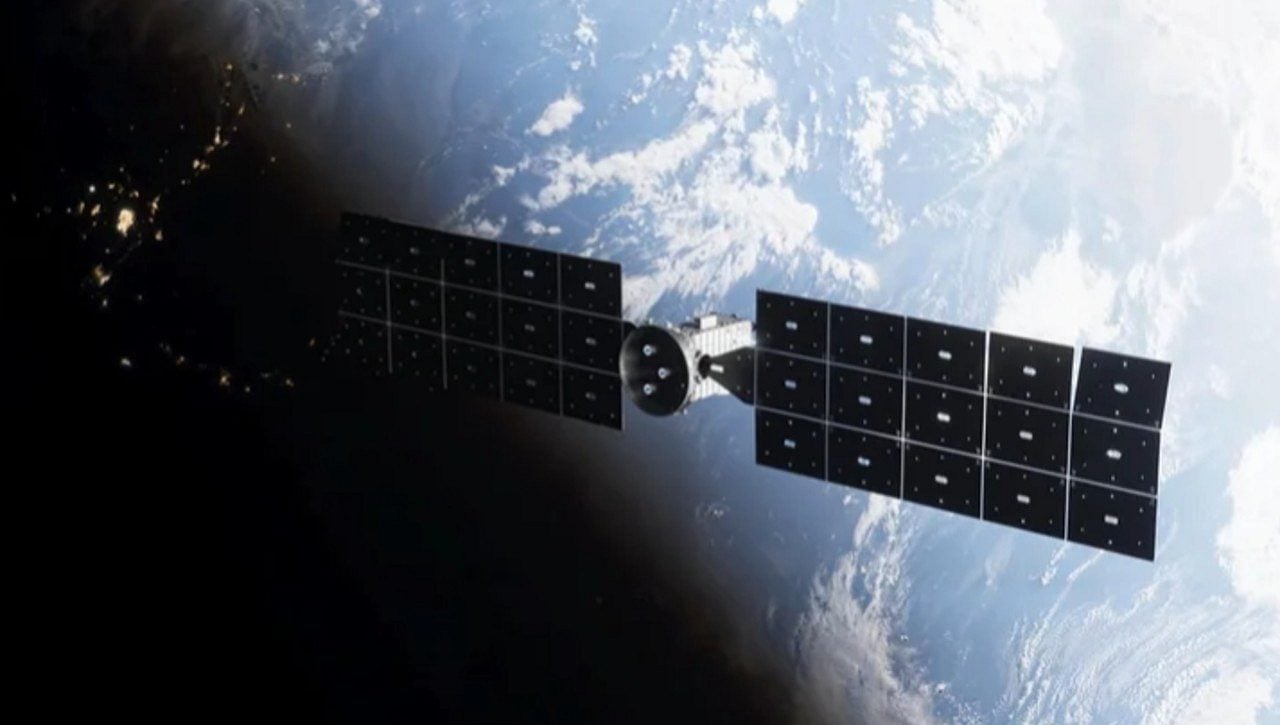
The United States space agency’s plan to extend the operation of old orbital equipment has run into unforeseen obstacles. Sent into space at the beginning of July, the LINK service spacecraft began recording operating anomalies at the end of the same month, temporarily compromising the operation aimed at saving the historic Swift observatory.
Launch details and the main purpose of the rescue equipment
The Swift Boost project’s journey began with the firing of a Pegasus XL rocket, manufactured by Northrop Grumman. The rescue vehicle, designed by Arizona-based company Katalyst Space Technologies, was created with the exclusive mission of docking with the Swift. This veteran satellite is widely recognized in the scientific community for its ability to track gamma-ray bursts, which represent the most violent energy releases known in the cosmos, usually originating from the collapse of massive stars.
However, the tranquility of the trip was short-lived in the microgravity environment. An official bulletin released at the end of July confirmed that the Katalyst module lost the stability of its attitude control — the vital system responsible for maintaining the ship’s correct orientation in relation to the Earth and the Sun —, which generated an uncontrolled rotational movement and data transmission failures. Even with this scare, engineers ensure that the main structure and secondary electronic components remain intact and operational.
The first telemetry diagnoses showed significant damage to the stabilization mechanisms. Two of the three flywheels, fundamental parts for directing the equipment without wasting fuel, stopped responding to commands from the land base. Added to this, the auxiliary thrusters powered by cold gas presented a lower-than-expected performance, making corrective maneuvers even more difficult.
Technical coincidence marks the history of failures between the two satellites
The current defect carries a dose of irony for the scientists involved in the rescue project. About two years ago, the mission target itself, the Swift observatory, suffered from exactly the same type of failure in its stabilization rotors. At that time, the control team had to deactivate the scientific instruments and activate safety mode to prevent the telescope from losing its route, interrupting astronomical research for a brief period.
To overcome the crisis, experts plan to activate the service vehicle’s electric motors in an attempt to stop the unwanted rotation and regain alignment with the communications antennas. Only after this emergency maneuver will the space program directors and the private manufacturer’s engineers be able to decide whether it is safe to proceed with the approach attempt or whether the mission will need to be aborted.
How the complex docking maneuver in Earth orbit would work
The veteran equipment has been gradually losing altitude due to friction with the rarest layers of the atmosphere, and its original construction did not include engines for repositioning. The strategy designed for the rescue vehicle involved a rigorous sequence of actions in low Earth orbit:
- Careful approach and visual inspection of the structural condition of the telescope.
- Physical capture using three high-precision robotic claws for secure locking.
- Activation of the driving force of the visitor module to push the assembly to a higher altitude, guaranteeing more years of operation.
Officially named the Neil Gehrels Swift Observatory, the scientific satellite was sent into space two decades ago with an initial investment of 250 million dollars. The current rescue effort has cost public coffers around 30 million dollars, an amount considered extremely advantageous in the modern aerospace economy, as it allows preserving a valuable asset for a fraction of the price it would cost to develop and launch a replacement from scratch.
Historical discoveries justify the effort to keep the equipment active
During its long operational history, the telescope has become an irreplaceable tool for mapping extreme and violent events in the farthest reaches of the universe. One of its greatest triumphs occurred recently, when its sensors captured the event dubbed BOAT (the brightest of all time, in free translation), a flash of radiation so intense that it redefined theoretical models about the maximum power that a stellar explosion can reach in deep space.





