
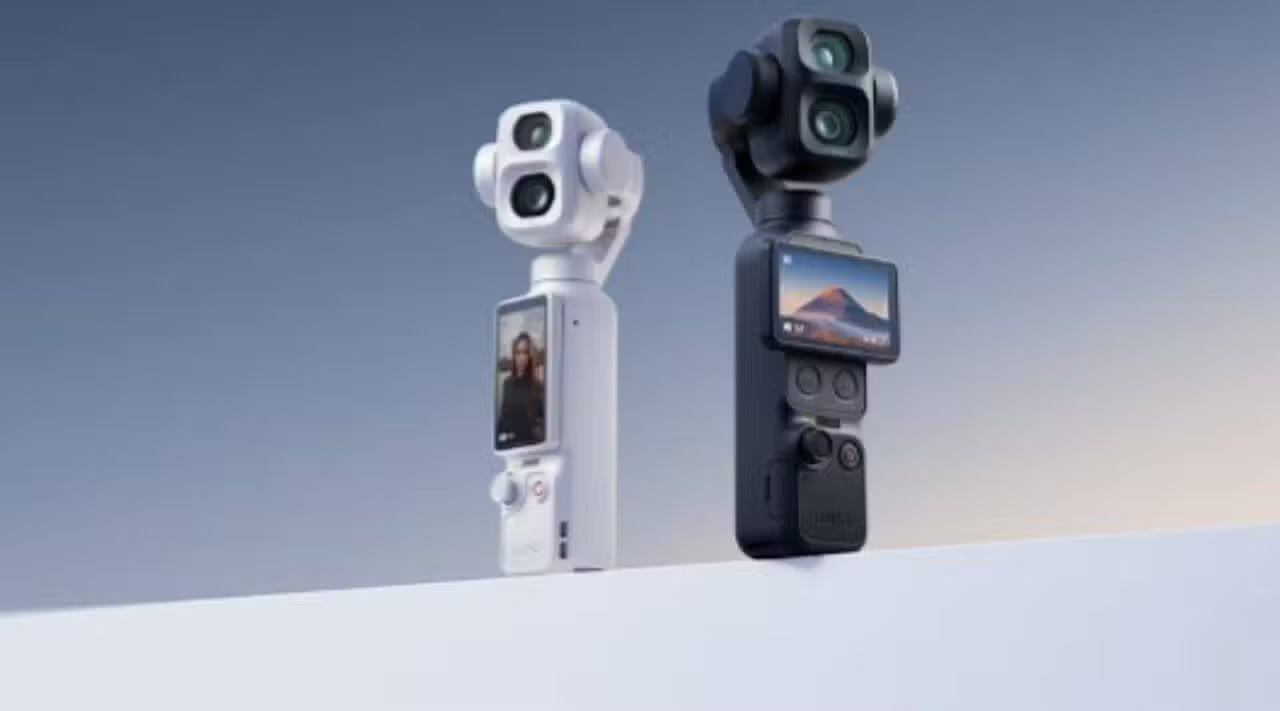
Chinese technology manufacturer DJI has officially announced the arrival of the Osmo Pocket 4P compact camera, equipment that introduces an unprecedented dual-lens system in the pocket stabilizer segment. The device arrives to solve one of the biggest bottlenecks faced by video producers today: the need to carry multiple accessories to vary the framing during external recording. With a chassis that fits in the palm of your hand, the new hardware eliminates the dependence on attachable magnetic lenses, a feature that was common in previous generations of the line. This structural change reflects the urgency of the social media market, where audience retention requires quick cuts and dynamic changes in perspective. The brand’s bet is to consolidate the device as the main work tool for those who record trips, independent documentaries and live broadcasts, delivering professional quality in an extremely reduced format.
Dual optical architecture eliminates the need for external accessories
The big difference of the newly announced hardware lies in the ability to switch between different focal lengths through a simple touch on the user interface. In practice, the operator is able to start a shot showing an open plan of the environment and, in the next second, close the frame on an interviewee’s face or a specific object, maintaining the fluidity of the final file. This native transition avoids abrupt interruptions in the workflow, something that used to break the rhythm of those working alone behind the camera. Professionals covering sporting events or technology fairs gain precious minutes, as they no longer need to pause the recording, open protective cases and screw new glass onto the main sensor. The presence of two distinct perspectives on the same chassis ensures that the creator does not miss the exact moment of the action while trying to adjust the equipment.
To support this visual versatility, the product’s engineering also updated the internal components responsible for mechanical stabilization. The three-axis gimbal, a trademark of the Pocket family, received more precise motors that compensate for severe vibrations, such as hurried steps on uneven terrain or vibrations inside moving vehicles. The image sensors built under the two lenses have been resized to absorb more light, delivering files with reduced grain in nighttime environments and color reproduction that is more faithful to reality. The audio capture system followed the technological leap, incorporating multidirectional microphones that isolate the speaker’s voice and filter out unwanted noise, such as gusts of wind or traffic in the background, eliminating the immediate use of external lapels in emergency situations.
Main technical specifications that accompany the new stabilizer
The evolution of the device is not just limited to the inclusion of extra glass, it encompasses a package of hardware upgrades designed to optimize editing time. The set of integrated tools transforms the device into a miniature production island, capable of delivering files ready for immediate publication. Among the resources that accompany the new version, elements focused on autonomy and precision of the audiovisual recording stand out.
- Instantly transition between the wide-angle lens and the close-up lens without losing focus or freezing frames.
- Redesigned stabilization motors to withstand sudden movements in action and extreme sports recordings.
- Night capture sensors that preserve shadow details and prevent strong lights from appearing in urban scenarios.
- Microphone array with active ambient noise cancellation, designed specifically for interviews in public and open spaces.
The sum of these technical characteristics delivers unprecedented narrative freedom for independent creators. When the cameraman is guaranteed that the image will remain level and the audio will remain clean, the focus of the work becomes exclusively the story being told. The ease of varying visual shots enriches the final montage, holding the viewer’s attention for longer, a vital metric for success on short and long video platforms. The equipment acts almost like a second camera operator, automating complex focusing and framing processes that previously required years of practice to master.
Direct impact on competition and the future of portable equipment
The arrival of such a complex system in such a small body raises the bar for the entire image capture industry. Rival companies that dominate the action camera sector will need to review their release schedules to try to match the versatility offered by the native dual lens. The end consumer ends up being the biggest beneficiary of this technological race, gaining access to cinema resources that, until a few years ago, required heavy investments in mirrorless camera bodies and sets of heavy interchangeable lenses. The miniaturization of optical technology proves that the size of the equipment no longer dictates the quality of the material delivered to broadcasters or streaming platforms.
Domination of the Asian manufacturer in the mobile capture segment
Historically recognized for the development of high-performance drones, DJI uses this launch to further its hegemony in terrestrial recordings. The device strictly meets the demands of a public that refuses to carry heavy backpacks, but that does not accept the quality compression imposed by traditional smartphones. The company’s strategic movement demonstrates an accurate reading of the current behavior of the internet, where publication speed and visual excellence go hand in hand in building solid digital careers. By delivering a complete video and audio solution in the palm of your hand, the brand guarantees its space behind the scenes of today’s main content productions.