
JWST detects semi-heavy water on exoplanet 700 light-years away, revealing formation

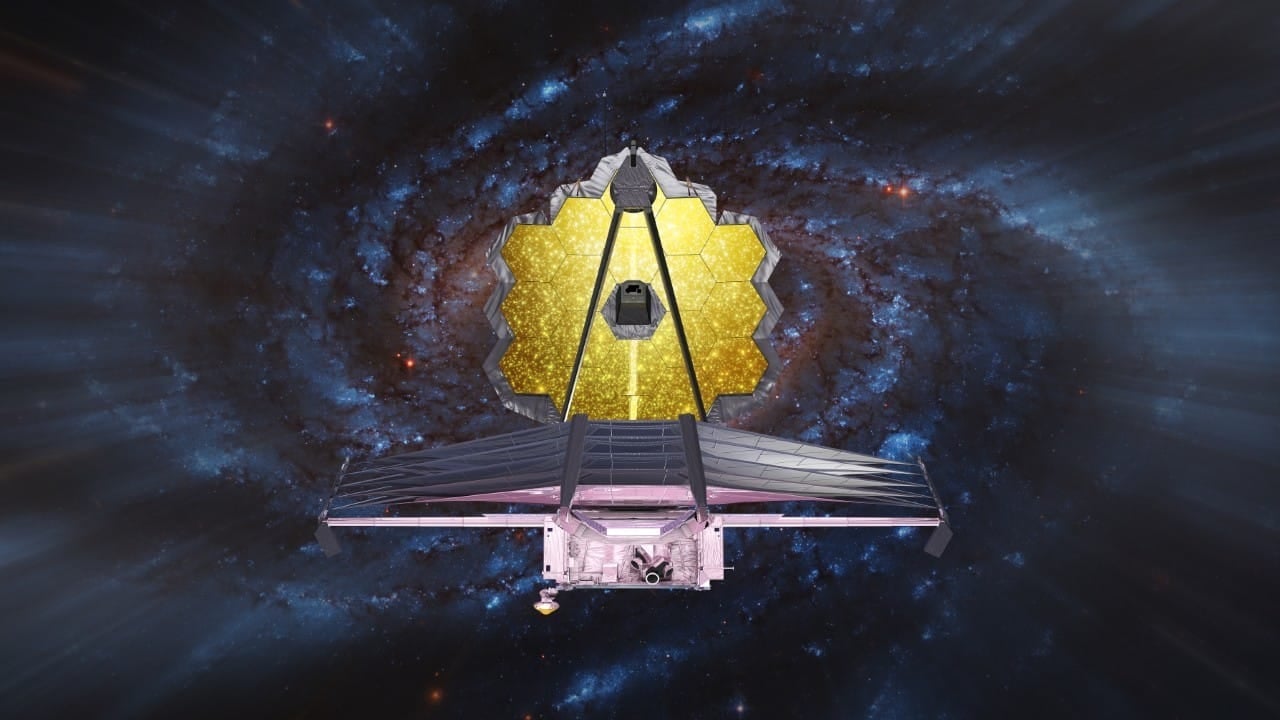
Scientists using the James Webb Space Telescope (JWST) may have identified the presence of semi-heavy water in the atmosphere of WASP-39b, a giant planet orbiting a star nearly 700 light-years from Earth. This exoplanet is one of the most investigated by JWST, which has already obtained a vast set of information about it, using its four main instruments for observations at infrared wavelengths.
Analyzing these observations allows researchers to decipher the chemical signatures present in an exoplanet’s atmosphere. By investigating the light that passes through this gaseous layer, it is possible to identify different molecules and, therefore, better understand the evolution of this distant world.
The search for water is fundamental in planetary research, as it can provide crucial insights into the environmental conditions of other worlds. For this new study, scientists focused on a more unusual variant of water known as semi-heavy water or HDO, rather than the common version.
Discovery of new evidence of water on the exoplanet WASP-39b
The research team, which published its preliminary findings on the arXiv server, investigated water isotopologues. These are molecules with the same chemical composition as water, but with variations in hydrogen. In HDO, for example, a hydrogen atom is replaced by deuterium, a heavier isotope that contains an additional neutron. This distinction allows astronomers to calculate the deuterium-hydrogen ratio (D/H), a chemical indicator that can trace the origin of a planet’s water and its atmospheric evolution over time.

The experts compared computer simulations of WASP-39b’s atmosphere with data obtained by JWST. In the analysis, several aspects were taken into account, such as temperature, the presence of clouds, molecular concentrations and the way the atmosphere interacts with light.
According to the scientists involved in the study, the D/H ratio observed in WASP-39b appears to be significantly higher than that detected in the gas giants of our own Solar System, such as Jupiter and Saturn. This particularity turns the exoplanet into a valuable study object for understanding the behavior of water in planetary environments beyond those known.
The selection of this exoplanet for research was, in part, due to the vast amount of pre-existing data about it. Researchers confirmed that JWST was able to generate the most complete transmission spectrum ever recorded for an exoplanet, offering scientists a detailed look at its atmospheric composition.
How severe conditions may have changed the planet’s water
The water’s peculiar signature can be attributed to WASP-39b’s inhospitable environment. This gas giant, with low density and high temperatures, orbits very close to its star, which exposes its atmosphere to extreme levels of radiation.
One of the hypotheses for this anomaly is atmospheric escape. Ordinary hydrogen water molecules, being lighter, would be more likely to escape into space. On the other hand, heavier molecules, which contain deuterium, would be more resistant to removal. Therefore, over time, the planet’s atmosphere would have a high concentration of semi-heavy water.
Furthermore, other atmospheric phenomena may have had an influence. Scientists consider that the mixing of gases in the atmosphere and chemical reactions caused by the light from the central star may have impacted the D/H ratio measured by JWST.
The precise cause for this unusual water signature is still under investigation. While the observations provide a thorough chemical picture, it is likely that multiple processes contributed to the current scenario that astronomers are now analyzing.
Water on the planet may indicate its formation history
Another theory considered by scientists is that WASP-39b may have originated in a more distant and colder area of its star system, beyond the so-called “ice line”. In this context, the planet would have agglomerated water-rich materials in the outer regions before migrating to its current orbit, closer to the star.
The study authors explained that “observations of protostellar ices from this region demonstrate a degree of deuterium enrichment that aligns with the D/H ratio inferred in WASP-39b.” They also added that “validating this scenario to reproduce the observed values will require in-depth chemical modeling.”
Despite detection, the exoplanet WASP-39b does not offer conditions for life as we know it. It is a gas giant with scorching temperatures, approaching 1,000 degrees Celsius. However, the discovery of HDO illustrates JWST’s ability to uncover unprecedented information about such distant worlds.
The researchers reinforce that semi-heavy water remains one of the most convenient chemical indicators for investigating water on other planets, due to its clear spectral signals in the atmosphere.





