
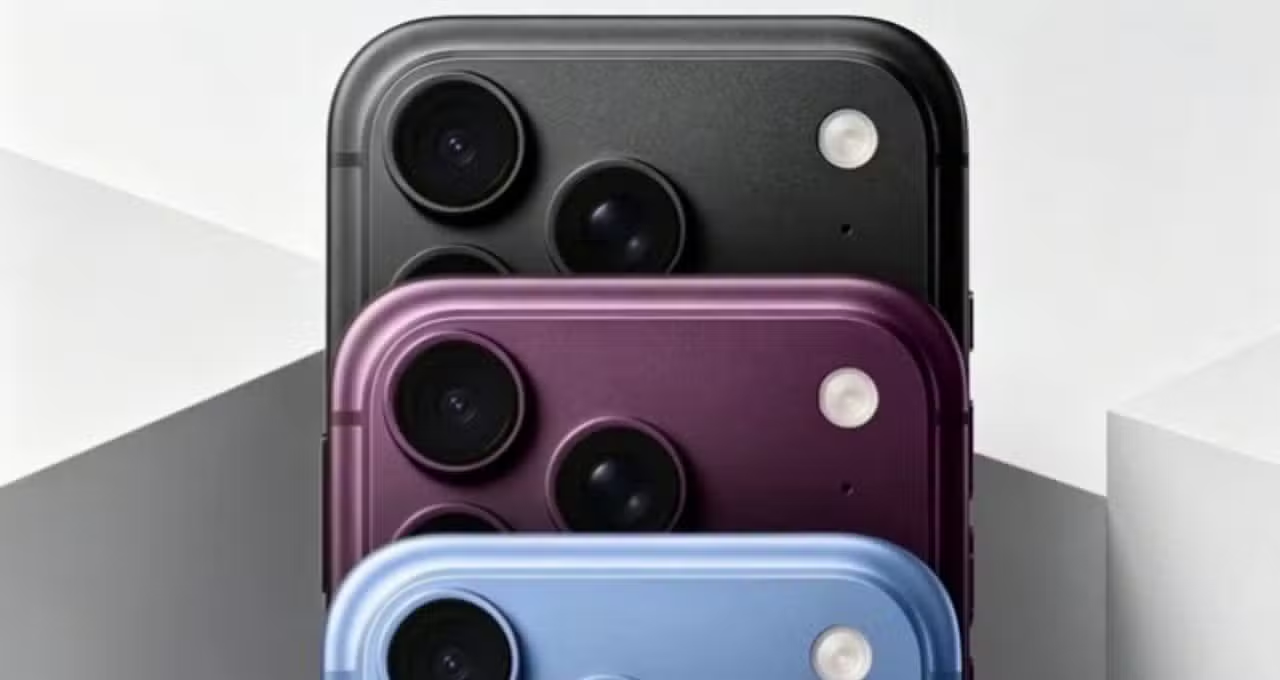
The Cupertino giant is considering making a drastic change in its smartphone portfolio, something not seen since the paradigm shift with the device’s tenth anniversary. Instead of focusing only on traditional high-performance versions, the manufacturer is expected to reveal a flexible model, provisionally called iPhone Fold, which promises to steal the spotlight in the technology market in 2026.
Experts in the financial and technological sector, however, estimate that the more robust conventional version will take on the brand’s financial leading role. The future iPhone 18 Pro has everything it needs to silently carry the weight of global sales, repeating a commercial phenomenon that the company experienced almost a decade ago.

The historical parallel with the 2017 releases
This market movement mirrors the American company’s recent past. During the 2017 main event, the public was introduced to the iPhone 8 along with the commemorative edition that changed the brand’s design. The most expensive model brought facial recognition and eliminated the edges, while the eighth generation version delivered a classic look that made more traditional buyers feel safe.
The direction of sales that year was dictated by bottlenecks in the Asian supply chain. The manufacturing of the device with an infinite screen ran into severe technical obstacles, which pushed its arrival in stores to November. As a result, the more conservative edition stuck to its original September schedule and dominated early shelves.
This logistical mismatch generated very clear consumer behavior. Customers who needed to change their cell phone quickly, or who did not want to risk using first-generation technologies, ran out of stocks of the most basic option. Even without futuristic features, the device guaranteed constant billion-dollar revenue for the company’s coffers.
Projections for the smartphone market in two years
Behind-the-scenes information points out that the flexible cell phone project is heading towards an identical industrial bottleneck. Component assembly sources indicate that creating durable hinges and creased screens on a global scale is a monumental challenge in today’s industry. This technical complexity should restrict the number of units available, forcing a later launch in relation to conventional models.
If the schedule is delayed, the traditional premium edition will reign supreme in purchasing intentions during the new product’s shortage period. The iPhone 18 Pro is unlikely to grace the covers of magazines about radical innovations, but it will deliver the software and hardware stability that the average user demands on a daily basis.
Several market factors converge to strengthen the classic model:
- Severe challenges in mass production of defect-free flexible displays.
- Risk of commercial postponement of the innovative model compared to the official calendar.
- The public’s fear of investing heavily in a product category that is still subject to structural flaws.
- Constant search for high standard devices that already have a history of reliability.
Limitations that prevent the popularization of the flexible format
Unlike the design transition that occurred years ago, the folding screen should not dictate the immediate standard for the entire Apple ecosystem. Production cost is the main obstacle to mass adoption. Industry leaks suggest that the foldable version’s price tag could cost double what current high-end devices charge.
In addition to the impact on your pocket, the engineering of these devices requires sacrifices that competing brands have been facing for years. To ensure perfect folding, manufacturers need to reduce battery size, use materials that are less resistant to drops, and limit space for high-end photo sensors. The overwhelming majority of consumers are not willing to give up power autonomy and perfect photos just to have a cell phone that changes shape.
Given these technical concessions, the conventional version gains an unbeatable commercial advantage. The flexible model will serve as a luxury laboratory to test public acceptance, leaving the responsibility for breaking revenue records on the shoulders of the iPhone 18 Pro.
The new positioning of the Apple catalog
This entire scenario highlights a careful restructuring in the technology giant’s planning. The folding device will reach store windows with exclusive status, targeting a niche of enthusiasts who are willing to pay a fortune for new features, even with usage limitations. In contrast, the classic Pro edition will maintain its role as a financial pillar, attracting those who value fast processing and durability.
This division of categories protects the company’s revenue against possible engineering failures. The massive sales volume of the traditional format guarantees quarterly profit, creating a safe space for the manufacturer to experiment with new formats and regain its status as a pioneer in industrial design.
Buyer behavior in the past has proven that conservative upgrades are money-making machines. The company’s management is confident that history will repeat itself, transforming the most stable version into the true economic engine of 2026, while the spotlight of the specialized media is focused solely on the engineering of the foldable screen.