
Demis Hassabis leaves command of Google DeepMind and takes over as chief scientist at Alphabet

Alphabet, the holding company that controls Google, announced on August 5, 2026 important changes in the leadership of its artificial intelligence laboratory.
The main change is that Demis Hassabis, CEO of Google DeepMind, is stepping away from his daily responsibilities in managing the laboratory, responsible for developing the company’s Gemini models.
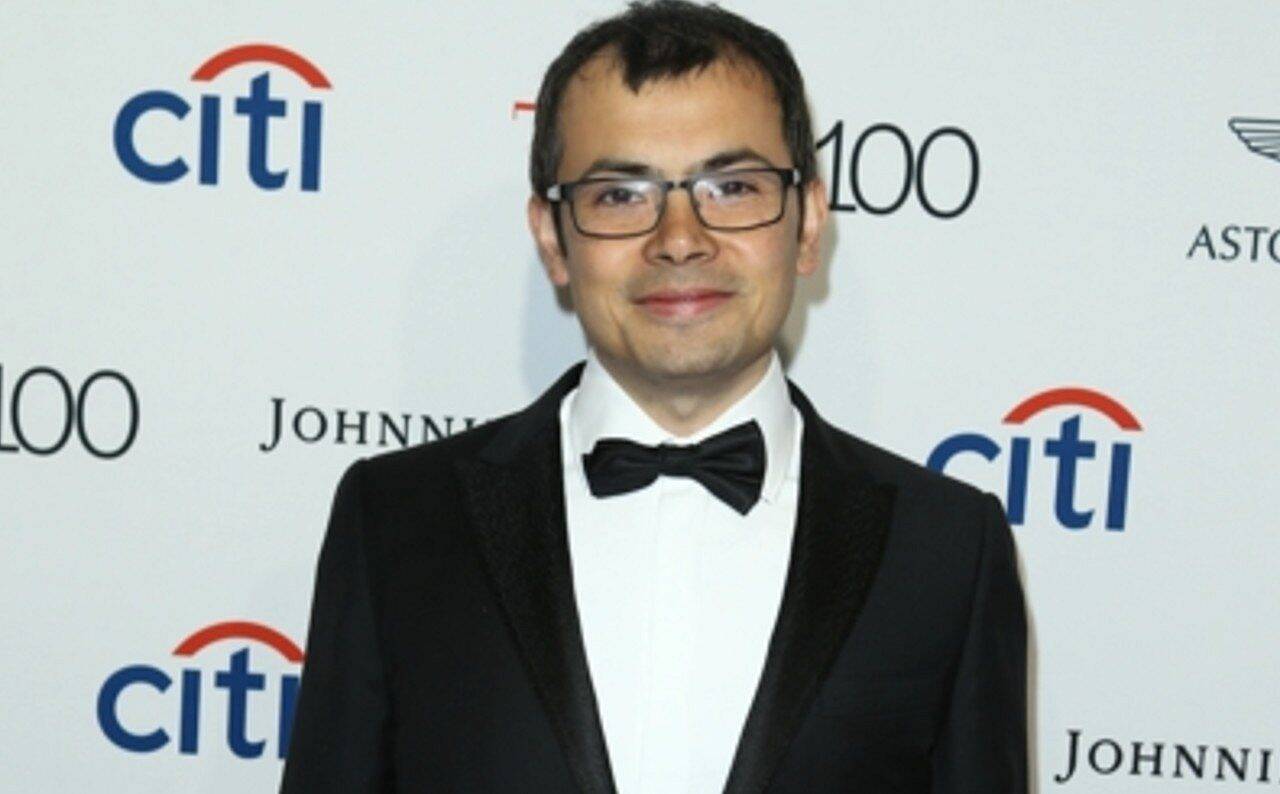
Hassabis will now move into the role of president of Google DeepMind and will also take on the newly created role of chief scientist at Alphabet. This strategic move reinforces the company’s priority in directing its long-term vision towards Artificial General Intelligence (IAG), allowing one of the main minds in the area to focus on more strategic research and development. He will continue to lead Isomorphic Labs, a unit focused on drug discovery via AI.
Hassabis was one of the founders of DeepMind in 2010, alongside Shane Legg and Mustafa Suleyman, who today leads Microsoft AI. Google completed the acquisition of the company in 2014.
In his place, Koray Kavukcuoglu, current director of technology at Google DeepMind, was appointed to lead the laboratory’s daily operations, assuming the role of senior vice president of Google DeepMind.
In a post on the company’s blog about the transformations, Hassabis explained that “I have been working towards AGI (Artificial General Intelligence) my whole life and now, like many of you, I feel that it is close.” He added: “With this context, I have decided that now is the right time to hand over my day-to-day operational responsibilities at GDM so that I have the time and space to focus on the bigger picture and help influence what’s next in the best way possible.”
Google Seeks Acceleration Amid Stiff Competition in AI Sector
The changes to the structure come at a time of intense questions about Google’s ability to keep pace and compete with other cutting-edge artificial intelligence players such as OpenAI and Anthropic.
Despite Google’s cloud unit showing great expansion, the company’s costs are also increasing.
In the second quarter, the company’s cloud sector revenue grew 82% year-on-year, reaching US$24.8 billion. However, Alphabet projects capital investment of between US$195 billion and US$205 billion for this year, mainly aimed at infrastructure to support its artificial intelligence goals.
Additionally, Google postponed the presentation of Gemini 3.5 Pro, its main AI model, which was scheduled for June. Media reports indicated that the model did not achieve certain internal goals, and that decreased team motivation was also a factor in the postponement.
The company, however, positions this reorganization as a strategy to accelerate its AI projects, granting Hassabis more freedom to focus on artificial general intelligence research.
In a corporate blog post, Pichai stated, “We have incredible talent, cutting-edge computing power, and products that bring AI to more people than any other company.” He continued, stating that “we need to accelerate all this work and stay focused on the cutting edge of AI. At the same time, there has never been a more important time to shape the future of Artificial General Intelligence (AGI) and science.”
Jeff Dean leaves for new research automation initiative
The reformulation of leadership positions also marked the departure of another prominent figure in the artificial intelligence scene.
Jeff Dean, who worked for 27 years at Google and was chief scientist at Google DeepMind, is leaving the company, along with other employees, to found a new non-profit organization called Discovery Loop.
Google said it will be one of the founding investors and cloud partner for the newly created organization.
In a released farewell message, Dean mentioned that Discovery Loop will aim to “automate machine learning, science and engineering to accelerate discoveries and progress.”
The company did not immediately comment on the matter.





