

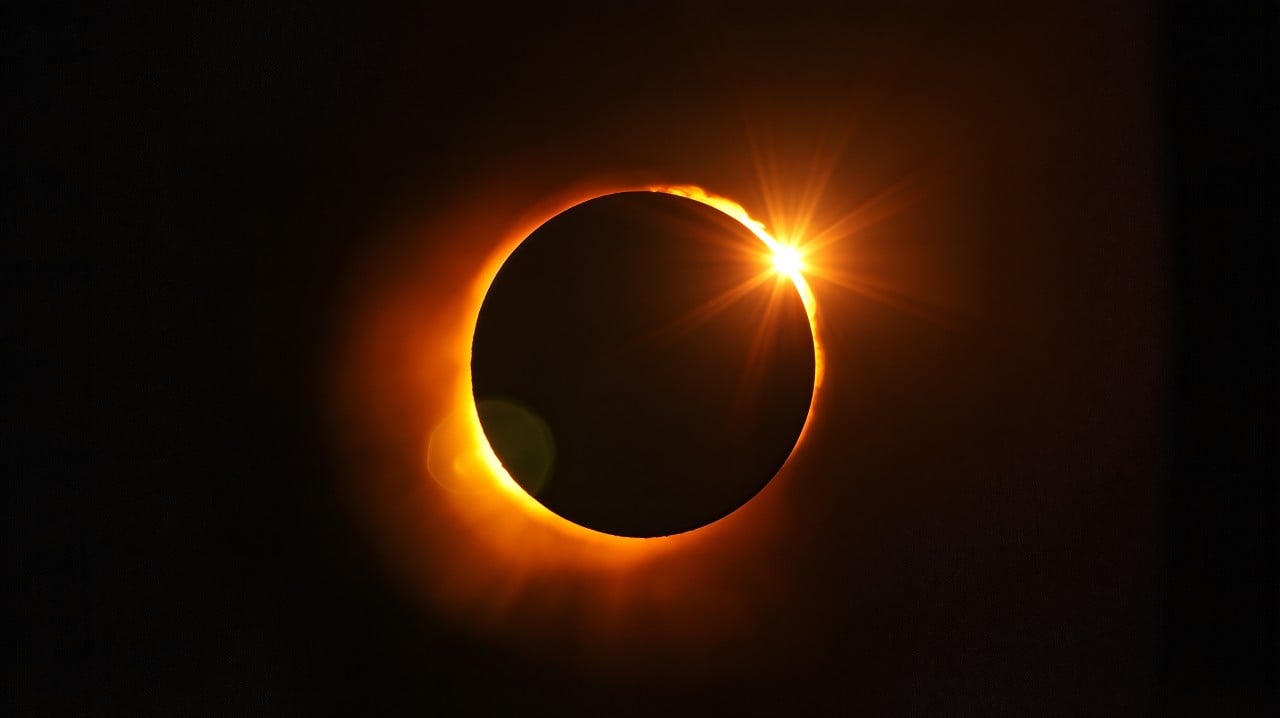
The European continent has already begun a true war operation behind the scenes in the electricity sector to face an astronomical event scheduled for August 12, 2026. During the passage of the next total solar eclipse, energy utilities project an abrupt and unprecedented decline in photovoltaic generation, requiring complex engineering and load dispatch maneuvers. All this anticipation seeks to shield the interconnected system against cascading blackouts and ensure that electricity reaches consumers’ homes without frequency fluctuations. The early mobilization demonstrates the authorities’ level of caution in the face of a scenario where day will turn to night for a few minutes in crucial solar catchment areas.
The impact of the most lasting astronomical phenomenon of the century on the electrical matrix
Classified by astronomers as the most extensive solar blockage of the last hundred years, the August 2026 event poses an unprecedented puzzle for critical infrastructure managers. The main difficulty lies in keeping the electricity trade balance perfectly aligned, compensating for the sudden lack of sunlight with other sources almost instantly. This technical juggling act is the only way to sustain service reliability for hundreds of millions of European citizens who rely on a highly sensitive network. Any deviation in the network frequency, which operates at a strict 50 Hertz in Europe, can disarm protection systems and cause localized outages.
The challenge becomes even more complex because the shadow’s trajectory will cross regions that concentrate large generating plants, drastically altering the production curve throughout the day. Operators need to calculate exactly the speed of the lunar shadow over the continent to program the gradual entry of other energy sources. This ramp up and down of solar generation requires perfect synchronization between the member countries of the European bloc, testing the limits of electrical system automation.
More on this story: Singapore leads 20th global ranking of most powerful passports of 2026
Projections point to a hole of almost 10 gigawatts in electricity generation
Data collected by Entso-E, the consortium that brings together transmission system operators in the region, shows the exact size of the approaching problem. If the sky is cloudless on the day of the event, the shadow cast by the moon will wipe around 9.7 gigawatts (GW) of photovoltaic power from the map in a matter of hours. For comparison purposes, this volume of energy subtracted from the grid is equivalent to almost 70% of the entire installed capacity of the Itaipu Hydroelectric Plant, highlighting the magnitude of the hole that authorities will need to fill in real time.
This loss of 9.7 GW represents a considerable share of the European base consumption during summer time, a time when the use of air conditioning units tends to increase demand. The outage not only affects large centralized power plants, but also millions of residential rooftops equipped with solar panels, known as distributed generation. Because these small generators are installed directly on properties, utilities lose visibility into exactly how much extra consumption will suddenly be thrown into the main grid when the homemade panels stop working.
Contingency tactics designed to avoid a collapse in European supplies
Knowing that the temporary darkness will bring down the production of solar panels, the transmission companies have already designed a roadmap for joint actions. The central objective is to create a protection network that encompasses everything from traditional plants to the control of heavy industrial consumption. The main measures that make up this contingency plan include:
- Uninterrupted meteorological surveillance: Second-by-second tracking of the advance of shadow and weather conditions over solar parks, allowing fine adjustments to the generation forecast.
- Activation of dispatchable sources: Preparation of natural gas thermoelectric plants and hydroelectric plants with reservoirs, which have the capacity to inject heavy energy into the grid immediately.
- Intelligent load control: Prior agreements with large industrial complexes to reduce the speed of their machines during the peak of the phenomenon, relieving stress on the system.
- International energy transit: Intensive use of high-voltage transmission lines that cross borders, allowing less affected countries to send electrical relief to neighbors in the dark.
Executing these tactics requires unprecedented political and technical alignment between national control centers. Europe has one of the largest integrated energy markets in the world, which means that a frequency problem in Spain could even be felt in Germany. Therefore, cargo dispatch algorithms are being recalibrated to deal with the extreme volatility expected for the afternoon of August 12th.
The learning left by past events and the strength of the interconnected network
The electricity sector is not navigating in the dark, as it uses the solar eclipse that occurred in 2015 as a large laboratory for practical tests. At that time, Europe also faced a sharp drop in clean generation, but managed to overcome the situation through rigorous planning and a lot of communication between countries. The crucial difference now is that dependence on renewable sources has grown exponentially in the last decade, making the system much more exposed to astronomical variations.
In 2015, installed solar capacity was just a fraction of what exists today, meaning the energy ramp will be much steeper in 2026. Engineers have learned that the key to success is not just having backup energy, but the speed at which that energy can be injected into the grid. Large-scale batteries, which were rare in the previous event, will now play a vital role in stabilizing the frequency in the first few minutes of darkness.
The future of energy security in the face of unpredictable natural phenomena
Even with the significant increase in the photovoltaic generating complex, Entso-E specialists guarantee that the current infrastructure has the necessary robustness to withstand the upheaval. These moments of extreme stress end up acting as trials by fire to validate the continent’s energy transition towards a low-carbon economy. The ability to manage a sudden loss of almost 10 GW will prove that it is possible to maintain a clean array without compromising operational security.
With the electric chess pieces already positioned, authorities are confident that the population will be able to admire the spectacle in the sky without worrying about the lamps going out inside their homes. Advance planning shows that modern engineering can predict and mitigate even the vagaries of celestial mechanics. The success of this operation will serve as a model for other regions of the world that also seek to integrate large volumes of solar energy into their electrical matrices.