
Unprecedented capture of plasma vortices on the sun refines space weather prediction

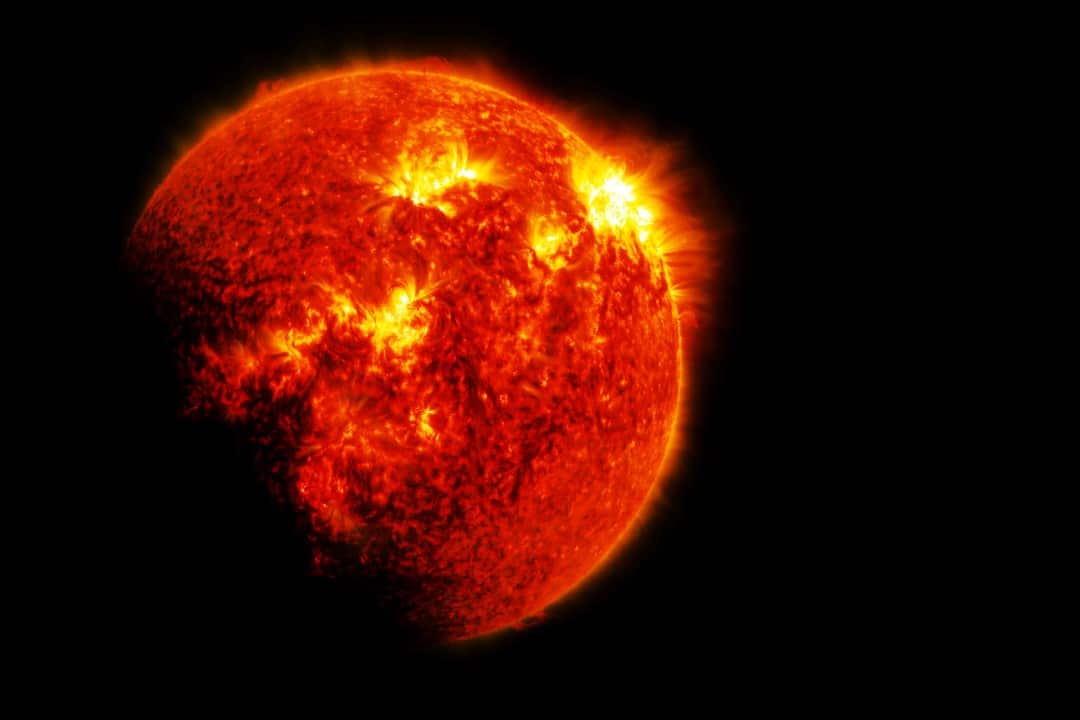
Scientists have carried out an unprecedented observation of the solar surface, the “photosphere”, revealing for the first time the presence of plasma vortices that had previously only been detected in the upper atmosphere, known as the “corona”. The discovery, made on August 5, 2026, offers a new understanding of the Sun’s dynamics and promises to significantly improve models for predicting solar flares and space weather, crucial elements for protecting technologies on Earth.
Surprising revelations in the solar photosphere
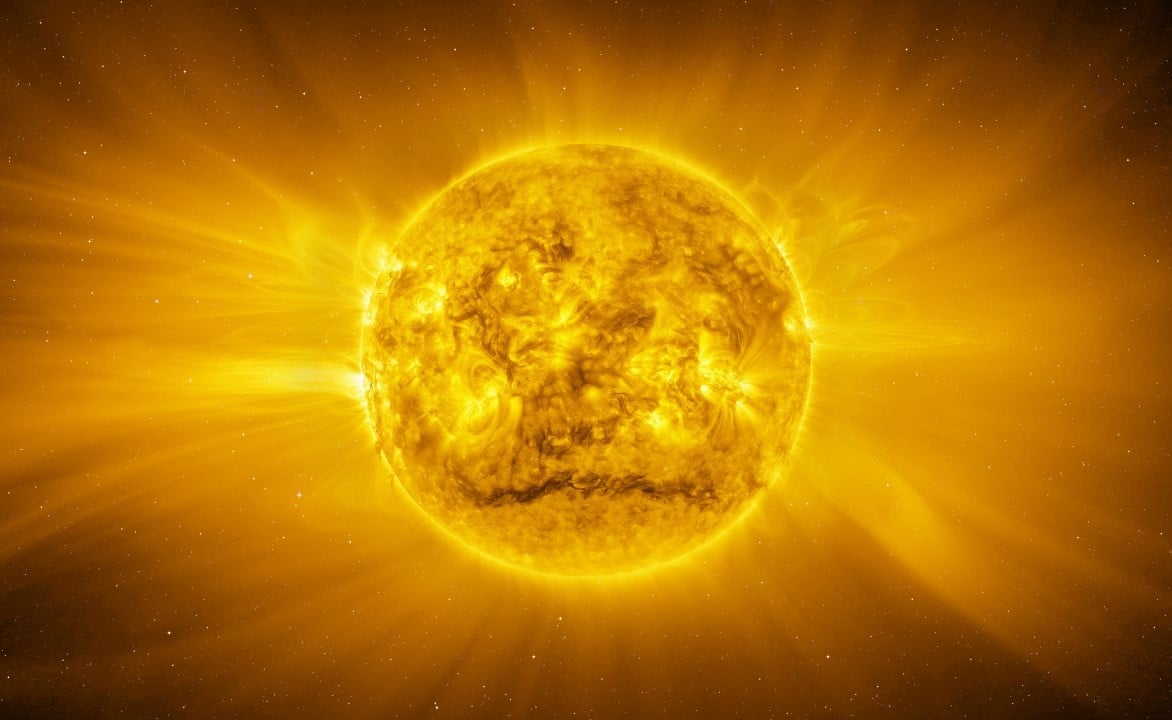
The research team, led by David Curize of the US National Solar Observatory (NSO), used the Daniel K. Inoue Solar Telescope to capture images of the solar photosphere at the highest resolution ever recorded. The telescope, located at the top of the Haleakala volcano, in Maui, Hawaii, is the largest in the world dedicated to solar study, with an aperture of 4 meters, capable of discerning structures approximately 20 kilometers away on the surface of the Sun. This high-resolution capability was fundamental in revealing details never seen before.
The photosphere, the thin, visible layer of the Sun, is the part we can observe directly. The magnetically active zones in this layer, where intense magnetic fields concentrate, were the main focus of the investigation. The data was detailed and published in the renowned international journal *Nature*, marking a notable advance in heliophysics.
Understanding vortices and Kelvin-Helmholtz instability
Solar plasma is an ionized state of matter at high temperature, where electrons separate from atoms. During observations, researchers identified a complex hydrodynamic phenomenon called Kelvin-Helmholtz Instability (KHI). This event occurs when waves or vortices form at the boundary between two layers of fluid, in this case plasma layers, that flow in opposite directions.
KHI had already been noticed in terrestrial phenomena, such as clouds, and in other celestial bodies, such as Jupiter’s atmosphere and the solar corona. However, its presence in the solar photosphere, a region where magnetic fields are dominant, is new. This discovery challenges previous conceptions about how plasma behaves on the visible surface of the Sun.
Innovative methodology to capture the invisible
To obtain these detailed images, the research team employed a high-speed burst capture technique, continuously recording a sequence of high-resolution images at extremely short intervals. Assembling these time series of images allowed the creation of videos that showed the movement of the plasma and changes in its microstructure.
Through this analysis, structures in the form of bands and vortices were revealed that had not previously been observed in the photosphere. This observation demonstrated that the plasma layer in the photosphere is not limited to simple convection processes, but exhibits complex turbulent patterns, indicating a deeper energetic interaction.
Direct implications for space weather prediction
The plasma vortices generated by KHI strongly twist magnetic field lines, causing intense mixing between magnetized and unmagnetized plasma — substances that would not otherwise combine easily. This process accelerates the diffusion of the magnetic field, releasing the accumulated energy in the form of heat and waves.
This release of energy contributes to the heating of the Sun’s upper coronal atmosphere, triggering explosive phenomena such as solar flares and coronal mass ejections. Understanding these mechanisms is vital to improving space weather prediction models. Events such as solar flares can severely affect Earth’s satellite communications and electrical grids, making the ability to predict these occurrences of great importance for global infrastructure.
The next steps in solar research
This study represents a milestone in understanding how magnetic fields and fluids interact in the Sun’s surface layer and how energy and mass are transported from the surface to the upper atmosphere. The research team validated their observations with 3D computer simulations, which reproduced the complex interactions between the solar magnetic field and plasma, confirming the formation of bands and vortices identical to real data.
Scientists emphasize the need for further investigation. Automated detection algorithms and additional high-resolution observations will be needed to quantify the energy transported by KHI to the Sun’s upper atmosphere and determine its exact contribution to magnetic field diffusion. The expectation is that this line of research will continue to unravel the mysteries of the Sun and strengthen the technological protection of our planet.





