
Dark skies boost visibility of the Perseid meteor shower that will peak on August 13


The long-awaited Perseid meteor shower, one of the most popular celestial spectacles, returns to delight observers and promises to light up the skies. Since the beginning of July, the astronomical phenomenon has intensified and will continue to be visible until the end of August, reaching its peak between the night of August 12th and the early hours of August 13th, 2024. The good news for enthusiasts is that the New Moon phase will guarantee ideal dark conditions, favoring observation and enhancing the experience.
NASA promotes live broadcast to follow the peak of the meteor shower
For those wanting a guided experience, NASA invited the public to participate in a collective observation. The space agency will host a live broadcast starting at midnight ET on August 13 on its YouTube channel. During the event, images captured by celestial cameras will be presented, as well as conversations with experts and a space to answer viewers’ questions about the phenomenon.
Observation of the event will be carried out with the support of advanced equipment. The cameras at the Automated Moon and Meteor Observatory (ALaMO), located at the Marshall Space Center, which celebrates two decades of operations this year, will monitor the phenomenon. Aerial images captured by the International Space Station (ISS) will also be shared. For those observing under favorable conditions, the peak of the meteor shower can yield between 50 and 100 meteor sightings per hour.
Why the Perseids are such an ancient and popular phenomenon
Recognized as one of the oldest documented meteor showers, the Perseids have records dating back more than 2,000 years. Its popularity comes from several factors: constant activity, good visibility and occurrence during the summer months, which facilitates outdoor observation. Furthermore, they are famous for generating “fireballs”, meteors that stand out for their intense brightness and the luminous trail they leave in the sky, capturing the attention of millions.
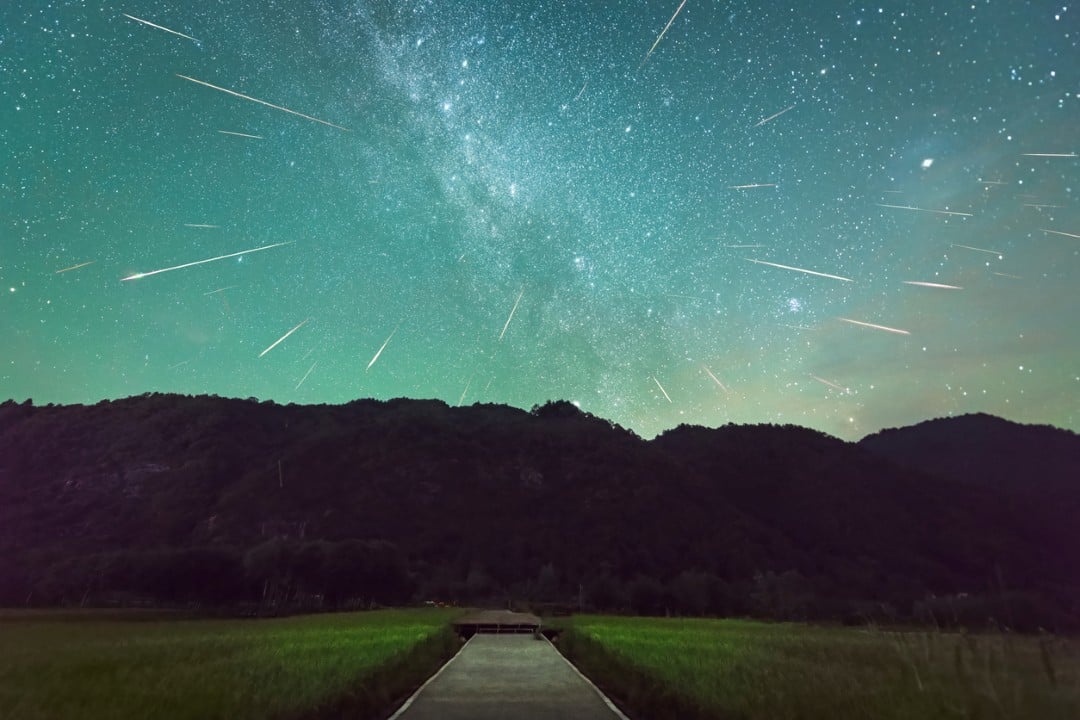
Origin of the name and where to look for meteors in the sky
The name Perseids originates from the constellation Perseus, as meteors appear to emanate from this region of the northern sky. In Greek mythology, Perseus is the hero known for defeating Medusa and saving the princess Andromeda, whose constellation is also located nearby. However, there is no need to worry about locating Perseus precisely to see the shooting stars, as the meteors can be seen from any point in the sky.
Essential tips for better observation of the Perseids
To make the most of the Perseid meteor shower, we recommend choosing a location with little light pollution and dark skies. It is essential to allow your eyes to adapt to the dim light for about 20 to 30 minutes before beginning observation. Then, just sit back comfortably, exercise your patience and enjoy one of the most impressive astronomical spectacles on the annual calendar.





