

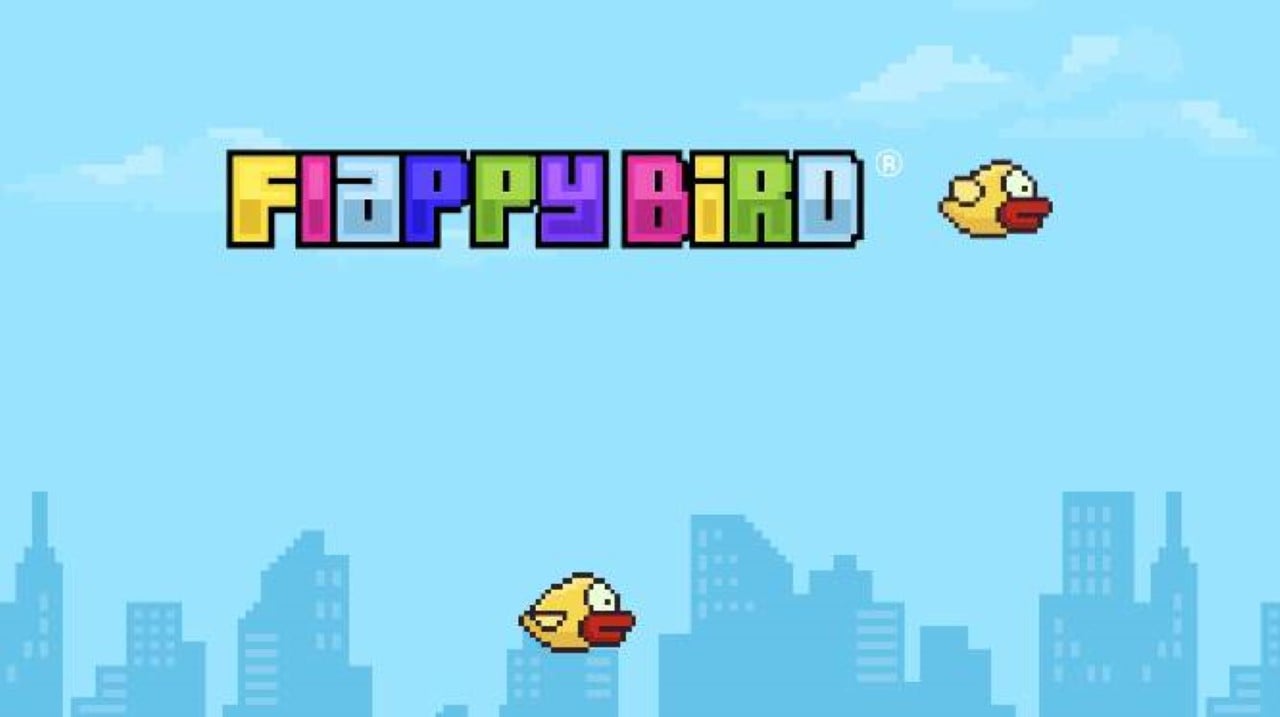
The mobile game Flappy Bird, which in February 2014 reached millions of downloads and generated an estimated revenue of US$50,000 per day, was abruptly removed from app stores by its own creator, Vietnamese Dong Nguyen. The decision surprised the gaming market, as it occurred at the height of the title’s popularity, defying the common logic of taking advantage of a resounding success and monetizing it at any cost.
The unexpected rise of a game with simple mechanics
Initially released for iOS in May 2013, Flappy Bird took a few months to gain notoriety, exploding in popularity in early 2014, when it also arrived on Android. Its mechanics were singularly simple: the player needed to tap the screen to control the height of a pixelated bird, navigating through narrow spaces between green pipes without colliding. Each successful pass added a point, while any error ended the match.
Despite the minimalist graphics, which resembled retro games, Flappy Bird’s relentless difficulty became one of its main attractions. The challenge of overcoming minimum scores, often with frustrating results, turned the game into a viral topic on social media. Personalities such as Swedish YouTuber Felix Kjellberg, known worldwide as PewDiePie, boosted the game’s visibility, with his videos playing Flappy Bird reaching millions of views and helping to consolidate the title at the top of the free rankings on mobile platforms.
Full coverage: Latest News (EN)
Personal reasons and concern for user experience
Dong Nguyen developed Flappy Bird alone in an estimated period of just two or three days, including fine-tuning gameplay. Its original intention was to create a quick and light distraction, suitable for brief moments of leisure. However, the massive success had a direct and negative impact on his personal life. He publicly reported difficulty sleeping and a significant loss of his peaceful routine, something that profoundly destabilized him.
- The main factors that led Nguyen to remove the game were:
- The negative personal impact: The unexpected success brought stress, making it difficult for you to sleep and altering your peaceful routine.
- The addictive nature of the game: He assessed that Flappy Bird was becoming overly engaging, almost harmful, for users.
- The distortion of the original intention: the game, which was supposed to be a simple pastime, turned into something he considered irresponsible.
This realization about the psychological impact of the game, both on itself and on players, was the main catalyst for the decision to remove it, regardless of the financial gains.
Conspiracy theories and official denials
The sudden removal of Flappy Bird from the air generated a flood of speculation and theories on the internet. One of the most persistent suggested that Nintendo, the Japanese video game giant and creator of the iconic Super Mario Bros. series, had taken legal action against Nguyen. This theory was based on the striking visual similarity between Flappy Bird’s green pipes and classic scenery elements from Mario games.
Contrary to rumors, Dong Nguyen vehemently denied any legal dispute as the reason for his game’s removal. Nintendo itself also made a statement to the press at the time, stating that it had not taken any legal action against the Vietnamese developer. Another controversy raised was the meteoric speed with which the app rose in store rankings, leading to suspicions of the use of artificial promotion strategies. Nguyen categorically rejected these accusations, attributing Flappy Bird’s overwhelming popularity to a combination of luck and favorable market circumstances.
Millionaire income did not change the unusual decision
Even with a daily turnover estimated at US$50,000, a figure that he himself confirmed to the press, Dong Nguyen remained firm in his resolve. He acknowledged the significant amount generated by advertisements within the application, but emphasized that the financial return was not enough to make him reconsider his decision to discontinue the game.
The Flappy Bird case became a landmark and a peculiar case study in the applications and games market. He blatantly contradicted the industry’s usual logic, which encourages maximum capitalization on sudden success. Instead of exploring profit potential, selling the company or expanding the franchise, the creator chose to prioritize his personal well-being and concern about the perceived impact on users. The decision to remove the game was announced by Nguyen on his social networks on February 8, 2014, with the effective withdrawal from stores the following day. Despite the removal, anyone who already had the application installed on their device was able to continue enjoying the game.
The legacy of a singular decision in the gaming universe
Dong Nguyen’s move to abandon a hugely successful project financially for ethical and personal well-being reasons left a lasting mark on the mobile gaming industry. Its choice raised important discussions about developer responsibility and the effects of addictive game design. Flappy Bird, in its brief existence, became a cultural phenomenon and, with its departure, an example of how success can have an unforeseen human cost.
Nguyen’s decision resonated with many professionals in the field, who saw the gesture as a reflection on the limits of the search for profit and the importance of mental health, both for creators and consumers. The Flappy Bird case remains a vivid reminder that sometimes personal values can override the greatest financial temptations.