
Discovery of new species of ichthyosaur in Germany expands understanding of the Jurassic

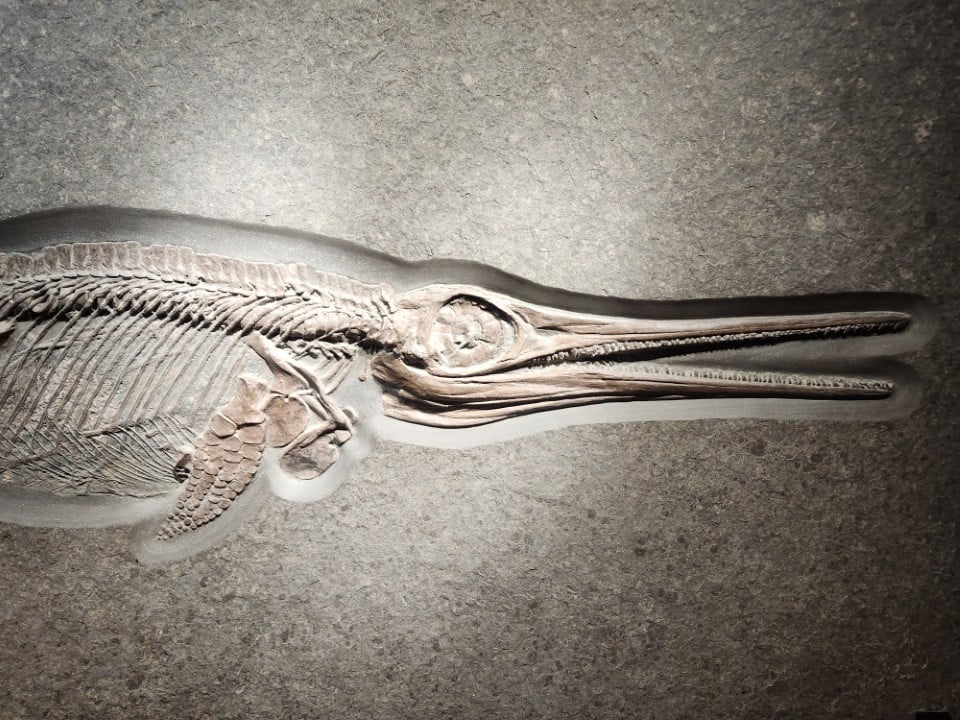
Researchers examining the ancient Late Jurassic seas that covered southern Germany for more than a century believed in the presence of just one species of ichthyosaur, Aegirosaurus leptospondylus. The remains of this creature were found in the famous Plattenkalk limestone deposits, the same fine-grained rock formation that revealed the iconic Archeopteryx fossil. However, on August 11, 2026, Dr. Erin Maxwell, from the State Museum of Natural History in Stuttgart, and her team announced the identification of a second species in these deposits: Jabalisaurus tethyensis. This ophthalmosaurid ichthyosaur was recognized from specimens that had been in museum collections for decades but had been misclassified as belonging to Aegirosaurus.
Jabalisaurus tethyensis inhabited the temperate waters of the Tethys Ocean approximately 150 million years ago, during the Late Jurassic. This ophthalmosaurian ichthyosaur was medium-sized, with an estimated length of between 2 and 2.9 meters. Its anatomy included an elongated, elevated skull, delicately crested teeth, and its diet likely consisted of small bony fish. Apparently, its skin was smooth, a characteristic compatible with other ichthyosaurs from related groups.
Understanding ichthyosaurs and their life span on Earth
Ichthyosaurs are marine reptiles that lived in the Mesozoic, with their first fossil records dating from the beginning of the Triassic, and remained until the beginning of the Late Cretaceous. Dr. Maxwell and her team detailed this information in their article.
The peak of diversity and differentiation of ichthyopterygians is generally associated with the first 8.7 million years of their evolution. This phenomenon is attributed to high rates of morphological development early in the group’s history, as they spread across varied marine habitats and food niches.
Already in the Jurassic, particularly at the end of the Aalenian, at the beginning of the Middle Jurassic, ichthyosaurs occupied a smaller number of ecotypes. Because of this, historically, they were considered to have reduced taxonomic diversity.

Details about the specimens that revealed the new species
Paleontologists’ description of Jabalisaurus tethyensis was based primarily on a small, immature skeleton preserved in the Bavarian State Collection of Paleontology and Geology in Munich. This fossil was originally found in the Geisberg quarry near Apfelthal in Bavaria.
In addition to the main specimen, two others were attributed to the new species: one from the Staatliches Museum für Naturkunde Stuttgart and another, an exceptionally preserved specimen from the Jura-Museum Eichstätt, which even maintains the complete contour of its soft tissues.
Unexpected presence in Mexico revolutionizes understanding of the distribution of ichthyosaurs
The discovery of Jabalisaurus tethyensis is significant for two main reasons: it not only doubles the diversity of ichthyosaurs previously known from German plattenkalk deposits, but also reveals that this genus has been found in other locations, specifically in Mexico.
Previously, the genus Jabalisaurus was exclusively recognized in the Gulf of Mexico area, located at a distance of about 9,000 kilometers. Their unexpected appearance in Bavaria indicates that these marine reptiles traveled across a vast area of the ancient Tethys Ocean and the neighboring proto-Caribbean, which contradicts the theory that they evolved in isolation on different coastlines, as some researchers have suggested.
Although there was an apparent great connectivity of marine habitats in the Late Jurassic, the ichthyosaur fauna of that period in the proto-Gulf of Mexico was interpreted as being highly endemic in nature, as pointed out by the researchers in the article. With the description of Jabalisaurus tethyensis, two pairs of closely linked species were identified, recovered from both the Plattenkalk deposits in Germany and the Gulf of Mexico region: Jabalisaurus meztli and Jabalisaurus tethyensis, in addition to Parrasaurus yacahuitztli and Aegirosaurus leptospondylus.
These new discoveries question the hypothesis of marked endemism in the proto-Caribbean. They, on the other hand, point to an ichthyosaur fauna with similar characteristics, adapted to climates that varied from warm temperate to tropical, covering the entire northwest of the Tethys Sea and the proto-Caribbean, indicating a possible regional divergence only at the species level. The presence of the genus Jabalisaurus in the northwestern Tethys Sea diminishes the idea that the Proto-Caribbean region was a crucial center of endemism for ichthyosaurs during the Late Jurassic. Instead, it suggests that a tropical Tethys ichthyosaur fauna was widely dispersed around the world, differentiating it from the more temperate to polar faunas found in places such as the United Kingdom, Svalbard, Eastern Europe and Argentina.




