
New 55-million-year-old primate fossils in Wyoming change understanding of evolution


Recent discoveries in southwestern Wyoming have revealed a suite of 55-million-year-old primate fossils. These small primates, the size of a mouse lemur, offer unprecedented information about the evolutionary trajectory of humanity’s sap-feeding ancestors.
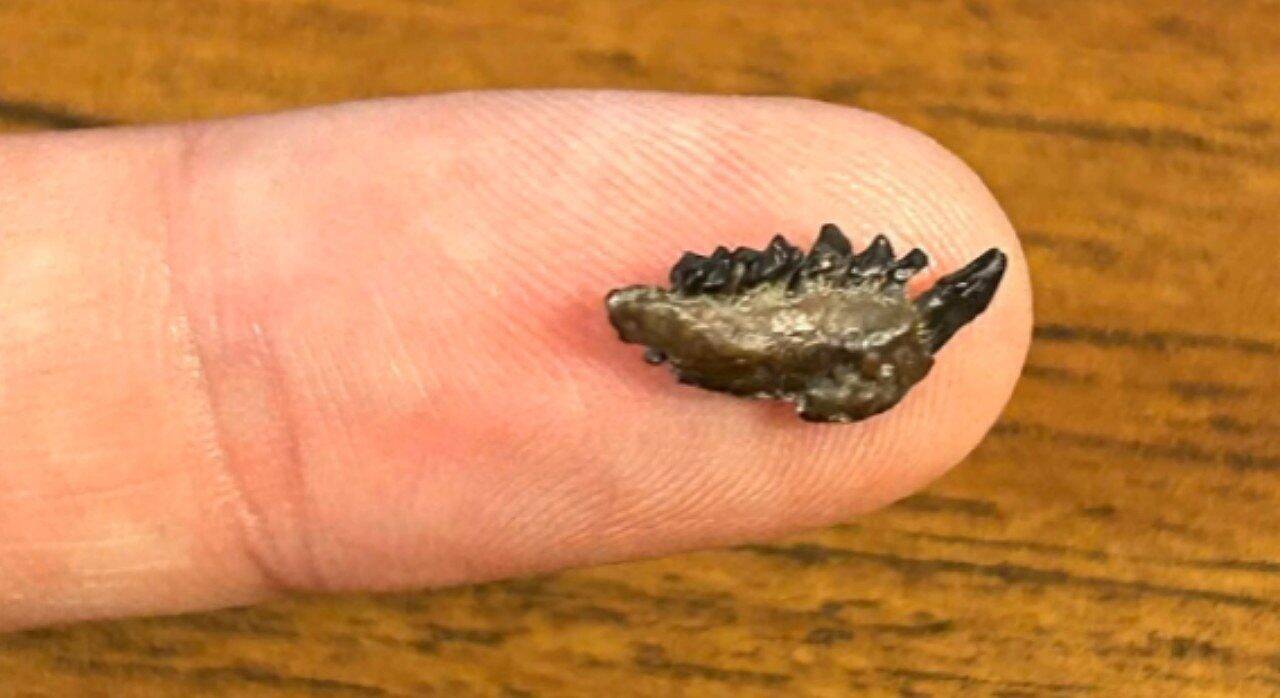
A new study, published in the Journal of Human Evolution, details the discovery of tiny fossils of three species of prehistoric primates. The finds occurred at the Smiley Draw site, located in the Wasatch sandstone formation, which dates back to the Eocene Period.
Among paleontologists, the state of Wyoming is widely recognized as one of the most important places in the world to find remains of early primates. These recent discoveries not only reinforce this reputation, but also indicate the vast potential for future finds in the region.
“The Early Eocene scenario has become more complex than we previously imagined,” said Chris Beard, a professor at the University of Kansas in Lawrence. He added: “There is much more to be understood about these fossils, especially those from southern Wyoming, and there is a reason we are working in this region.”
Discoveries that fascinate and bring new challenges to researchers
Since the 1880s, Wyoming has served as a crucial center for early primate paleontology. The first fossils of lemur-like primates, dating back approximately 55 million years, were discovered in the Bighorn Basin at that time.
Beard mentioned that “a lot of work was done in the late 20th century in the Bighorn Basin, especially regarding an animal known as Tetonius.”
The Tetonius, named after the Teton Mountains, is described by Beard as a creature “vaguely resembling a tarsier.” About the size of a contemporary mouse lemur, measuring less than 30 centimeters and weighing less than 70 grams, its closest living relatives are modern-day tarsiers.
Tarsiers are small, arboreal primates and classified as “dry-nosed”. Endangered populations of these tiny primates can still be found in the tropical forests of Southeast Asia.
In their study, Beard and his team identified a new species of Tetonius, called T. varleyorum. This discovery came from the Smiley Draw site, an Eocene site located in the Great Dividing Basin in Sweetwater County.
Beard explained that “in Wyoming, it is common to find Eocene fossils in shales, which disintegrate easily.” He noted: “This particular site is quite unusual, if not unique, in that it is a layer of sandstone filled with fossils. It is rare to find Eocene fossils in sandstone, which makes Smiley Draw the opposite of what we generally expect.”
For Beard, the identification of a new species of Tetonius is of great relevance, considering its age and anatomical characteristics.
“It is clearly a distinct species, as it is younger than Tetonius and its later descendant, Pseudotetonius, both from the Bighorn Basin,” said the researcher. He clarified: “The fossils we found in Sweetwater County come after this entire lineage had already become extinct in the Bighorn Basin.”
The research also details fossils of two rarely found anaptomorphines, another group of prehistoric primates. The species Arapahovius gazini and Anemorhysis savage had never been located in the Great Dividing Basin, and only a few other specimens of them have been discovered to date.
Most notably, the fossils of these three primates were found in the same location, indicating that they coexisted in the same period and environment. This finding raises new questions about life in the early Eocene.
“We are discovering animals that lived together in Smiley Draw that never cohabited in Bighorn Basin,” Beard reported. “Tetonius, Arapahovius and Anemorhysis did not coexist there, but we find them united here.”
For this reason, Beard called it “frustrating” from a paleontological perspective to compare the Smiley Draw discoveries with the widely researched finds in the Bighorn Basin.
“We have the idea that animals evolve, become extinct, and then other species replace them,” he explained. “What we’re finding at Smiley Draw suggests that animals we thought were going extinct at one time in the Bighorn Basin were probably not going extinct elsewhere.”
Gradual and parallel evolution: what the fossils indicate
Tetonius, Arapahovius and Anemorhysis belong to the omomyid family, a group of ancient tarsier-like primates identified in several Eocene localities around the globe.
Beard said the omomyids of Wyoming are notable examples of gradual evolution, a concept Charles Darwin introduced in his seminal 1859 work, “The Origin of Species.”
“There was a big debate in paleontology about how evolution happened,” Beard said. “Did it happen gradually, as predicted by Charles Darwin, or did it fit more closely with the punctuated equilibrium model, popularized by Stephen Jay Gould and his colleagues?”
The fossils of Tetonius and Pseudotetonius, found in the Bighorn Basin, represent a classic example of gradual evolution. Although they are clearly distinct animals, Beard indicated that the fossil record shows “no interruption in the single chain of lineage from primitive to advanced.”
The main finding lies in the notable changes in the lower jaws of these primates, which Beard and his collaborators identified in fossils from both the Bighorn Basin and the Great Dividing Basin.
“These animals initially had relatively long lower jaws and many teeth between the molars and front incisors,” he reported. “Over time, their jaws compacted from front to back. They lost some teeth and developed a rodent-like front incisor, which protruded and became larger and more robust over the eons.”
The purpose of this excessively large incisor, however, remains an enigma. Beard mentioned that if the question were asked of three different paleontologists, three different answers would be obtained.
“In my opinion, they were using this big front incisor to scrape the bark off trees,” he said. “Many contemporary animals do this to stimulate the release of sap, gum or resin from trees.”
Tree sap is rich in sugar, and for a tiny primate with a high metabolism, this substance would represent a valuable source of energy and nutrients.
Was this change in jaw and tooth anatomy driven by a change in diet, or were omomyids honing the tools needed for millennia of the same diet? That’s another question up for debate, but Beard indicated that the second hypothesis is the most likely.
These questions are important to the new Smiley Draw discoveries, as they reveal that the same phenomenon — the shortening of the jaw, the loss of teeth and the greater incisor — occurred in Tetonius, but not in an identical way to what was observed in the Bighorn Basin Tetonius.
“T. varleyorum from Smiley Draw has shorter jaws and fewer teeth, making it similar but not exactly the same as what we observed in Bighorn Basin,” Beard explained. “They are two different lineages evolving in parallel to achieve the same result.”
Parallel evolution is a widely proven phenomenon in nature. The famous finches collected by Darwin in the Galápagos Islands serve as a prime example, with distinct but related birds developing beaks adapted to their diets on their isolated islands.
All of this adds further evidence that peculiar events were occurring in Sweetwater County 55 million years ago.
Hyperthermal events and climate change during the period
Beard and his colleagues are analyzing all the mammal fossils found at Smiley Draw to see if they tell the same story as the recently described omomyids. If confirmed, this would be further proof that different dynamics were taking place in different regions of Wyoming.
“It’s an interesting phenomenon,” he noted. “We found animals living side by side in Smiley Draw that were already extinct or never cohabited in the Bighorn Basin. They were only going extinct locally in the Bighorn Basin.”
Climate change may be the explanation for this discrepancy. The Eocene period was marked by large climatic fluctuations, which often resulted in extinction or adaptation for flora and fauna.
“We had a lot of what we call hyperthermal events in the Eocene, where the world warmed quickly and then cooled back down,” Beard said. “As the planet warmed, animals better adapted to tropical climates expanded north, from Sweetwater County to Park County. When the temperature dropped and they were no longer comfortable, they returned south. It’s a very dynamic process, and we’re recording many of these fluctuations when analyzing Smiley Draw.”
The distant ancestors of the human lineage
This new study on prehistoric primates has generated more questions than answers. However, this is viewed positively as it gives Beard and his team more reason to return to Smiley Draw.
Beard reported that his team was at the site in June to collect fossils. Some of these specimens are already being analyzed using a micro-CT scanner in North Carolina.
“I can say that we have found additional fossils of early primates and primate-like creatures that are entirely new just two months ago,” he revealed. “We’ll have a lot more to share about Smiley Draw.”
It’s not just them investigating little-explored sites in southern Wyoming. Paleontologists at Duke University’s Duke Lemur Center Museum of Natural History have discovered stunning Eocene fossils in the Bridger Basin, including the best specimens of Plesiadapis, the oldest mammal with primate features in the fossil record.
“The Bridger Basin is the Madagascar of the Eocene,” said curator Matthew Borths in December 2024, describing the transition from few primates to great diversity in Wyoming’s rainforests.
Borths’ dream was to find an omomyid in the Bridger Basin, as they are considered to be humanity’s closest ancestors in the Eocene period. Interestingly, there is no shortage of omomyids in Smiley Draw, which is less than 200 miles to the northeast.
Beard said Wyoming is “better than any other place in the world, including Europe, Asia and Africa” for paleontologists researching the origins and evolution of the oldest primates. This refers only to what has already been discovered, without considering what is still waiting to be found.
“Wyoming is incredibly fundamental to understanding the deep origins of humans,” he said. “None of these animals are a direct ancestor of humans. They are probably our ‘great uncles’ and ‘great aunts’, but that doesn’t make them any less important. In my opinion, it actually makes them even more important.”
These prospects will keep Beard and his colleagues busy for decades to come. There is much more to be discovered, studied and understood.
“I love Wyoming, both personally and scientifically,” Beard confessed. “We would like to have a perfect fossil record, but we don’t. What we do have are fragments and glimpses; we try to piece it together to understand the meaning. Wyoming has been neglected for a while, to be honest, and we are very fortunate to have such an incredible fossil record there.”





