
DNA memory uses 100x less energy and challenges traditional chip

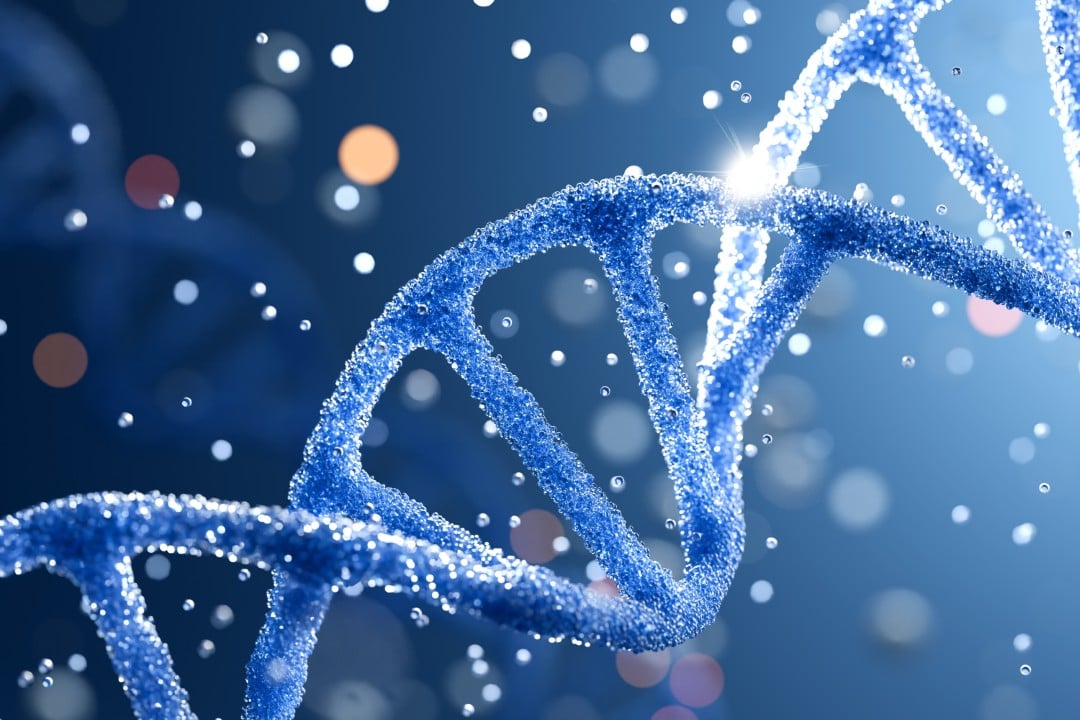
A recent discovery in the field of computing promises to redefine the way data is stored and processed. Researchers have managed to combine synthetic DNA with a semiconductor to create a memory device that operates with remarkably higher energy efficiency, consuming 100 times less energy than traditional chips. This innovation represents a significant step towards more sustainable and powerful computing systems, especially in a global scenario where data center energy consumption has become a growing economic and environmental concern. The research, which is still in the laboratory stage, points to a future where the storage and processing of information can occur in an integrated and much more efficient manner.
Understanding DNA memory and how it works
The central proposal of DNA memory lies in the intrinsic capacity of this molecule to store vast amounts of information in a compact and durable form. Unlike binary systems that use bits (0s and 1s), DNA uses a language based on four nucleotides — adenine (A), guanine (G), cytosine (C) and thymine (T) — to encode data. In the new device, the team of scientists used synthetic DNA, which was meticulously integrated into a semiconductor chip. This fusion allows information to be written to and read directly from DNA strands, overcoming some of the limitations of conventional storage methods and opening the door to new approaches in hardware design.
Energy savings that challenge traditional architectures
The drastic reduction in energy consumption, said to be a hundred times lower than that of existing chips, is one of the most revolutionary aspects of this new technology. This efficiency is achieved, in part, by innovative architecture that allows data storage and processing to occur in the same location. In current computing systems, memory (such as RAM or NAND flash) and the processor are separate components, requiring a constant flow of data between them. This movement of information consumes a considerable amount of energy. By integrating these functions, DNA memory eliminates what is known as the “Von Neumann bottleneck”, resulting in much more economical and faster operation, which directly impacts the longevity and performance of devices.
Why storage and processing integration is crucial
The ability to store and process data in the same place is seen as the next big leap in computing. Historically, the separation of these two functions has led to latency and high energy consumption, especially in tasks that require a lot of data manipulation, such as artificial intelligence and big data analysis. With DNA memory, “in-memory” computing becomes a more tangible reality. This means operations can be performed directly where the data is, reducing the need for continuous transfers and speeding up application response times. This characteristic is fundamental for the development of more agile computers that are less dependent on energy sources.
The energy challenges of large data centers and artificial intelligence

The current context makes research into DNA memory even more relevant. The exponential growth of data centers, driven by cloud computing and, more recently, artificial intelligence, has resulted in an alarming increase in global energy consumption. It is estimated that these centers already demand a significant portion of the world’s electrical energy, with growth projections that indicate that, in a few years, they could surpass the consumption of entire countries. Artificial intelligence, in particular, requires immense computational and energy resources to train complex models. A technology that reduces energy consumption by 100 times could drastically alleviate this pressure, offering a greener and more economically viable solution for the digital infrastructure of the future.
The research path: from laboratory to practical application
It is essential to highlight that DNA memory is still in the laboratory research phase. Although the initial results are promising, there are several challenges to be overcome before the technology can be commercially viable. The scalability of production, the durability of DNA molecules in operational environments and the speed of reading and writing on a large scale are some of the points that need to be improved. Furthermore, integration with existing computing infrastructures will require additional investments and innovations. Despite this, the demonstration of such an efficient concept offers a promising horizon and motivates continued studies to transform this vision into reality and introduce a new era in computing, with impacts on several industries, from health to security.
Comparison with other emerging memory technologies
The search for alternatives to traditional chips is not exclusive to DNA memory. Several other emerging memory technologies are being investigated, such as resistive random access memory (ReRAM) and phase change memory (PCM), which also aim to improve energy efficiency and storage density. However, the approach that combines synthetic DNA with semiconductors stands out for its intrinsic sustainability and the ability to operate in a biological way, which could allow advances in areas such as biotechnology and medicine, in addition to conventional computing. This distinction positions DNA memory as a unique candidate in the portfolio of innovations that will shape the future of the technology.




