
New Samsung watches pass regulatory body with 10W recharge

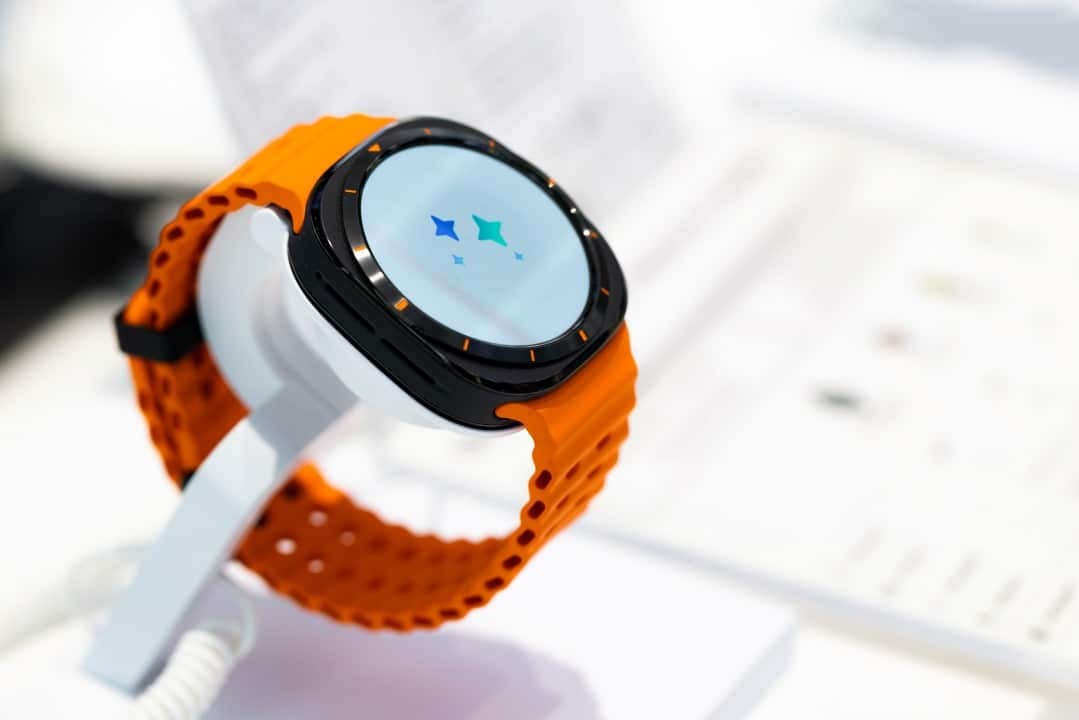
The South Korean manufacturer’s next generation of smart watches has just taken a decisive step towards reaching stores. Recent documents from the Chinese regulatory body registered the unreleased Galaxy Watch 9 and Galaxy Watch Ultra 2 under the codes SM-L3550 and SM-L7150. Official files confirm that the company chose not to innovate in energy transfer speed, maintaining the limit of 10W, using the same 5V/2A specification already seen in previous lines.
The 3C seal functions as a legal requirement for any electronic equipment sold in China, focusing mainly on electrical safety guidelines. Although approval is an excellent barometer for confirming the existence of products, the data frustrates consumers who were waiting for a technological leap in the time needed to fill the wearables’ batteries.
Registration with an Asian body points to an imminent announcement of the new watches
The appearance of these devices in the government database shows that the project has already surpassed the prototype phase and is ready for mass production. Technology market analysts monitor these approvals to predict the brands’ calendar, and current expectations revolve around the manufacturer’s next event. Industry sources suggest that the global conference will take place on July 22, the traditional stage for the company’s big revelations.
- Standard model technically identified by the number SM-L3550.
- More robust version cataloged with the acronym SM-L7150.
- Recharge power stagnant at the 10W mark for the whole family.
- Energy capacity of 435 mAh planned for the 44 mm edition.
- Power tank expanded to 784 mAh in the premium variant.
It is worth noting that the exact milliampere-hour specifications arise from the crossing of recent rumors with the homologation records, and may undergo slight changes in the final version. However, stagnation in the electrical supply system is a definitive fact and confirmed by laboratory tests.
Thermal engineering challenges force maintenance of recharge speed
Wrist devices have an extremely compact format, which makes it difficult to dissipate the heat generated during fast power supply processes. Raising the voltage would require a complete restructuring of the internal components to eliminate the risk of overheating in the user’s arm. Faced with this physical scenario, the engineers preferred to guarantee the integrity of the hardware and the safety of the customer, giving up competing for speed records at the outlet.
The conservative strategy repeats the formula adopted in the previous generation. While direct competitors, such as the Apple Watch Series 9, can reach 80% charge in around 45 minutes with their fast chargers, the South Korean giant prefers to direct its research efforts to other areas. The real appeal of the new models must be the more accurate biometric sensors and more fluid communication with the brand’s smartphones.
The brand’s next conference will bring a complete portfolio of mobile devices
The festival scheduled for the middle of the year promises to be busy, sharing the smartwatch spotlight with the long-awaited line of foldable cell phones, which will include the Galaxy Z Fold 8 and the Z Flip 8. There are also strong indications about the unveiling of the company’s unprecedented mixed reality glasses. Passing through the Chinese regulatory agency only involves one bureaucratic step, leaving the mysteries about prices and exclusive software features to the official transmission.
Experts estimate that the manufacturer has found a ceiling for innovation in external design, now focusing on specific usability refinements. The Ultra 2 edition illustrates this phase well, promising more impact-resistant materials and a real gain in autonomy away from the socket, driven exclusively by the larger size of the battery, as energy input will continue to be slow. The real acid test will come when the first buyers put the devices into intense use.
Legal approval paves the way for products to reach retail
The recent stamp from Asian authorities acts as an accelerator for the start of commercial distribution, which usually occurs weeks after the presentation event. The company’s track record shows that Asia and North America receive initial batches almost immediately. For the Brazilian public, the launch window suggests that national shelves will begin to display the new products in the third quarter of the year.
In everyday use, maintaining the 10W rate does not make the basic experience unfeasible, even allowing the reuse of magnetic bases from past generations. However, consumers who have hectic routines and depend on recharging just a few minutes before leaving home will need to adapt their habits. Anyone who considers ultra-fast charging a non-negotiable factor will have to explore options from other manufacturers or wait for a chemical revolution in the batteries of the future.





