
Research shows that capuchin monkeys from Serra da Capivara have used tools for millennia


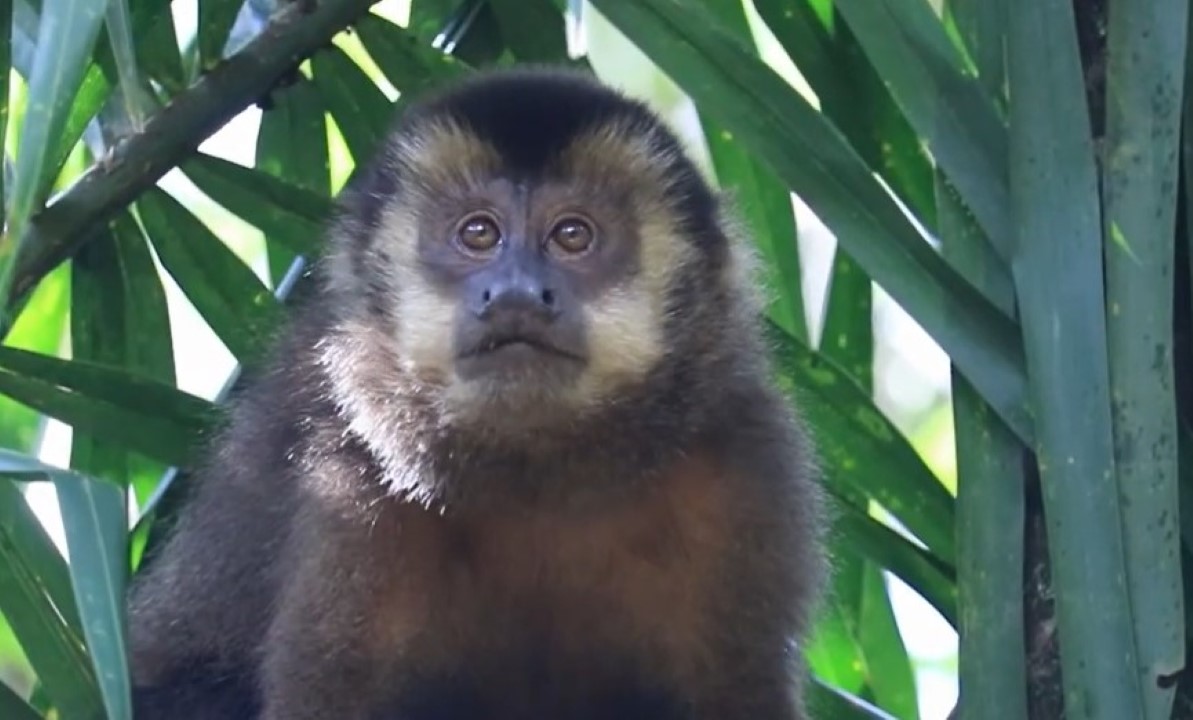
Recent research released by the Neotropical Primates Research Group (NeoPReGo) reveals that capuchin monkeys in the Serra da Capivara National Park, located in the south of Piauí, exhibit the widest range of tool use ever recorded among primates of the same species. This remarkable diversity stands out as a crucial point in understanding animal intelligence.
As Tiago Falótica, one of the founders of NeoPReGo, explains, these primates use stones and rods to reach food, obtain water and other resources. Their repertoire of tools is so complex that it compares to the variety seen in chimpanzees, known for their skill in using instruments.
“The capuchin monkeys of Serra da Capivara are fascinating, as they have the greatest diversity of tool use ever identified,” said biologist and primatologist Tiago Falótica. He added that, while other populations of the species may not use tools or only use one type, the animals of Serra da Capivara stand out for their surprising ability.
The study of these capuchin monkeys in the Serra da Capivara National Park began in 2004. Falótico began direct monitoring of the population in 2007 and continues investigations with the primates to this day.
Diversity of tools and unique behaviors of capuchin monkeys
Researchers observed that monkeys use stones for tasks such as breaking coconuts, digging in the earth for potatoes, roots and trapdoor spiders. Sticks are used to probe burrows, scare away lizards, bumblebees, spiders and rodents, and also to extract water accumulated in tree trunks.
Although similar behaviors have been seen in capuchin monkeys from the Ubajara National Park, in Ceará, the Serra da Capivara population demonstrates practices that are considered exclusive. Among them are the throwing of stones in sexual displays, the fragmentation of small rocks and the use of sticks to collect honey.
A notable detail is that the sticks are made and adapted by the monkeys themselves. This type of tool is predominantly used by the males of the group.
How capuchin monkeys learn and pass on tool use
Monkeys acquire the use of tools through trial and error, where they manipulate objects until they discover their functionality. Additionally, there is social learning, where animals observe and imitate the behaviors of other members of the group.
This method makes it possible to transmit these skills between generations, ensuring the permanence of certain practices within groups and consolidating a true culture of using instruments.
Archaeological research also suggests that capuchin monkeys have used tools in Serra da Capivara for a period of at least 3 thousand years. Materials produced by these animals have been discovered, such as stone chips that resemble those created by humans in prehistoric sites.
Population and the impact of the presence of visitors in the park
The exact size of the capuchin monkey population in the park remains uncertain. However, scientists estimate that the site is home to at least one hundred groups of these primates.
The presence of tourists can alter the animals’ behavior. Tiago Falótica observes that some groups have already become accustomed to human proximity, but a large flow of visitors tends to scare them away.
For this reason, visitors are given clear instructions not to feed or interact directly with the monkeys. Although photographing and observing is permitted, such activities must be carried out silently and maintaining a safe distance.
The importance of cultural protection for capuchin monkeys
The main threats to the population include the fragmentation of connection areas between groups, resulting from the expansion of real estate occupation near the park, and the invasion of domestic animals such as dogs, cats and pigs.
Given the uniqueness of certain practices, which are exclusive to the capuchin monkeys of Serra da Capivara and may be restricted to a single group, the loss of individuals may result in the disappearance of this cultural knowledge.
For the researcher, the distinction of these capuchin monkeys elevated Serra da Capivara to the status of a vital center for studies on the evolution of tool use and animal intelligence.
“Diversity of behavior represents a dimension that has been gradually incorporated into discussions about biodiversity conservation”, stated Falótica. He added that, in addition to protecting species, certain restricted behavioral cultures also require additional safeguards.





