
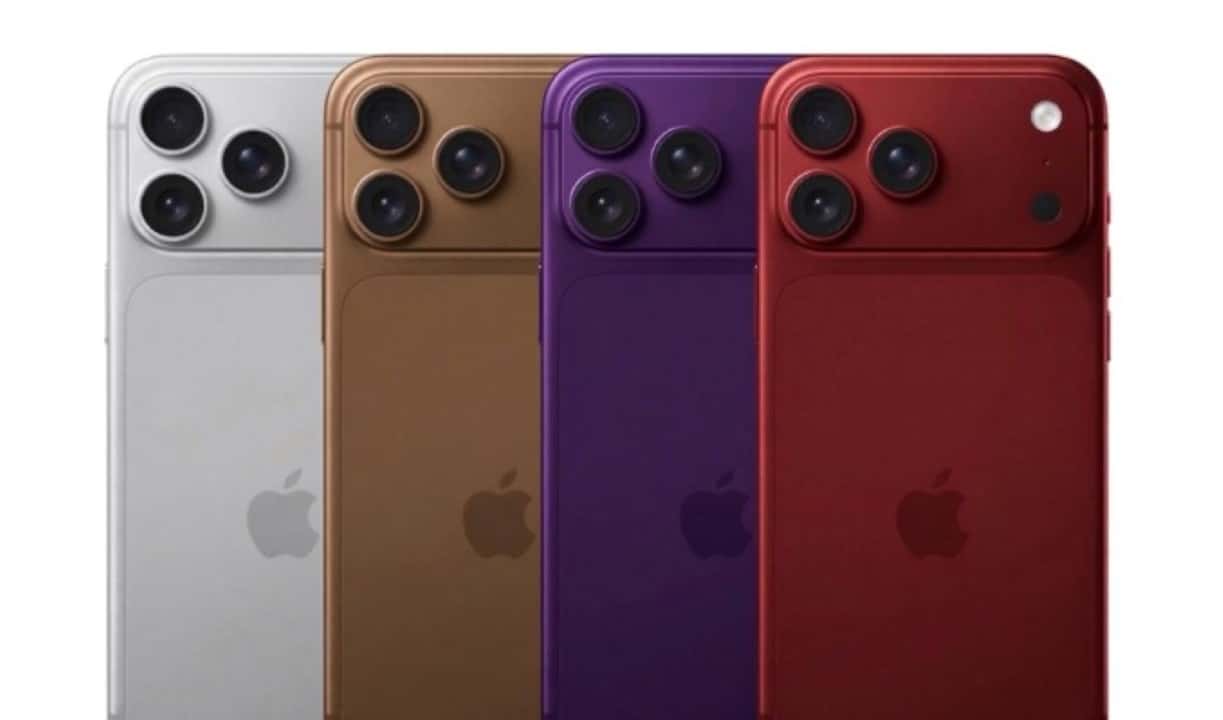
The launch of Apple’s next iPhone in 2026 signals a possible break with a pattern established by the company: scheduling pre-sales exclusively on Fridays.
The company had already confirmed an event for September 9, which will be held at the Steve Jobs Theater, with the iPhone 18 Pro, the iPhone 18 Pro Max and the expected foldable iPhone among the highlights. Although Apple has not yet released pre-sale dates, information reports that reservations for the Pro models could begin on September 12, a Saturday.
This decision to bring the date forward to an unconventional day would serve to divert from September 11th, which will fall on the Friday shortly after the official event, and could also establish a different launch schedule for Apple’s first foldable iPhone.
Apple has a history of scheduling adjustments, having made a similar change in the past. The iPhone 6s and iPhone 6s Plus models began their pre-sales on Saturday, September 12, 2015. The launch time reported at the time also deviated from the standard, starting at midnight (Pacific time) on September 12, instead of the traditional start at 5 am (Pacific time).
00:00
00:00
The foldable iPhone may have a different launch schedule
The expectation is that this launch will formalize Apple’s arrival in the foldable smartphone segment. Abundant rumors indicate that the device will be called iPhone Ultra, with projections of an external screen of around 5.5 inches and an internal screen of 7.8 inches, as pointed out by previous reports.
However, consumers may not have access to the foldable model at the same time as the Pro models. Several reports suggest that pre-orders for the foldable may be delayed until the end of September, possibly due to limitations in the production line. This situation places the foldable device as the main uncertainty in Apple’s launch planning for the year 2026.
Other iPhone 18 models may be launched at another time
Apple’s strategy may include dividing the iPhone line into two distinct launch phases.
Previous information indicated that the standard iPhone 18, iPhone 18e and a second-generation iPhone Air may not hit the market until spring 2027. Such an approach would allocate the month of September exclusively to Apple’s higher-cost iPhones, rather than making the entire range of models available simultaneously, which would represent a considerable change in the company’s recent strategy.
What are the expectations for the new iPhones
Rumors indicate that the iPhone 18 Pro models will feature a more compact Dynamic Island, improvements to camera technology, and Apple’s new A20 Pro chip, which can be produced using TSMC’s 2-nanometer process. In addition, the iPhone 18 Pro Max may have a main camera with variable aperture.
Industry experts estimate that the iPhone 18 Pro and Pro Max models could suffer price increases in the range of US$100 to US$300. This would be a reflection of the increase in memory costs and manufacturing expenses for the 2 nm processor. The folding model, in turn, may have an even higher cost, with projections ranging between US$2,000 and US$2,500.
Implications for those who want to purchase a new device
The peculiarity of this release schedule makes patience an even more crucial factor for consumers. Anyone thinking about purchasing a new iPhone this year should wait for Apple’s presentation on September 9th before making any decision, especially as the more affordable versions of the iPhone 18 may only be available from 2027.
Choosing to purchase new devices at launch could guarantee access to Apple’s cutting-edge technology more quickly, but possibly at a considerably higher cost. On the other hand, waiting may present more economical options, although only a few months from now. So far, September 9 is the only officially confirmed date, with the rest of the schedule still subject to speculation and possible surprises from Apple.