
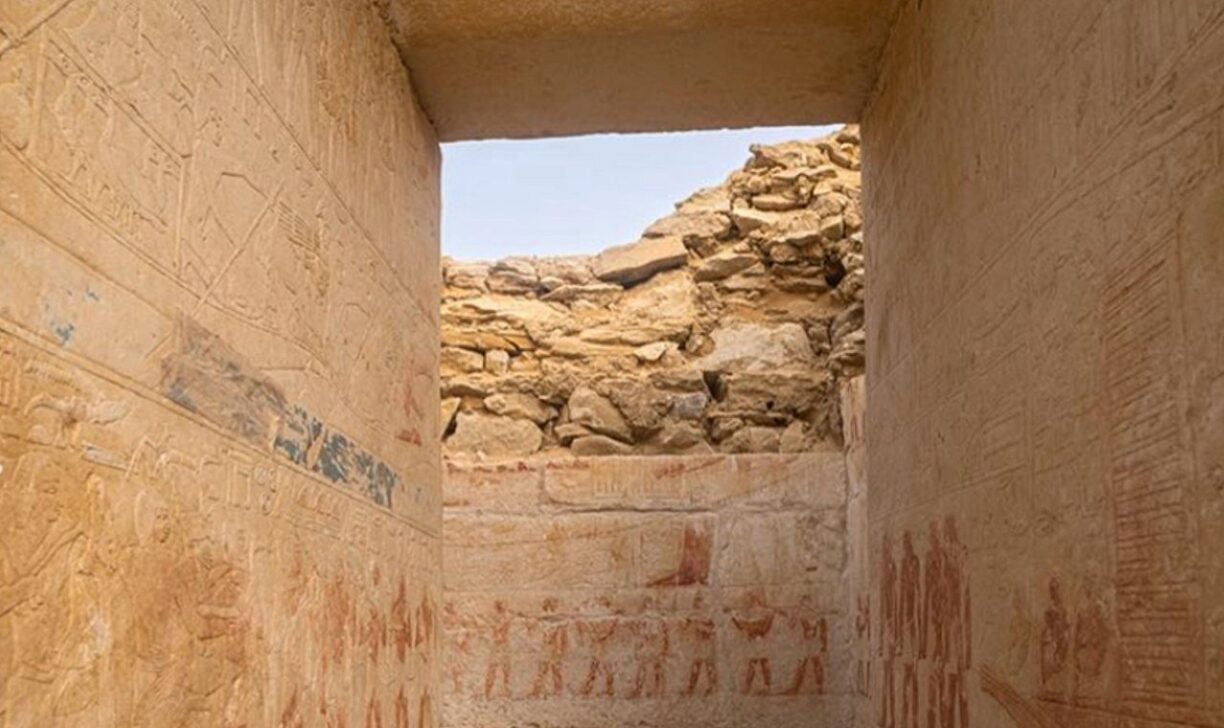
A joint archaeological mission directed by Josep Cervelló uncovered a decorated Old Kingdom tomb dating between 2494 BC and 2345 BC in the Saqqara necropolis, located southwest of Cairo, on September 8, 2026. The team described the burial site from the late Fifth Dynasty as striking and beautiful.
Excavations conducted by the Autonomous University of Barcelona and Egypt’s Supreme Council of Antiquities revealed an exceptional mastaba containing two funerary chapels built for Yunmen, a high-ranking official serving Pharaoh Djedkare Isesi, who arranged for his father, a lower-ranking official named Iti, to share the burial space.
Egypt’s Ministry of Tourism and Antiquities confirmed that the tomb sits in the Mariette necropolis north of Saqqara. The ministry verified that the structure belongs to the period ruled by Djedkare Isesi. Official statements noted two funerary chapels dedicated to Younmin and his father, Ity.
Researchers from the Autonomous University of Barcelona stated that the site identifies individuals of historical and cultural significance. The monument surprised the researchers.
Carved stone reliefs depicting agricultural tasks and offering processions retained their original paint alongside a decorated architrave bearing customized funerary texts.
Wall illustrations across the chambers include drawings of donkeys and additional animals. Government representatives reported that the complex provides fresh evidence regarding art, administration and architecture during the Fifth Dynasty.
Research in Saqqara documents daily routines across the necropolis
Specialists consider the dual tomb evidence of Yunmen advancing from provincial origins to a central government role while sharing his resting place with his father.
Auguste Mariette first investigated the sector during the 19th century without producing detailed documentation. Current field projects analyze the physical landscape to evaluate the site as an active workspace. Ancient laborers continuously constructed monuments and delivered offerings across the grounds.
Mapping urban layouts helps specialists trace pedestrian paths, open squares and ceremonial spaces. Archaeological teams identified signals pointing to two additional unexcavated tombs located near the newly recorded mastaba.