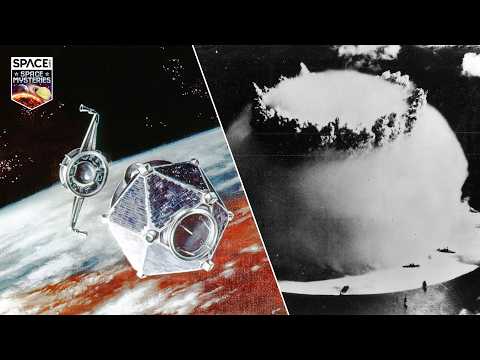
American satellite detects secret nuclear test from 1979

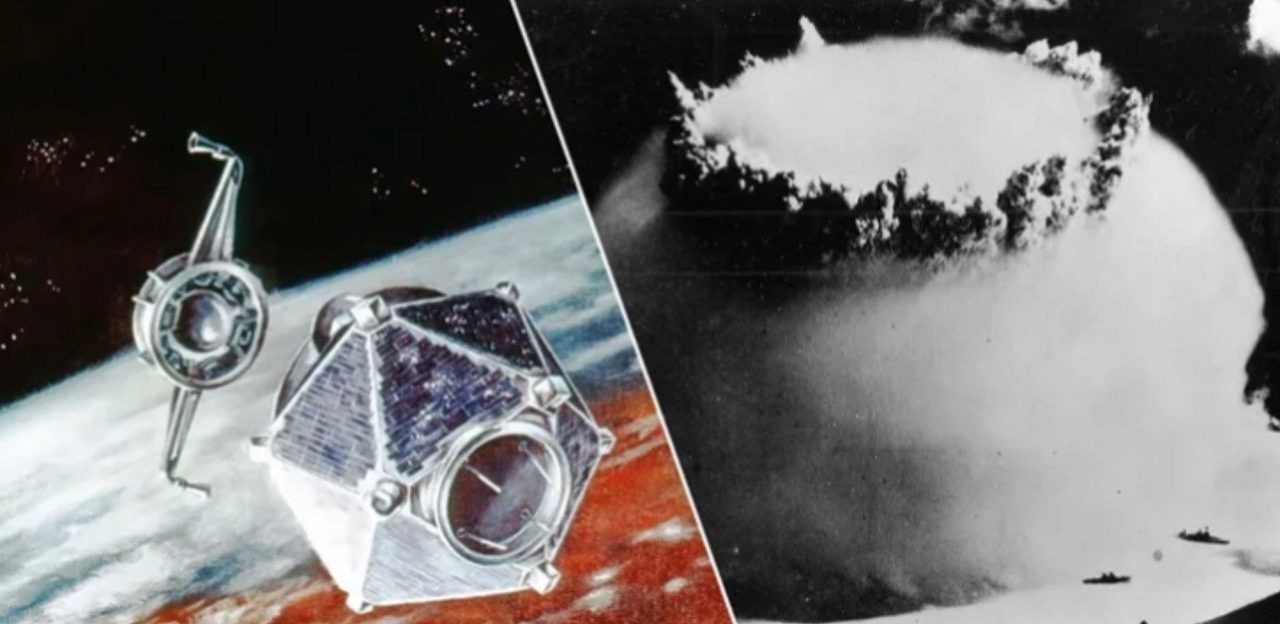
An American surveillance satellite detected an unexplained light flash off the coast of South Africa on 22 September 1979, prompting decades of government debate over an illicit atmospheric nuclear test.
The event began when Vela 6911, an orbital sensor unit built by the United States to spot atomic detonations, registered the sudden optical burst over the South Atlantic Ocean. Government officials immediately sounded internal alarms regarding the unexplained signal.
Vela sensors recorded a distinctive double flash produced by variations in the brightness of a nuclear fireball and its subsequent atmospheric shock wave, matching the exact optical signature that the American orbital platform was engineered to identify.
White House records revealed immediate alert over suspected detonation
President Jimmy Carter documented the crisis in his personal diaries. On 22 September 1979, Carter wrote that ‘There was indication of a nuclear explosion in the region of South Africa.’ A subsequent entry recorded in February 1980 stated that ‘We have a growing belief among our scientists that the Israelis did indeed conduct a nuclear test explosion in the ocean near the southern end of Africa.’
A scientific review committee convened in 1980 under Massachusetts Institute of Technology professor Jack Ruina disputed the explosion theory, determining instead that a small meteoroid impact on the spacecraft likely produced the sensor anomaly.
The Ruina committee did not eliminate an atomic detonation from technical consideration. Its meteoroid finding sparked sharp dispute across United States intelligence agencies.
Declassified records and intelligence personnel challenged natural anomaly theory
Declassified government files released around the turn of the 21st century exposed deep divisions among United States intelligence agencies regarding the origin of the signal.
Defense Intelligence Agency Vice Director Jack Varona rejected the meteoroid explanation. Records released in 2006 documented that Varona labeled the 1980 scientific findings a politically motivated ‘whitewash.’ He cited Naval Research Laboratory data that captured signatures ‘unique to nuclear shots in a maritime environment.’
Stansfield Turner echoed that assessment. Turner, who directed the Central Intelligence Agency under the Carter administration, described the incident in 2003 as a ‘man-made phenomenon.’
Retired intelligence officer Tyler Drumheller stated in 2006 that confidential informants ‘collectively provided incontrovertible evidence that the [South African] apartheid government had in fact tested a nuclear bomb in the South Atlantic in 1979, and that they had developed a delivery system with assistance from the Israelis.’
Modern research points toward an artificial blast
Independent researchers reexamined the sensor readings over the past decade to evaluate the mechanical blast claims. Their technical assessments provided additional backing for a military detonation.
Researchers Christopher Wright and Lars-Erik De Geer published an analysis in 2017 incorporating updated findings on hypervelocity space dust impacts alongside declassified records and overlooked public data.
Wright and De Geer affirmed that the Ruina panel failed to produce a workable physical model for its meteoroid collision hypothesis, concluding that the 1979 optical pulse was ‘consistent with a nuclear explosion, albeit detected by an aged satellite for which background modulation was abnormal and/or commenced earlier’ while citing supplementary hydroacoustic and radionuclide signals confirming ‘that the Vela Incident was a nuclear weapon test explosion.’ Their work questioned the core technical assumptions of the earlier White House findings.
A separate technical investigation in 2022 analyzed measurements gathered by the Nimbus-7 spacecraft of NASA exactly 16 minutes and 44 seconds after the South Atlantic flash, detecting an ionospheric perturbation consistent with an explosion shock wave.
Original members of the 1980 committee rejected the revised findings. Physicist Richard Mueller stated during an oral history conference in November 2019 that the mathematical probability of an atomic blast remained ‘as close to zero as it gets.’
Mueller maintained that stance despite acknowledging that many original panelists initially suspected an atomic detonation, drawing direct opposition from Wright and De Geer during the November 2019 conference.
Investigators continue to evaluate which foreign governments could have organized such an oceanic test. Debate over responsibility remains unresolved.
Diplomatic scrutiny has focused on potential covert military collaboration between South Africa and Israel, though critical sections of declassified United States government records regarding the incident remain fully blacked out.
Unredacted files released by United States agencies and recent atmospheric models indicate that the 1979 flash off South Africa was not a natural occurrence. The underlying intelligence files remain classified four decades later.