
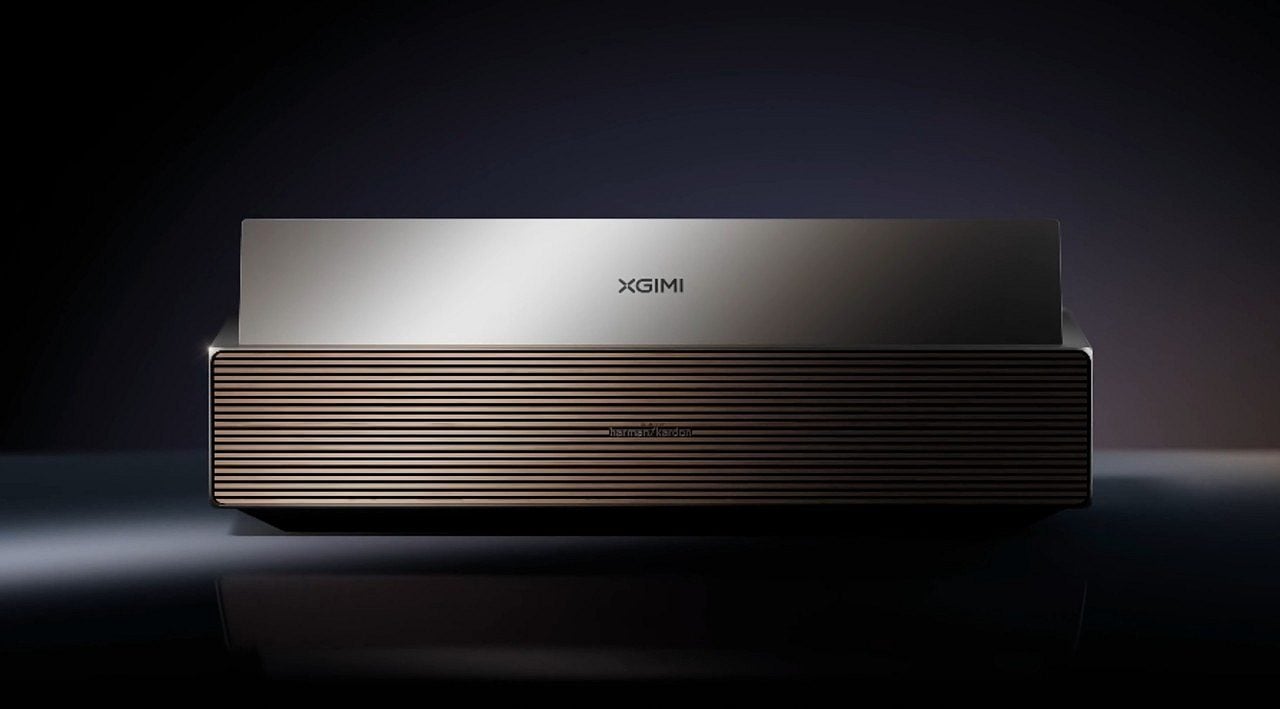
Hardware manufacturer XGIMI introduced its new AURA 3 projector series on October 20 with native support for 4K gaming at 120 Hz. The equipment delivers high refresh rates aimed at modern gaming platforms.
Ultra-short throw optics allow the unit to beam display sizes reaching 200 inches when sitting directly against a wall, positioning the equipment as an alternative to traditional television screens.
Lighting control mechanisms and optical output in the Max edition
The premium AURA 3 Max flagship delivers 5,700 ISO lumens of brightness to handle illuminated rooms. Native contrast on this top-tier configuration reaches 8,000:1.
XGIMI installed a Dynamic Dual Iris mechanism that regulates light output through two physical apertures that open and close based on real-time screen content.
The Dynamic Black Enhancement system scales the overall contrast ratio by up to tenfold while working alongside a triple RGB laser unit that reaches 110 percent coverage of the BT.2020 color gamut through real-time processing handled by the dedicated X-VISION chip. Calibration routines maintain optical balance across contrasting scenes.
Internal processing architecture and input connectivity for gaming consoles
Dual DLP drive controllers work in parallel inside the chassis to deliver native variable refresh rate, auto low latency mode, and Dolby Vision Gaming decoding.
Three HDMI ports equip the rear panel, dedicating two inputs to 4K signals at 120 Hz. The third connection provides an enhanced audio return channel through eARC.
Network connectivity relies on a physical Gigabit Ethernet jack located alongside the video inputs.
Input lag measurements and rivalry across living room display brands
Latency drops to one millisecond when the projection system renders games in 1080p at 240 Hz. Internal testing confirms stable frame delivery under these high-speed video conditions.
XGIMI targets competitive esports players.
Competing manufacturers AWOL Vision and JMGO market rival laser projectors with comparable ultra-short throw specifications. Both brands target consumers looking to replace conventional living room panels.
Market competition centers on displacing large-format LCD and OLED televisions inside family living rooms.
Throw ratio geometry and hardware variance in the Pro version
A throw ratio of 0.163:1 projects a 120-inch diagonal surface from a distance of 20.3 centimeters from the wall. This optical geometry eliminates clearance issues on standard home furniture.
The secondary Aura 3 Pro variant adjusts hardware capabilities downward, delivering 4,100 ISO lumens and a fixed 7,000:1 contrast ratio.
- Integrated Google TV operating platform
- Native 3D video playback with two pairs of included glasses
- Harman Kardon sound system delivering 80 W with Dolby Atmos support
- Automated focus adjustments paired with trapezoidal keystone correction
- Solid-state laser light source rated for 20,000 hours of operation
Crowdfunding reservation terms and customer deposit structures
Commercial rollout for the projector series runs through a crowdfunding campaign hosted on Kickstarter. Backers access early production allocations through that public page.
Early reservations require a deposit of 50 dollars.
The company converts that initial down payment into an equivalent credit applied to the final purchase invoice. Deliveries start after the funding window concludes.