
Harvard University astrophysicist Avi Loeb presented a blueprint for long-term interstellar exploration and rigorous scientific analysis of aerial phenomena during the Texas Tribune Festival 2026 in Austin, Texas. Addressing an audience at Bethell Hall in St. David’s Episcopal Church on Saturday, September 26, 2026, Loeb called for humanity to invest heavily in deep-space survivability rather than relying solely on planetary colonization.
Loeb participated in the panel titled “Space: The Final Frontier”, sharing the stage with Ars Technica senior space editor Eric Berger in an hour-long exchange moderated by Matt Ewalt, senior director of events and live journalism at The Texas Tribune. The session focused on the divergent commercial, military, and academic approaches currently driving space exploration across the United States.
Interstellar platforms require 1 trillion dollars annually, Loeb argues
Loeb proposed that humanity must transition from short-range exploration toward interstellar travel by developing self-replicating artificial intelligence robots and massive orbital habitats. The astrophysicist argued that neither the Moon nor Mars provides a sustainable long-term alternative to Earth due to their hostile surface environments, necessitating artificial platforms capable of traversing interstellar space over multiple generations.
Check out: Sean Combs allegedly pays inmates for services and contraband inside FCI Fort Dix
To achieve this capability by the end of the 21st century, Loeb estimated that an annual global investment of US$ 1 trillion would be required, an expenditure comparable to the current annual defense budget of the United States. Under this framework, conceptualized by Loeb as “Noah’s Spaceship”, large-scale space platforms designed to accommodate humans or autonomous technological avatars would serve as an insurance policy against existential planetary catastrophes, ensuring the continuity of the species outside the solar system.
Eric Berger approached the panel from an institutional and commercial standpoint, drawing on his experience covering private launch systems and industrial aerospace developments. Loeb counterbalanced this perspective with an argument for high-risk, curiosity-driven initiatives, warning that relying entirely on market forces risks neglecting the basic research needed for deep-space survival.
Funding fundamental science outpaces commercial technology, says Avi Loeb
During the debate, Loeb addressed the financial disparity between commercial technological applications and fundamental scientific inquiry. Loeb criticized the modern tendency of technology investors to pour capital into applied software and quantum computing while neglecting the basic physical research that made those technologies possible in the first place.
Loeb pointed out that the 20th-century physicists who discovered quantum mechanics and solid-state physics earned fractions of the fortunes generated by modern semiconductor and computing executives. Loeb stated: “This means that we should not only water the branches of the tree of knowledge with the unrealistic hope that it will continue to blossom. Instead, we should water its roots of fundamental science.” He noted that while private enterprise focuses on immediate financial returns, government and philanthropic institutions must continue supporting foundational discovery that does not have an immediate commercial application.
The Harvard professor also asserted that academic scientists have an institutional duty to pursue topics that capture public attention and serve national interests, rather than isolating themselves in purely theoretical calculations. Loeb criticized branches of theoretical physics that spend decades exploring complex mathematical models in multidimensional spacetime without empirical validation, urging the community to address observable anomalies.
Follow: Human genome stability in simulated zero gravity opens path for space medicine
Pentagon records and UAP research reshape scientific debate
The panel in Austin took place alongside national developments regarding government transparency on aerospace phenomena. At 07:00 EDT on Saturday, September 26, 2026, the magazine POLITICO published an investigative report by journalist Ilan Greenberg detailing the work of the UAP Science Advisory Council, an organization led by Loeb to analyze data on Unidentified Anomalous Phenomena alongside deliberations by United States intelligence agencies.
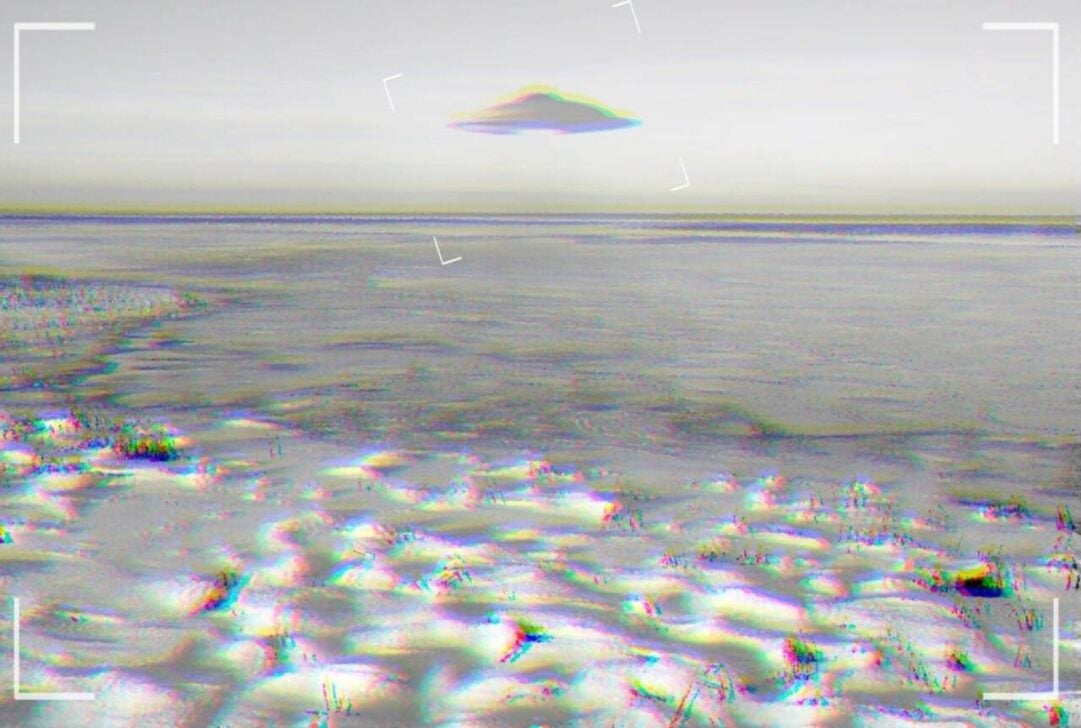
Loeb argued in Austin that the official acknowledgment of anomalous aerial objects by defense officials makes empirical research into the subject an urgent priority for civilian science. By dedicating instrumented observation to unexplained events, Loeb maintained that researchers can assist defense institutions while fulfilling a basic scientific obligation to determine whether technological signatures exist outside Earth.
Emphasizing the nonpartisan nature of the investigation, Loeb noted that understanding these phenomena represents a collective question for humanity rather than an ideological issue. Loeb stated: “UAP research transcends politics and holds the potential to replace international relations with interplanetary relations.”
Austin gathering connects Harvard scientist with Texas officials
The Texas Tribune Festival 2026 took place in downtown Austin from Thursday, September 24, to Saturday, September 26, 2026, bringing together political figures, journalists, and scientists across more than 100 panels and interviews. Outside the auditorium sessions, Loeb held discussions with regional leaders regarding the integration of technology, public governance, and independent research.
At the official festival dinner, Loeb met with San Antonio Mayor Gina Ortiz Jones, who took office as mayor in June 2025 following her tenure as Under Secretary of the United States Air Force. Loeb also met with Sarah Adler Hartman, who assumed the role of chief executive officer at The Texas Tribune in late 2025 after working as a product director, and Dr. Craig Cummings, co-founder of venture capital firm Moonshots Capital and former National Security Agency intelligence officer.
Read also: James Webb Little Red Dots are overfed supermassive black holes
- Event: Texas Tribune Festival 2026
- Location: Bethell Hall, St. David’s Episcopal Church, Austin, Texas
- Panel duration: 1 hour of debate followed by audience questions
- Dates of the festival: Thursday, September 24, to Saturday, September 26, 2026
- Estimated cost of proposed interstellar platform: US$ 1 trillion annually