
The London Palladium Theatre in England hosts the 70th edition of the Ballon d’Or on Monday (26), marking the first time in history that the prestigious football gala takes place outside France. Co-organised by UEFA and France Football, the ceremony moves away from its traditional home at the Théâtre du Châtelet in Paris to celebrate the 70th anniversary of the trophy. The relocation to the British capital pays direct tribute to former English winger Stanley Matthews, who played for Blackpool and claimed the inaugural award in 1956.
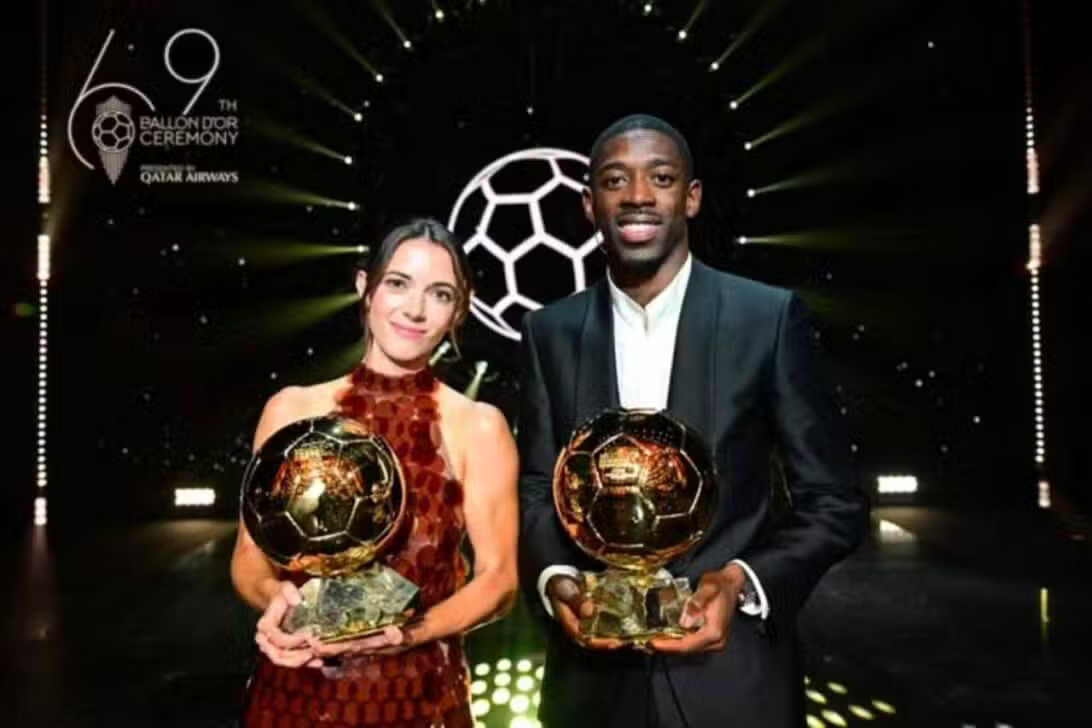
The official winners of the 2026 trophies are revealed during the evening gala on October 26, 2026, which starts at 8:00 p.m. GMT following the red carpet arrivals and the preliminary countdown from 30th to 11th place. In the 2025 edition, French forward Ousmane Dembélé, of Paris Saint-Germain, captured the men’s trophy and lifted France into a tie with Argentina atop the all-time ranking of nations with eight titles each, while Spanish midfielder Aitana Bonmatí secured the top women’s prize.

Broadcast details, voting rules and Brazilian contenders in London
Voting for the 2026 Ballon d’Or evaluates player performances between August 3, 2025, and July 19, 2026, with 30 finalists competing for the main men’s trophy. An international jury of 100 specialist journalists from the top 100 nations in the FIFA rankings decides the men’s award, while 50 journalists vote in the women’s category. Former French striker Thierry Henry and British broadcaster Kate Scott host the ceremony, which streams live and free of charge to viewers in Brazil and worldwide via the DAZN platform.
Brazilian football features three representatives on the 30-man shortlist for best player in the world: Real Madrid forward Vinicius Júnior, Paris Saint-Germain defender Marquinhos, and Arsenal defender Gabriel Magalhães. In the early rankings announced prior to the main stage gala, Vinicius Júnior placed 17th, Gabriel Magalhães finished 21st, and Marquinhos came in 25th. In the women’s categories, goalkeeper Lorena, who plays for the Kansas City Current in the United States, competes simultaneously for both the Women’s Ballon d’Or and the Yashin Trophy for best goalkeeper, while Rio de Janeiro club Flamengo represents Brazil in the Men’s Club of the Year ballot.
All-time records by players and nations in the trophy’s history
Argentine forward Lionel Messi, who plays for Inter Miami in Major League Soccer and returns to the 30-player shortlist in 2026, holds the record as the most decorated footballer in Ballon d’Or history. Messi won all eight of Argentina’s trophies on his own. Right behind Argentina and France on the leaderboard by country sit Germany, the Netherlands, and Portugal, which share second place with seven awards apiece, followed by Brazil with five trophies won by four different players between 1997 and 2007.
Portuguese striker Cristiano Ronaldo has collected five career Ballon d’Or titles (2008, 2013, 2014, 2016, and 2017) and shares with Lionel Messi the distinction of being the last footballers to win the award in back-to-back editions. Although forwards and attacking midfielders have historically dominated the ballot, defensive players have captured the top individual prize on two occasions: Soviet goalkeeper Lev Yashin, of Dynamo Moscow, who remains the only netminder ever to win the trophy, in 1963, and Italian centre-back Fabio Cannavaro, of Real Madrid, honoured in 2006.
Year-by-year roll of honour from 1956 to 2025
Across seven decades of the award, only the 2020 edition did not crown a champion due to the global disruption of the football calendar. The complete chronological list of Ballon d’Or winners by year, nationality, and club is detailed below:
- 1956: Stanley Matthews (England) – Blackpool
- 1957: Alfredo Di Stéfano (Spain) – Real Madrid
- 1958: Raymond Kopa (France) – Real Madrid
- 1959: Alfredo Di Stéfano (Spain) – Real Madrid
- 1960: Luis Suárez (Spain) – Barcelona
- 1961: Omar Sívori (Italy) – Juventus
- 1962: Josef Masopust (Czechoslovakia) – Dukla Prague
- 1963: Lev Yashin (Soviet Union) – Dynamo Moscow
- 1964: Denis Law (Scotland) – Manchester United
- 1965: Eusébio (Portugal) – Benfica
- 1966: Bobby Charlton (England) – Manchester United
- 1967: Flórián Albert (Hungary) – Ferencváros
- 1968: George Best (Northern Ireland) – Manchester United
- 1969: Gianni Rivera (Italy) – Milan
- 1970: Gerd Müller (Germany) – Bayern Munich
- 1971: Johan Cruyff (Netherlands) – Ajax
- 1972: Franz Beckenbauer (Germany) – Bayern Munich
- 1973 and 1974: Johan Cruyff (Netherlands) – Barcelona
- 1975: Oleg Blokhin (Soviet Union / Ukraine) – Dynamo Kyiv
- 1976: Franz Beckenbauer (Germany) – Bayern Munich
- 1977: Allan Simonsen (Denmark) – Borussia Mönchengladbach
- 1978 and 1979: Kevin Keegan (England) – Hamburger SV
- 1980 and 1981: Karl-Heinz Rummenigge (Germany) – Bayern Munich
- 1982: Paolo Rossi (Italy) – Juventus
- 1983, 1984 and 1985: Michel Platini (France) – Juventus
- 1986: Igor Belanov (Soviet Union / Ukraine) – Dynamo Kyiv
- 1987: Ruud Gullit (Netherlands) – Milan
- 1988 and 1989: Marco van Basten (Netherlands) – Milan
- 1990: Lothar Matthäus (Germany) – Inter Milan
- 1991: Jean-Pierre Papin (France) – Olympique de Marseille
- 1992: Marco van Basten (Netherlands) – Milan
- 1993: Roberto Baggio (Italy) – Juventus
- 1994: Hristo Stoichkov (Bulgaria) – Barcelona
- 1995: George Weah (Liberia) – Milan
- 1996: Matthias Sammer (Germany) – Borussia Dortmund
- 1997: Ronaldo (Brazil) – Inter Milan
- 1998: Zinedine Zidane (France) – Juventus
- 1999: Rivaldo (Brazil) – Barcelona
- 2000: Luís Figo (Portugal) – Real Madrid
- 2001: Michael Owen (England) – Liverpool
- 2002: Ronaldo (Brazil) – Real Madrid
- 2003: Pavel Nedvěd (Czech Republic) – Juventus
- 2004: Andriy Shevchenko (Ukraine) – Milan
- 2005: Ronaldinho Gaúcho (Brazil) – Barcelona
- 2006: Fabio Cannavaro (Italy) – Real Madrid
- 2007: Kaká (Brazil) – Milan
- 2008: Cristiano Ronaldo (Portugal) – Manchester United
- 2009, 2010, 2011 and 2012: Lionel Messi (Argentina) – Barcelona
- 2013 and 2014: Cristiano Ronaldo (Portugal) – Real Madrid
- 2015: Lionel Messi (Argentina) – Barcelona
- 2016 and 2017: Cristiano Ronaldo (Portugal) – Real Madrid
- 2018: Luka Modrić (Croatia) – Real Madrid
- 2019: Lionel Messi (Argentina) – Barcelona
- 2020: No award presented
- 2021: Lionel Messi (Argentina) – Paris Saint-Germain
- 2022: Karim Benzema (France) – Real Madrid
- 2023: Lionel Messi (Argentina) – Inter Miami
- 2024: Rodri (Spain) – Manchester City
- 2025: Ousmane Dembélé (France) – Paris Saint-Germain