WSL: Gabriel Medina calls for surfer unity after controversial elimination of João Chianca in Tahiti
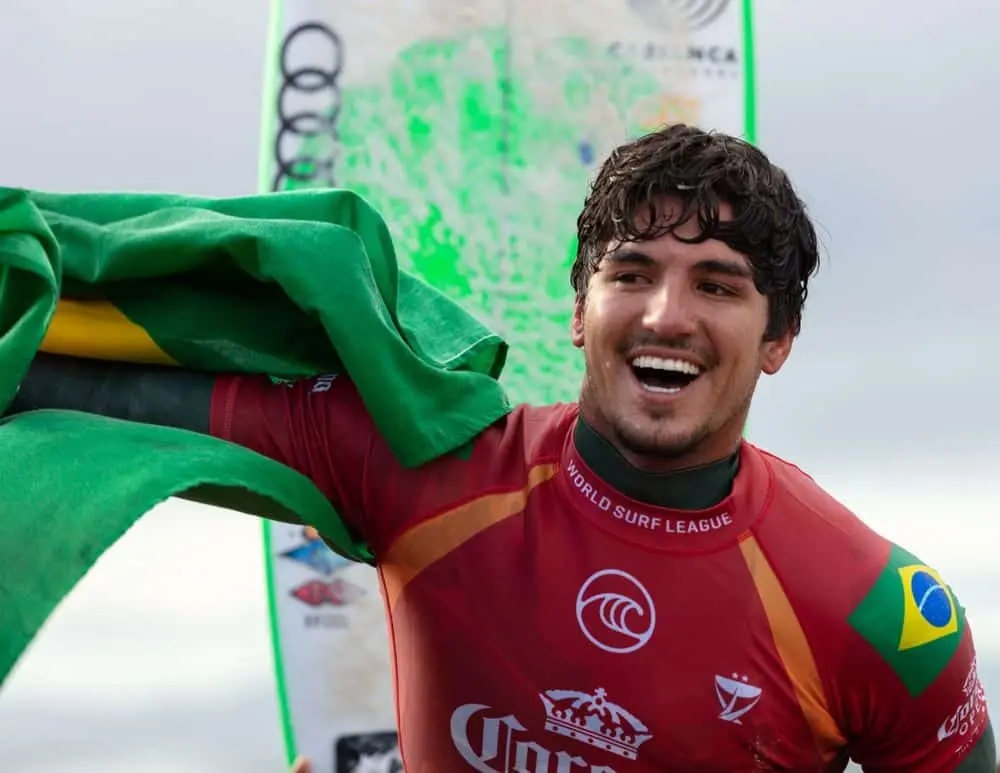
Gabriel Medina, three-time world surfing champion, called for greater unity among Brazilian surfers following the controversial elimination of João Chianca in the round of 16 at the Teahupoo stage in Tahiti on August 14, 2025. Chianca’s loss to American Griffin Colapinto by a mere 0.3-point margin prompted strong criticism from the Brazilian, who labeled the World Surf League (WSL) judging a “joke” on social media. The incident reignited discussions about the consistency of WSL evaluations, with Medina emphasizing the need for solidarity in the sport to address controversial decisions. The event, critical for WSL Finals qualification, exposed tensions between athletes and the organization, raising questions about transparency and judging criteria.
The controversy erupted when Chianca, known as Chumbinho, expressed his frustration with the WSL judges on social media. He stated he was pleased with his performance but deemed the judging decision unfair. The narrow 0.3-point gap intensified criticism, as Chianca believed his maneuvers warranted advancement. Medina, also competing in the event, leveraged his status as Brazil’s top surfer to call for athletes to unite in seeking dialogue with the WSL, suggesting that a lack of cohesion weakens their push for change.
- Elimination details: João Chianca lost to Griffin Colapinto by 0.3 points.
- Chumbinho’s reaction: He called the decision a “joke” in a social media post.
- Event context: Teahupoo is one of the most challenging stages in the world circuit.
- Ranking impact: The elimination jeopardized Chianca’s chances of qualifying for the WSL Finals.
The Tahiti incident is not isolated but reflects ongoing debates in professional surfing about the subjectivity of maneuver evaluations, particularly at high-performance waves like Teahupoo.
Brazilian surfers’ response
Chianca’s elimination sparked a wave of support from other Brazilian athletes. Figures like Filipe Toledo, also eliminated in Teahupoo, and Olympic champion Italo Ferreira expressed solidarity with Chumbinho on social media. Toledo highlighted the difficulty of competing in such demanding conditions and questioned the consistency of WSL criteria. He stressed that Brazilian surfers need to take a unified stance to ensure their voices are heard within the league.
Medina was particularly vocal on the issue. He argued that the lack of unity among surfers, especially during controversies, allows questionable decisions to go unchallenged. His call for action included a proposal for meetings between athletes and the WSL to discuss improvements in the scoring system. The three-time champion, who has faced similar controversies in his career, emphasized that Brazilian surfing has the influence to drive change but must act collectively.
- Toledo’s support: Filipe questioned the judges’ consistency in Teahupoo.
- Italo Ferreira: Advocated for dialogue with the WSL.
- Medina’s history: Previously criticized judging in events like 2023.
- Collective demand: Athletes seek greater transparency in evaluation criteria.
The mutual support among Brazilians strengthens Medina’s position but also highlights the challenge of achieving consensus in a sport where subjectivity is inherent to judging.
BORA CHUMBINHO!!! 🇧🇷🇧🇷
— WSL Brasil 🇧🇷 (@WSLBrasil) August 13, 2025
Fechando as oitavas contra Griffin Colapinto 🔥🔥
Assista: https://t.co/DT2YVTeLQl#WSLBrasil pic.twitter.com/uhy5gwCTOe
History of WSL controversies
Professional surfing has faced recurring criticism over judging, especially at technically demanding stages like Teahupoo. The Tahitian wave, known for its deep and dangerous tubes, requires high-risk maneuvers, making judging even more complex. In 2024, a similar controversy involved Brazilian Yago Dora, who questioned his scores in an Australian event. The WSL defended its judges but promised to review criteria for future competitions.
In Chianca’s case, the 0.3-point margin reignited calls for technological aids in judging. Some athletes propose using artificial intelligence or real-time video analysis to reduce subjectivity. The WSL employs a five-judge panel evaluating criteria such as difficulty, variety, speed, power, and flow, but the lack of clarity on how these are applied remains contentious.
The Teahupoo stage, held in challenging conditions with waves up to 3 meters, amplified these issues. Even Colapinto, who advanced against Chianca, acknowledged the difficulty of judging unpredictable waves. He refrained from directly addressing the controversy, focusing instead on preparing for the quarterfinals.
WSL’s response and next steps
The WSL issued a statement defending the integrity of its judges and emphasizing that the scoring system is continuously reviewed. The organization noted that judges undergo rigorous training and decisions are based on a consensus among the five-member panel. However, acknowledging athlete dissatisfaction, the WSL committed to holding a meeting with surfer representatives after the season concludes.
Medina, who has previously acted as a spokesperson in negotiations with the WSL, is expected to lead these discussions. He proposed forming a surfers’ committee to collaborate with the league on rule revisions and technology adoption for greater transparency. The idea gained support from international athletes like John John Florence, who has also criticized judging in past events.
- WSL statement: Defended the scoring system but promised dialogue.
- Medina’s proposal: Creation of a surfers’ committee to review rules.
- International support: John John Florence endorsed calls for transparency.
- Future meeting: WSL plans discussions with athletes post-WSL Finals.
The WSL’s conciliatory response lacked immediate changes, which may sustain tensions until the season’s end.
Teahupoo’s significance in the world circuit
The Teahupoo stage is among the most prestigious in the world circuit, not only for its extreme wave conditions but also for its role in determining WSL Finals qualifiers. In 2025, the event gained added importance as the final stage before the championship showdown in September at Lower Trestles, California. Chianca’s elimination diminished his chances of qualifying, while Medina remains in contention for a fourth world title.
Tahiti, deeply tied to surfing culture, draws thousands of spectators and is a cornerstone of the WSL calendar. The controversy surrounding Chianca highlighted the intense pressure athletes face at this critical stage. The 0.3-point difference, though small, could significantly impact Chumbinho’s career, as he now relies on unlikely results to reach the WSL Finals.
- Stage significance: Final opportunity for WSL Finals qualification.
- Tahiti conditions: Waves up to 3 meters challenge competitors.
- Chianca’s impact: Elimination reduces his title contention chances.
- Medina’s pursuit: Three-time champion vies for a fourth title.
Fan reaction
The controversy extended beyond athletes and the WSL. On social media, Brazilian fans voiced outrage over Chianca’s elimination, with hashtags like #JusticeForChumbinho trending. Many shared videos comparing Chianca’s and Colapinto’s waves, questioning the judges’ decision. The passionate Brazilian fanbase also praised Medina’s leadership in addressing the issue.
International fans were divided, with some supporting the WSL’s stance on the complexity of real-time judging, while others criticized the lack of objective criteria. Online forums saw calls for greater technology use and independent score reviews. Fan pressure may push the WSL to expedite reforms, especially with the WSL Finals approaching.
Future of judging in surfing
Chianca’s case revives a long-standing debate in professional surfing: how to balance the sport’s inherent subjectivity with the need for fair competition? The WSL has tested technologies like video analysis in select events, but widespread adoption faces hurdles due to costs and the complexity of real-time maneuver evaluation. Experts suggest artificial intelligence could help, but the league has yet to commit to major changes.
Medina’s call for unity could be a turning point. With Brazilian surfers like Medina, Toledo, and Ferreira dominating the circuit, their collective influence could drive reform. Medina’s leadership in past discussions, such as safety protocols for big-wave events in 2022, underscores his ability to mobilize peers.
- Technology debate: AI and video analysis to reduce subjectivity.
- Implementation challenges: Costs and complexity hinder adoption.
- Medina’s track record: Led safety discussions in 2022.
- Brazilian influence: Brazil’s top surfers hold sway in WSL talks.
The future of professional surfing hinges on how the WSL addresses these challenges, particularly as the sport gains global prominence.