Chinese probe Tianwen-1 captures unprecedented images of interstellar comet 3I/ATLAS near Mars

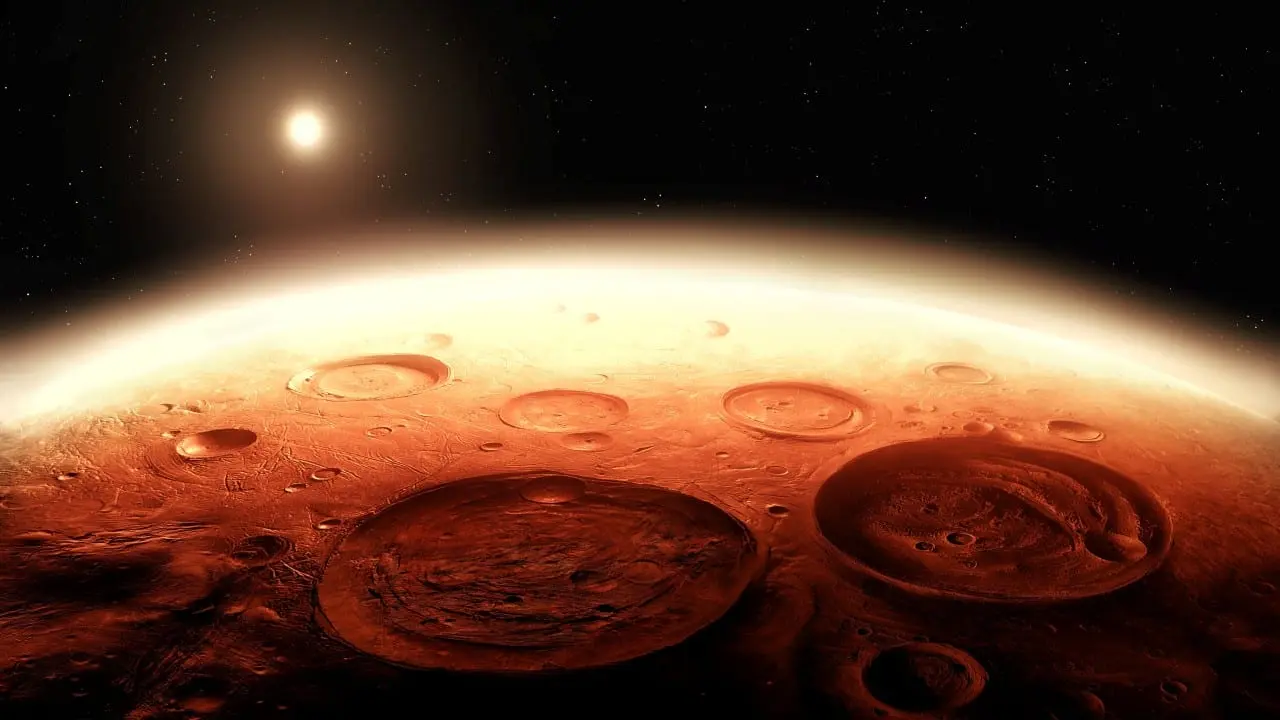
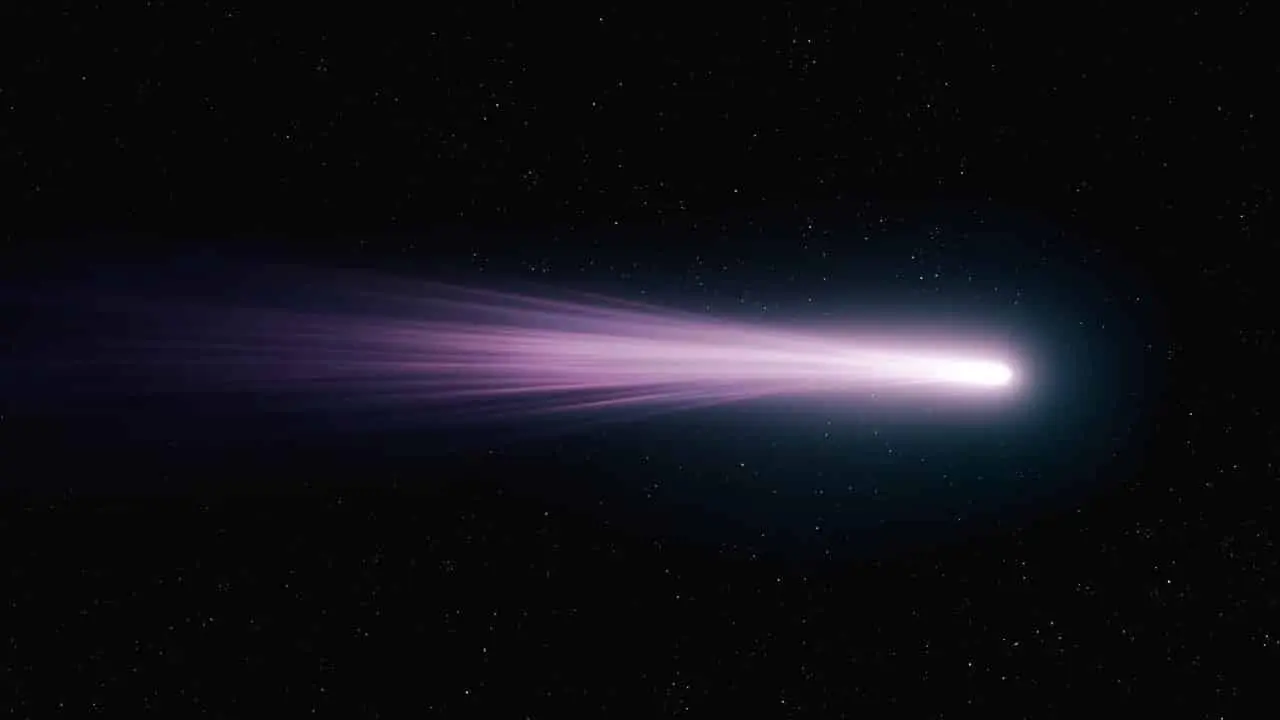
Chinese probe Tianwen-1 recorded images of the interstellar comet 3I/ATLAS during its passage close to Mars in October 2025. The device, in orbit around the red planet, captured the object about 30 million kilometers away. The operation marked the first observation of an interstellar body from Mars.
The comet was discovered on July 1, 2025 by the ATLAS telescope in Chile. It follows a hyperbolic trajectory, confirming origins outside the Solar System. Perihelion occurred on October 29.
- Rocky core with a diameter of 5.6 km.
- Speed of 58 km/s.
- Composition with water ice and carbon dioxide.
Technical capture with HiRIC camera
Tianwen-1’s HiRIC high-resolution camera adapted to track the fast-moving target. Engineers adjusted short exposures to avoid blur caused by orbital speed.
Data was transmitted to stations in Beijing. 30-second sequences generated animations that show the comet’s displacement against the stellar background.
The distance of 29 million kilometers required pre-correctionsnotes. Thermal stability measurements ensured clear images of the nucleus and coma.
Characteristics observed in the object
Images reveal a core of stone and ice with a reddish hue due to organic dust. The gaseous, dusty coma stretches for thousands of kilometers.
The initial thin tail reached 56 thousand kilometers in August observations. It points away from the Sun under radiation pressure.
Initial spectra detect water ice, carbon dioxide and traces of carbon monoxide. The composition suggests formation in a cold protoplanetary disk.
Spectra indicate possible origin near the center of the Milky Way. Non-gravitational acceleration was calculated from the data.
Coordination between space agencies
International space agencies have aligned efforts to study 3I/ATLAS. Probes on Mars have been repositioned for simultaneous captures.
The European Space Agency used Mars Express and ExoMars TGO for supplementary records. NASA data came from the Mars Reconnaissance Orbiter with HiRISE camera.
Marrovers like Perseverance have attempted visual detection of the Martian surface. The United Arab Emirates’ Hope probe monitored the atmosphere during the passage.
Preparing for Observation
Planning started in September 2025 based on forecastsare orbitals. Telemetry tests ensured safe transmission of images.
Observation windows considered the comet’s weak brightness and speed. Focusing on short exposures maximized the useful signal.
The mission expanded Tianwen-1’s original capabilities. Protocols for weak body tracking have been validated.
Tianwen-1 Mission History
Launched in July 2020, the probe reached Mars orbit in February 2021. The Zhurong rover landed in May on the Utopia plain.
The rover operated for an Earth year collecting soil samples. He analyzed mineral composition and local atmosphere.
The orbiter continues to map the surface with HiRIC. Current attention includes ice caps and dust storms.
Observation of the comet demonstrates the versatility of the platform. Tianwen-1 now supports opportunistic studies beyond Mars.
Contributions to future studies
3I/ATLAS data supports the Tianwen-2 mission launched in May 2025. It aims to collect asteroid and comet samples from the main belt.
Thermal control tests prepare weak target tracks. Composite frame processing improves detection of subtle signals.
Models of cometary activity in an interstellar environment gain precision. Collaboration with probes like STEREO and SOHO refines hyperbolic trajectories.
The object acts as a time capsule of distant star systems. Its age is greater than that of the Sun, allowing insights into ancient planetary formation.