Researchers review four decades of information from Halley’s Comet to plan new mission

comet Halley, astronomy, space missions, solar system exploration, space agencies
The international scientific community has dedicated recent months to the thorough review of astronomical data collected during the last perihelion of one of the most documented celestial bodies in history. The global effort aims to update deep space monitoring systems and prepare the technological infrastructure for the object’s next approach. Technical mobilization uses raw information extracted in the past to calibrate state-of-the-art telescopes and refine mathematical models of orbital dynamics.
The event recorded in the eighties represented a definitive milestone in modern astrophysics and interplanetary exploration. Pela For the first time, experts were able to directly observe the nucleus of a star with this specific structural composition. On the Naquela occasion, the body reached a distance of approximately 88 million kilometers from the Sol, requiring an unprecedented technological apparatus to overcome the severe terrestrial optical restrictions caused by the positioning of the planets.
The object’s elliptical trajectory keeps it in continuous transit through the limits of our planetary system, fulfilling an orbital period that varies between 74 and 79 years, depending on gravitational interactions. Atualmente, international research centers process information from that historic passage to project future interceptions and understand the chemical evolution of the primordial elements that make up the frozen structure that travels through the space vacuum.
Cooperation between agencies maps structure of the celestial body
The formation of the so-called Armada Halley represented an unprecedented level of international cooperation for the exploration of deep space, uniting powers in a purely scientific objective. A set of probes were sent specifically to intercept and analyze the moving object, capturing details that redefined astronomical models at the time. The Vega 1 mission, operated by the Soviet space program, performed a flyby calculated to collect the first direct samples of gas and dust released by the structure. Dias later, the Vega 2 probe complemented the survey by mapping the coma, the vast cloud of volatile material that surrounds the nucleus during the extreme solar approach. The instruments on board these ships detected the presence of water molecules and complex organic compounds, immediately altering current chemical models about the initial formation of rocky planets.
The European project Giotto carried out the riskiest approach of the entire fleet, reaching less than 600 kilometers from the surface of the star in a highly complex maneuver. The probe’s cameras withstood high-speed particle impacts to transmit detailed photographs of the dark, irregular core, revealing a chaotic topography. The joint effort also included the Japanese spacecraft Suisei and Sakigake, focused on measuring the solar wind and plasma interactions around the celestial body, establishing the foundations of modern cometary science. The data consolidated by these joint missions formed a bank of information that continues to be explored by astrophysicists in developing theories about the distribution of water in the primitive Terra.
Historical records detail ancient orbital passes
Historical documentation on the star’s orbital trajectory dates back to the year 240 BC, demonstrating the visual impact of the phenomenon on ancient civilizations. Anotações detailed images were made by Chinese astronomers, who systematically recorded their periodic appearances in the eastern night sky with great precision.
In the medieval Europa, the passage of the year 1066 was immortalized in the famous Tapeçaria of Bayeux, one of the most important artifacts of that period. The astronomical phenomenon was directly associated with political and military events that defined the power structure and borders of the time.
The scientific understanding of the object changed radically only in 1705, propelling astronomy into a new analytical phase. Astronomer Edmond Halley applied the newly formulated laws of universal gravitation to calculate the exact orbit of the celestial body.
The correct prediction of his return in 1758 validated Newtonian celestial mechanics in an indisputable way for the academic community. Essa mathematical confirmation guaranteed the definitive naming of the star in honor of the British researcher who uncovered its repeating pattern.
Public reactions and educational engagement during transits
The transit of the celestial body in 1910 generated atypical mobilizations after the spectroscopic detection of specific gases in the star’s tail, such as cyanogen, a highly toxic compound. The dissemination of unverified information by the press at the time boosted the sale of protective equipment and the construction of underground shelters in several countries, reflecting a scenario of misinformation and lack of scientific literacy in society at that century. Essa situation contrasted directly with the environment observed four decades ago, which was strongly marked by the dissemination of technical knowledge and educational engagement on a global scale, promoted by governments and research institutions. Instituições teaching, universities and astronomy clubs organized extensive observation campaigns with telescopes and binoculars aimed at students and the general public. The focus of these actions was strictly on the physical and mathematical aspects of the phenomenon, dispelling unfounded theories and promoting true mass scientific literacy. Bancos of international data began processing measurements in real time, sharing the raw results with networks of professional and amateur astronomers around the world transparently. The integration of this information began to feed algorithms that refine orbital dynamics models to this day, creating a permanent educational legacy. Esse model of scientific communication established the current standard used by space agencies to publicize major astronomical events to the world population.
Advances in deep tracking technology
The navigation and armor technologies developed for the original exploration fleet served as the operational basis for subsequent high-cost projects. The success of the Rosetta mission, which landed a module on another star years later, used flight and approach protocols rigorously tested during that historic interception.
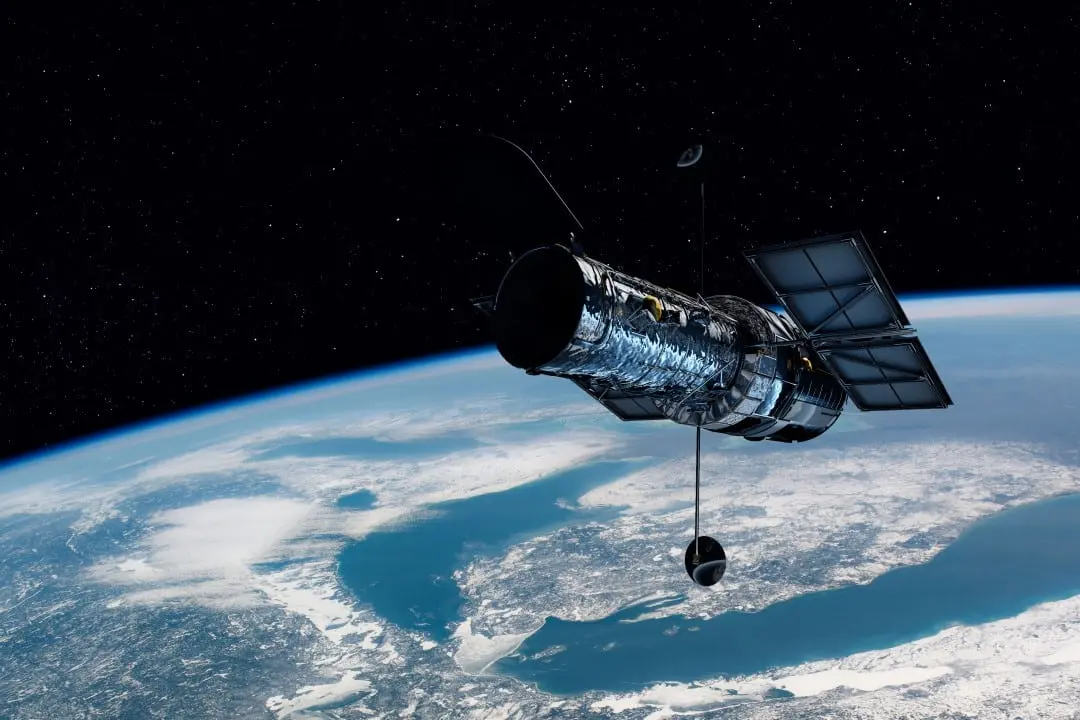
Currently, very high-power observatories, such as Telescópio Espacial Hubble and Very Large Telescope, maintain systematic monitoring of the object. Esse continuous tracking occurs even when the celestial body reaches its aphelion, the point of greatest distance from Sol on its elliptical trajectory.
The extreme distance does not prevent the capture of high-precision photometric data by space agencies responsible for deep space surveillance. Essas measurements indicate the level of residual activity on the frozen surface and help map the structural integrity of the core subjected to the absolute cold.
Chemical analyzes define new astrophysical parameters
Spectrometric analyzes confirmed that the nucleus is approximately 15 kilometers long, with an elongated shape similar to a peanut. The surface turned out to be extremely dark, reflecting only a minimal fraction of sunlight, which contradicted theoretical expectations of a body made up mostly of exposed white ice.
Materials identified in the structure include