James Webb Telescope confirms asteroid 2024 YR4 near the Moon, but without risk of collision

New and decisive observations made by Telescópio Espacial James Webb have brought significant relief to the scientific community. Asteroid 2024 YR4, which generated considerable concern after initial estimates of a possible collision with Lua, now has its trajectory precisely determined, indicating that it will pass at a safe distance. Este event marks a remarkable triumph of astronomical observation and calculation capabilities, ensuring the safety of the natural satellite of Terra.
The celestial object, initially identified in December 2024, quickly became a focal point for scientists and space agencies around the world. The urgency to understand its orbit was palpable, given the initial unpredictability of its route. Este This type of early detection is essential for planetary defense, allowing time for in-depth studies and, if necessary, the development of mitigation strategies.
Discovery and initial concerns
The discovery of asteroid 2024 YR4 in December 2024 quickly raised alarm in the astronomical community. Inicialmente, estimates pointed to a 3.1% probability of collision with Terra on December 22, 2032, a scenario that mobilized intensive observation efforts. The potential threat of a terrestrial impact, even if small, requires an immediate and coordinated response from several global space agencies, which maintain programs dedicated to identifying and monitoring objects close to Terra.
After subsequent observations, the possibility of an impact with Terra was fortunately ruled out, which brought a first sigh of relief. Contudo, in June 2025, new projections indicated a 4.3% chance of collision with Lua, shifting the focus of concern to our natural satellite. Este type of readjustment in probabilities is common in astronomy, as the accuracy of asteroid trajectories improves as more observational data is collected. The dynamic nature of space requires constant vigilance and the ability to recalculate risks as new information arrives, ensuring that any potential threat is assessed and mitigated as accurately as possible.
The crucial role of James Webb Space Telescope
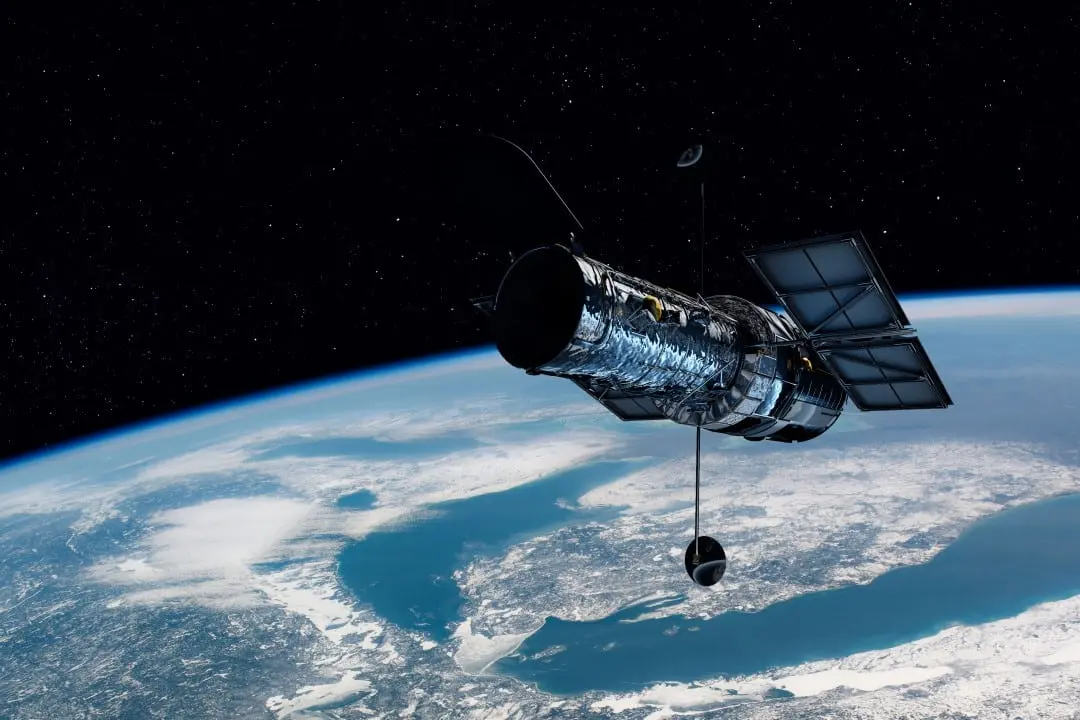
The research team led by Andy Rivkin of Universidade Johns Hopkins and Julian DeWitt of Instituto of Tecnologia of Massachusetts has achieved an impressive feat. Eles managed to observe asteroid 2024 YR4 on February 18th and 26th, using the powerful Telescópio Espacial James Webb (JWST). Essa early and detailed observation capacity was decisive in refining the object’s orbital calculations.
The James Webb, known for its unmatched sensitivity to infrared light, has proven to be an indispensable tool for tracking and characterizing faint objects in deep space. The precision achieved by the new observations allowed scientists to confirm the asteroid’s trajectory with a significantly reduced margin of error, allaying concerns of a lunar impact.
Challenges and innovations in observation
The task of observing asteroid 2024 YR4 was not simple, even for an advanced tool like Telescópio James Webb. NASA and Agência Espacial Europeia (ESA) highlighted that the most recent observations revealed that the asteroid was extremely faint, almost invisible. Este factor, combined with the extremely limited time available for data collection, turned the mission into a true technical challenge.
The research team had to develop new techniques and adapt Telescópio Webb’s equipment specifically to detect such a faint asteroid amid the vast darkness of space. Essa methodological innovation not only ensured the successful observation of YR4, but also sets a valuable precedent for future missions to track difficult-to-detect celestial objects. The ability to fine-tune and optimize research tools is critical to continued advances in astronomy and space safety.
Confirmed trajectory and relief
The detailed observations, conducted with the aid of Telescópio Espacial James Webb, confirmed with high precision that asteroid 2024 YR4 will pass relatively close to Lua, at an estimated distance of 22,900 kilometers. The Esta margin, although it appears large in terrestrial terms, is considered a fairly close pass in an astronomical context, but crucially, it narrowly avoids any possibility of direct impact with the Terra natural satellite.
Confirmation of the non-collision brought considerable relief to the scientific community and the general public, who had been following the news about the asteroid’s trajectory with apprehension. The data obtained not only ensures the safety of Lua, but also improves our understanding of asteroid dynamics and the accuracy of orbital predictions, strengthening confidence in space monitoring capabilities.
Understanding objects close to Terra
Objects close to Terra (NEOs, the acronym in English for Near-Earth Objects) are asteroids and comets that, due to their orbits, approach Terra. Detecting and monitoring these objects is a top priority for global space agencies. The importance lies in the possibility, however remote, of an impact that could cause significant damage to the planet.
Planetary defense programs are continually improved to identify, classify and predict the trajectories of these celestial bodies. The ability to anticipate close passes or potential collisions is crucial to protecting life on Terra and space infrastructure. Understanding their compositions, sizes and speeds allows for more effective response planning.
The importance of space surveillance
The case of asteroid 2024 YR4 reinforces the continued need for and investment in space surveillance programs. Early detection and accurate monitoring of objects near Terra are vital to the safety of our planet and its satellites. Ferramentas and Telescópio Espacial James Webb prove to be crucial in this global effort.
Keeping a close eye on what happens in our cosmic “backyard” is a responsibility shared by the international community. Technological advances in astronomy allow more and more asteroids to be cataloged and their orbits calculated with greater precision, reducing the likelihood of unwanted surprises. Esta proactive surveillance is the first line of defense against potential threats.
Future of planetary defense
The successful observation of 2024 YR4 and subsequent confirmation of its safe trajectory highlights continued progress in the area of planetary defense. Collaboration between research institutions and space agencies, along with the development of new techniques and the use of cutting-edge instruments like JWST, are critical to enhancing our ability to protect Terra from future cosmic threats.
Learning from each asteroid observed contributes to building more robust knowledge about the nearby universe and strategies to mitigate risks. The scientific community remains on alert, investing in technology and research to ensure that humanity is prepared for any challenge that comes from deep space.