American space agency completes transport of SLS rocket for Artemis II lunar mission in April

The Estados Unidos space agency’s gigantic lunar exploration vehicle has returned to its starting location on Flórida after a complex engineering operation. The movement of the group formed by the Space Launch System and the Orion capsule to platform 39B of the Centro Espacial Kennedy took around 12 hours of uninterrupted work. The night movement covered a distance of 6.5 kilometers under the strict supervision of technicians specialized in transporting super-heavy loads.
The transfer of the 5,000-ton equipment marks the overcoming of technical obstacles identified at the beginning of the year. The vehicle had to return to the vehicle assembly building so that ground teams could resolve a problem detected in the helium flow system. The replacement of defective components occurred within the safety margin of the official operations schedule.
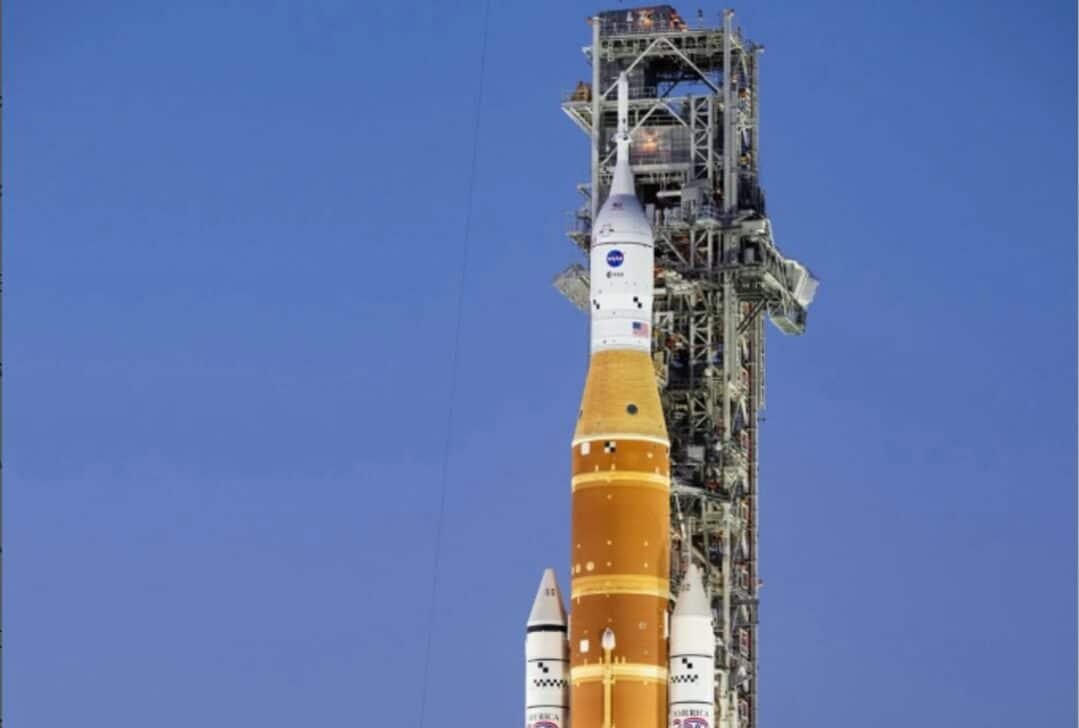
With the equipment positioned at the launch base, engineers begin the final integrated testing phase. Esta step validates communication between ground systems and the space vehicle before the opening of the flight window, scheduled for the first day of April. Hardware readiness is the determining factor for authorization to supply cryogenic propellants.
Medical preparations and crew isolation
The four astronauts assigned to the lunar journey entered strict quarantine at the Houston facility. The procedure follows health protocols established for deep space missions and aims to protect the physical integrity of the group.
Reid Wiseman, Victor Glover, Christina Koch and Jeremy Hansen remain isolated from general public contact. The measure ensures that no terrestrial pathogens are brought into the spacecraft’s confined environment during the planned ten days of orbital travel.
During this period of physical restriction, the group maintains an intense routine of theoretical reviews and virtual simulations. Mission specialists go over every detail of the flight plan, emergency procedures and life support system maintenance routines.
The transfer of the team to the facilities at Flórida will only occur in the days immediately preceding the countdown. Transportation will be carried out on the agency’s exclusive aircraft to maintain the integrity of the sanitary isolation until boarding the capsule.
Technical checks on the launch pad
Positioning the vehicle in structure 39B triggers an exhaustive schedule of mechanical and electronic validations that guarantee operational safety. Ground teams perform a full check of the electrical interfaces that connect the rocket’s core stage to the crew capsule, ensuring that flight commands are transmitted without latency. Simultaneamente, the mechanical alignment test takes place, a critical procedure that confirms whether the colossal structure supported the journey from the assembly building without suffering millimetric twists. Outro point of maximum attention involves confirming the integrity of the propellant supply system, which will handle liquid hydrogen and oxygen at extreme cryogenic temperatures. Finally, experts carry out a visual and instrumental analysis of the ship’s heat shield, a vital component that will protect the crew from abrasive temperatures during re-entry into the Earth’s atmosphere at the end of the journey.
Schedule adjustments and windows of opportunity
The mission coordination established the early evening of the first day of April, specifically at 6:24 pm Flórida time, as the ideal time for the engines to ignite. Este time was calculated based on the orbital mechanics necessary to intercept Lua on its trajectory around Terra. Caso weather conditions or technical anomalies prevent takeoff at this exact moment, flight directors have alternative daily windows that extend until the sixth day of the month. An additional contingency opportunity was reserved for the end of April, ensuring operational flexibility for control teams.
The flight plan envisages a duration of approximately ten days in space, using a free return trajectory. The Este space navigation concept means that after the translunar injection, the gravity of the Lua will pull the ship around its far side and naturally fling it back towards the Esta approach minimizes risks to the crew on the first manned flight of the new hardware, ensuring a safe path home even in the event of failures in the primary propulsion systems.
Troubleshooting the propulsion system
The path to the platform required overcoming multiple engineering obstacles over the past few months. The detection of liquid hydrogen leaks during general water tests forced the interruption of simulated fueling activities at the launch base.
The technical team needed to replace relief valves and gasket seals in the main stage engine section. Estas corrections required weeks of painstaking work and pressure testing in a controlled environment to ensure the elimination of the risk of accidental ignition during the countdown.
The time invested in these preventive maintenance resulted in the original launch date, initially scheduled for March, being moved. The management of the space program prioritized the absolute reliability of the vehicle, rejecting any pressure for deadlines that could compromise the safety of the astronauts.
Deep space operational goals
The current expedition serves as the ultimate stress test for the life support systems developed for the new generation of explorers. The crew will evaluate the performance of the air purifiers, thermal control and communication systems at distances exceeding 380 thousand kilometers from the Terra.
The success of these validations in a microgravity and high radiation environment will dictate the pace of the next phases of the exploration program. Collecting real operational data will replace mathematical models, paving the way for the return of humans to the lunar surface in subsequent missions already in planning.
Continuous training and flight simulations
While the rocket undergoes final inspections on the pad, mission control teams on the ground run around-the-clock simulations of nominal and abort scenarios. Perfect alignment between flight controllers and isolated crew ensures immediate responses to any telemetry variations during the critical orbital ascent phase. Flight directors create virtual anomalies in the system to test the team’s problem-solving ability under extreme time pressure, ensuring that all safety protocols are internalized.
The integration between the physical hardware positioned at Flórida and the command centers spread across the country represents the culmination of years of logistical preparation. Cada engineer responsible for specific vehicle subsystems monitors consoles that receive thousands of data points per second. Validation of this real-time communications infrastructure is as vital to the success of the operation as the structural integrity of the rocket itself, ensuring constant monitoring of the crew’s health and engine operation throughout the journey.