New telescopes track the 95% of the universe dominated by dark energy and matter in space
Recent astronomical observations reinforce that the totality of cataloged planets, stars and galaxies represents a tiny fraction of cosmic reality. The most precise data in modern cosmology indicate that only 4.9% of outer space consists of common elements, formed by the atoms that structure living beings and visible celestial bodies.
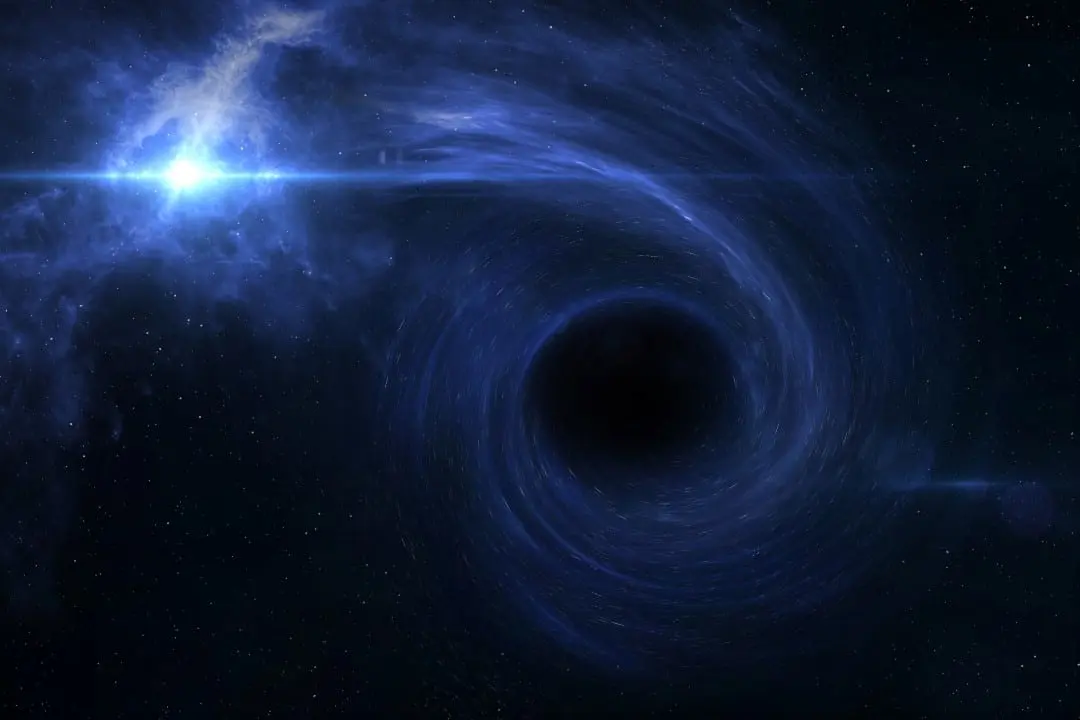
The remainder of this vast immensity, equivalent to 95.1%, is divided between two mysterious components that have never been directly detected by human instruments. Essa invisible portion acts as the main engine of celestial dynamics, sustaining the cohesion of galaxies and dictating the pace of expansion of the space fabric itself.

The structural composition of the cosmos is divided into the following fundamental proportions:
– The repulsive force responsible for spatial acceleration occupies around 68.3% of the total.
– The invisible mass that acts as a gravitational anchor represents approximately 26.8%.
– Baryonic matter, which encompasses everything that interacts with light, is limited to 4.9%.
Without the presence of these hidden elements, the laws of traditional physics fail to explain the current architecture of space. The scientific effort focuses on obtaining material evidence of components that do not emit, reflect or absorb any type of electromagnetic radiation.
First signs and the gravitational anomaly in space
Mapping of this anomaly began in the 1930s, when orbital analyzes on Aglomerado Coma revealed serious mathematical inconsistencies. The speed of displacement of celestial bodies far exceeded the limit allowed by the amount of luminous mass observed in telescopes at the time.
Calculations indicated that galactic structures should break apart and scatter through the vacuum due to the high rotation. Para justify the stability of the cluster, it was postulated the existence of a gigantic hidden mass, exerting a gravitational attraction intense enough to keep the system cohesive.
Galactic rotation and the consolidation of the invisible model
Forty years after the first suspicions, precise measurements of the rotation of spiral galaxies have provided the observational basis necessary to validate the theory. Monitoring stars located at the edges of these galactic disks revealed unexpected orbital behavior that is contrary to classical mechanics.
The peripheral stars orbited the galactic center with the same speed as the innermost stars, contrary to the expectation of deceleration at the edges. Essa kinetic uniformity required an amount of mass much greater than that concentrated in the luminous core of the galaxy.
The accepted explanation determined that galaxies are immersed in gigantic, spherical halos of undetectable material. Essa discovery transformed the concept from a mere mathematical anomaly into an indispensable pillar for modern extragalactic astrophysics.
Challenges in capturing massive particles in laboratories
The search for the fundamental particle that makes up this invisible mass mobilizes underground laboratory complexes around the planet. The main hypothesis lies in weakly interacting massive particles, which would cross Terra constantly without interacting with ordinary matter.
Tanks filled with purified liquid xenon operate in deep mines to isolate detectors from the cosmic microwave background. The objective of these highly sensitive equipment is to record the rare moment when one of these particles collides with an atomic nucleus.
Despite decades of technological improvement and billion-dollar investments, no conclusive signs of a collision have been recorded to date. The silence of the detectors forces the scientific community to recalibrate its instruments and question the limits of the standard model of particle physics.
Given the lack of direct results, new lines of research are gaining strength, suggesting alternative candidates with extremely light masses. Partículas theories and primordial black holes emerge as viable options to explain the excess gravity observed in deep space.
Cosmic collisions highlight the separation of physical components
The observation of titanic clashes between galaxy clusters has provided the most robust empirical evidence about the independent nature of this hidden mass. During these cataclysmic events, the hot gas that fills intergalactic space undergoes strong friction, heating up and emitting intense X-rays that are captured by specialized satellites. However, gravitational mapping of the region, carried out by distorting the light of galaxies in the background, reveals that most of the mass is not found where the gas is concentrated.
The phenomenon demonstrates that the invisible mass crossed the impact zone without suffering any type of resistance or deceleration, behaving in a manner completely different from atomic matter. Essa spatial separation between the luminous gas braked by the shock and the intact gravitational halos confirms that the hidden element does not interact electromagnetically. The data extracted from these collisions discard theories that try to explain the extra gravity just by modifying the laws of Newton, consolidating the physical existence of the invisible component.
Continuous acceleration and the repulsive force that dominates the vacuum
While gravity acts to group matter together, a mysterious force of a repulsive nature dominates the scene on cosmological scales, forcing the accelerated removal of all structures in the universe. The discovery of this phenomenon occurred at the end of the last century, when the glow of distant supernovae indicated that the expansion of space was not losing strength, but rather gaining speed exponentially. Diferente of radiation or ordinary matter, which dilute as the volume of the universe increases, the density of this repulsive energy remains constant, filling every cubic centimeter of the space vacuum. The absolute predominance of this component will dictate the final fate of all galaxies, suggesting a future scenario where the night sky will become progressively darker and emptier. If the rate of acceleration remains unchanged, neighboring galaxies will eventually cross the cosmological horizon, becoming unobservable from Via Láctea and isolating the remaining star systems in a cold, lonely expanse.
Primordial radiation maps the density of space architecture
The thermal echo generated in the first moments after the formation of the universe provides the most detailed map of the original distribution of energy and mass. The tiny temperature variations recorded in this background radiation work like a cosmic genetic code, allowing scientists to calculate with mathematical precision the exact proportion of elements needed to shape the galactic web observed today.
New generation of telescopes expands the research horizon
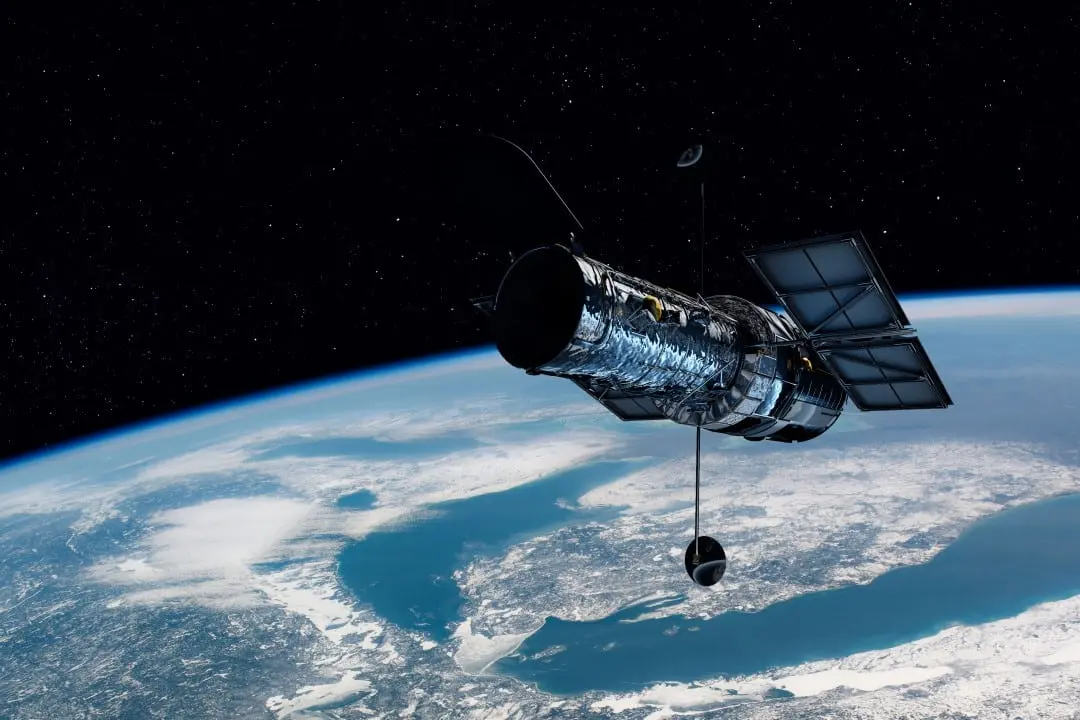
Advancing space exploration now depends on state-of-the-art observatories designed specifically to map the geometry of the universe in three dimensions. Satélites Newly launched and ground-based telescopes undergoing calibration have the ability to analyze billions of galaxies simultaneously, tracking the subtle visual distortions caused by gravitational lensing.
Cross-referencing data from these new instruments will make it possible to measure the rate of space expansion with a precision unprecedented in the history of astronomy. The information collected will be used to test the validity of general relativity on extreme scales and verify whether the repulsive force of the vacuum has changed over billions of years.
Hypotheses about a parallel and complex physical ecosystem
The difficulty in detecting individual particles drives the development of theoretical models that propose the existence of an entirely segregated physical sector. Essa approach suggests that the dark side of the universe is not formed by a single type of inert particle, but by a variety of elements that interact through unique forces.
The formulation of invisible atoms and undetectable radiation increases the complexity of the cosmological model, indicating that the perceptible reality is just a fraction of a much richer ecosystem. The journey to decipher the mechanisms that govern 95% of the cosmos continues to challenge the limits of technology and human ability to understand the fundamental nature of existence.