Success of the Orion spacecraft guarantees return of astronauts to lunar soil in 2027
The recent flight of the Orion spacecraft confirmed that the American space agency has the necessary technology to transport crew members towards Earth’s natural satellite. Shortly after the capsule touched the waters of the Pacific Ocean on April 10, near San Diego, technical teams began to unravel the information generated during the trip. The initial assessment shows that the project met all established goals, ensuring the advancement of the schedule for the Artemis III expedition, which is scheduled to launch in 2027.
Before diving back into the Earth’s atmosphere, the vehicle covered a distance of more than 1.1 million kilometers in its lunar orbit. In the most dangerous stage of the return, the capsule reached a speed almost 35 times the speed of sound, requiring maximum effort from the thermal protection barrier to protect the interior of the ship. The result of this extreme maneuver exceeded experts’ expectations.
Detailed evaluation of thermal protection against high temperatures
The first analyzes of Orion’s protective base showed much less wear compared to the marks left by the Artemis I flight. Photographs taken by rescue teams in the water and checks carried out on the deck of the support ship proved a significant drop in the loss of material due to carbonization. The scenario found in practice validated laboratory tests carried out with plasma jets, which simulated extreme temperatures of up to 2,760 °C, proving that the computer simulators were correct.
Visual records made by monitoring planes during the free fall will be studied over the next month. This collection of images will allow scientists to discover the exact moment in which the ship’s surface underwent changes, helping to understand the dynamics of materials under hypersonic friction. For more rigorous investigation, the module housing the astronauts will be taken back to the Kennedy Space Center in the coming weeks, where it will undergo a thorough scan.
During the disassembly phase, technicians will thoroughly check each piece, extracting the rest of the navigation records and removing electronic equipment that can be reused. The safe emptying of toxic fluids, such as propellant residues and refrigeration substances, will also be carried out safely. When the northern hemisphere summer ends, the thermal protection base will move to the Marshall Space Flight Center in Alabama, where researchers will use X-ray equipment and microscopes to investigate the internal structure of the material.
Mathematical accuracy when touching the Pacific Ocean
The point of impact of the capsule on the water was a mere 4.7 kilometers from the exact planned coordinate, highlighting the high capacity of the onboard computers. Preliminary data also reveals that the ship’s speed when tearing through the atmosphere had a difference of only 1.6 kilometers per hour in relation to what scientists had calculated. This almost non-existent margin of error proves the effectiveness of the physical equations used by NASA to guide the vehicle.
The ceramic coating installed in the upper area of the capsule also perfectly withstood the space journey. The reflective tape, which has the function of controlling the ship’s temperature in a vacuum and was created to melt upon re-entry, continued to be stuck to several parts of the fuselage. Shortly after the rescue off the coast of San Diego, technicians dismantled a number of parts for evaluation before shipping the main structure back to the Florida facility.
Parts removed from the capsule for studies and future releases
The list of equipment still uninstalled at the Californian military base includes:
- Crew seats, which will undergo physical integrity tests
- Video recording and external lens control systems
- Memory devices with complete trip records
- Vital Spacecraft Life Support System Connections
- Parts connected to the body fluid disposal mechanism
Experts pay special attention to the urine disposal ducts, which had a small malfunction while the spacecraft was orbiting the Moon. The objective is to trace the origin of the defect and create a safe alternative before the next expedition gets off the ground. Addressing these human life support issues is an absolute priority for the agency, as future lunar bases will require impeccable sanitation systems to keep astronauts healthy for long periods.
Launch vehicle performance exceeds agency expectations
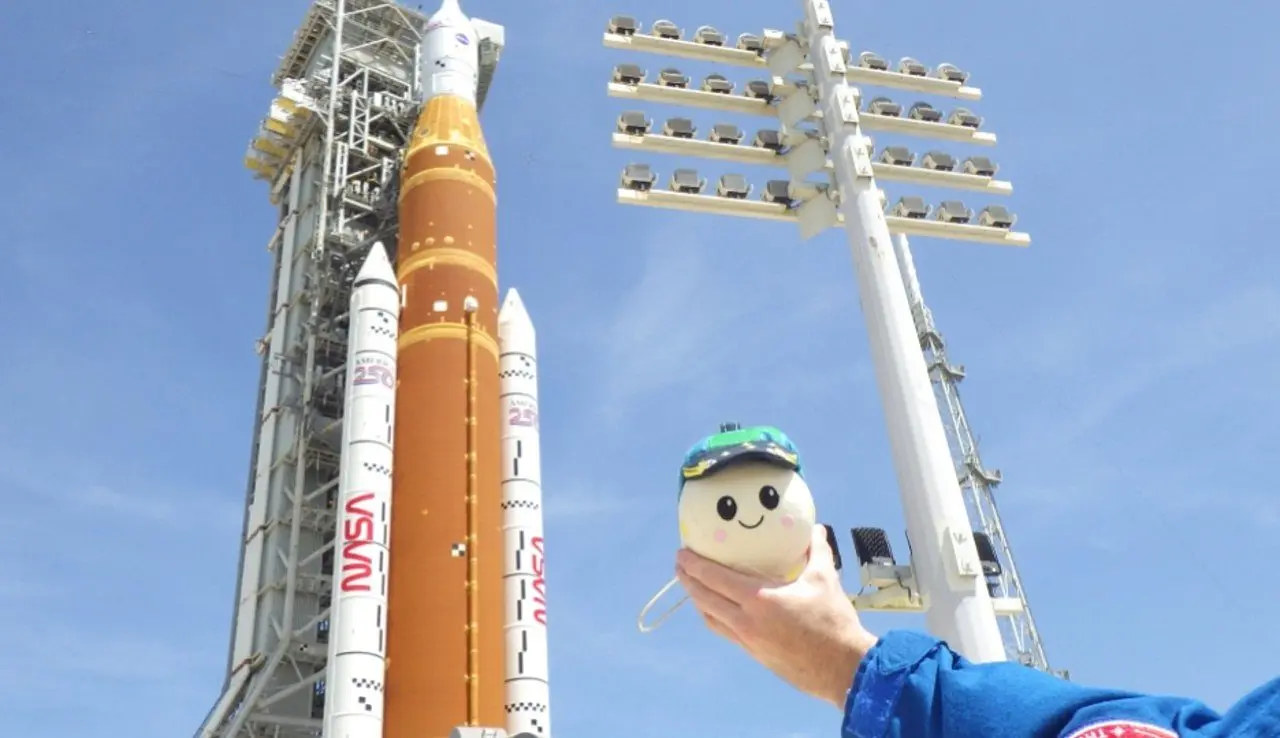
The gigantic Space Launch System (SLS), responsible for propelling the mission away from Earth, operated without any structural failure. The initial report indicates that the vehicle placed Orion on the correct route with impressive precision. When the RS-25 thrusters were turned off, the set was traveling at more than 29,000 kilometers per hour and stuck to the exact orbital position that had been programmed, eliminating any doubts about the reliability of the equipment.
The successful launch crowns more than ten years of research and billions of dollars invested in the SLS project, considered NASA’s most robust booster since the Apollo program era. All safety measures and parts tolerances worked exactly as expected, proving that the American aerospace industry has reached the standard needed to transport humans into deep space.
Ground infrastructure suffers minimal damage after takeoff
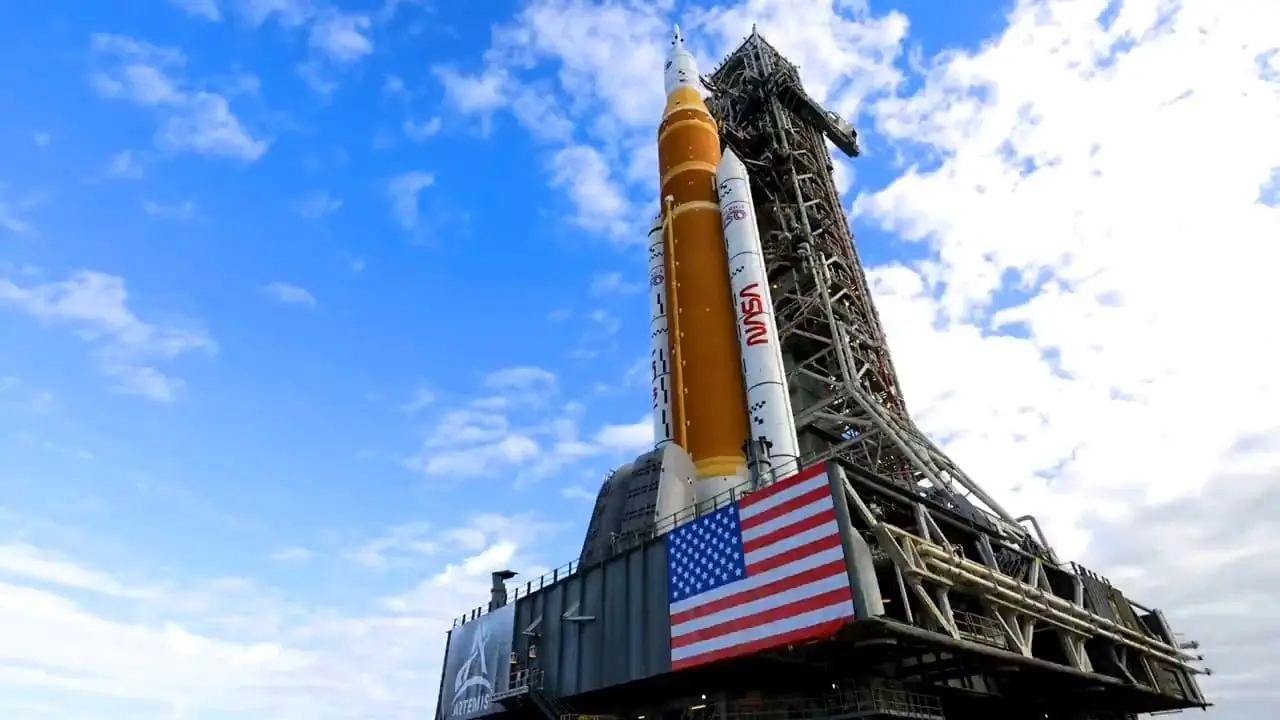
Once the dust settled at Kennedy Space Center, maintenance crews did a thorough sweep of the mobile launch tower. The structural modifications made after the first test flight showed their strength, absorbing the brutal impact of the engines. Despite the violence of the flames and the extreme sound pressure generated during ignition, the metal structure suffered only superficial wear.
Cleaning and checking work began a few hours after the rocket left the ground. Components that had been reinforced, such as the elevator access doors, survived intact, while the gas pipes were able to bend without breaking, thanks to a new flexible design. The installation of heat shields at strategic points ensured that the water, refrigeration and energy lines continued to function normally even after the vehicle had passed.
The support tower has already been taken back inside the Vehicle Assembly Building, where it will undergo minor adjustments before receiving the next rocket. This agility in the recovery of the ground infrastructure is a positive sign that the space complex can keep up with the accelerated pace required by the next stages of the lunar program.
Final preparations for the return of humans to the natural satellite
The ocean rescue operation involved precise coordination between civilians and military to extract the crew and equipment from the water. Specialized US Navy divers helped the occupants safely exit the capsule, transferring everyone to the amphibious ship USS John P. Murtha. Then, the spacecraft itself was lifted and transported to the San Diego Naval Base, marking the beginning of the data collection phase.
All the knowledge gained from this flight is being applied directly to the planning of Artemis III, which has the historic mission of taking humans back to lunar soil in 2027, breaking a hiatus that has lasted since the final steps of the Apollo 17 mission in 1972. This next trip will serve as a testing ground for extended survival technologies, paving the road for future expeditions towards Mars. With the positive results obtained now, NASA eliminates the main technical barriers and confirms that the United States is ready to usher in a new era in the exploration of the cosmos.