Icon of cinema, Crocodile Dundee’s Burt, dies at 90 and moves the world
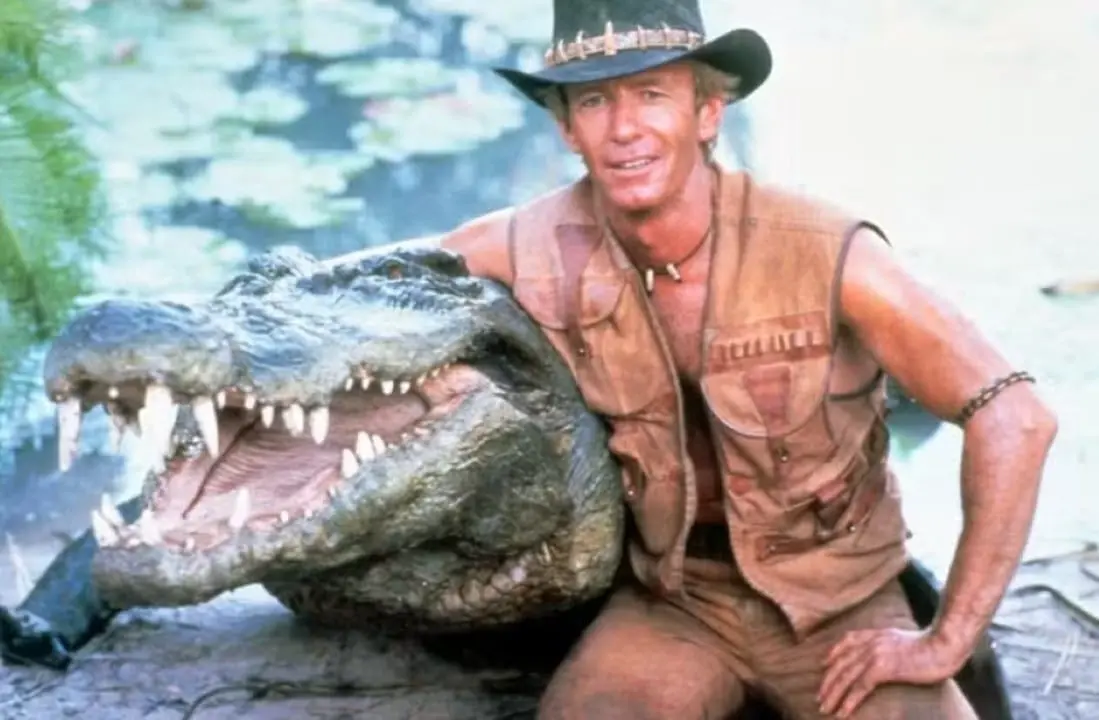
Burt, the crocodile who became a true legend in cinema and a symbol of Australian wildlife, has died at the age of 90 at Crocosaurus Cove in Darwin, Australia. His death, announced this past weekend, marks the end of an era that began in 1986, when Burt gained worldwide fame for his appearance in Crocodile Dundee. The crocodile, measuring an impressive 5.1 meters and weighing approximately 700 kilograms, was captured in the Reynolds River in the Northern Territory during the 1980s. Since then, he has captivated millions worldwide with his imposing presence and remarkable personality.
Burt, who had resided at Crocosaurus Cove since 2008, was known for his unique temperament and independent nature. The park, in tribute to him, emphasized his significance not only as a tourist attraction but as an ambassador for Australian wildlife. His passing has been deeply felt by fans, visitors, and caretakers who interacted with him daily, leaving an immense void and a story that will never be forgotten.
The news of Burt’s death has sparked a wave of emotional tributes on social media and in the global press. Burt was more than just a crocodile; he was a cultural icon and a symbol of the connection between cinema, nature, and Australian history. He leaves behind a legacy that will continue to inspire future generations about the importance of preserving wildlife and the rich biodiversity of the country.
An icon of the screen and environmental conservation
Burt’s appearance in Crocodile Dundee was a milestone that helped put Australia on the global entertainment map. The film, starring Paul Hogan, not only became a box-office hit, grossing over $328 million, but also introduced the world to Australia’s exotic wildlife, with Burt taking center stage. His performance in the film, though brief, was unforgettable and cemented the crocodile’s image as one of the most fascinating and feared creatures on the planet.
Beyond his role on screen, Burt played a significant role in raising environmental awareness. Since his arrival at Crocosaurus Cove, he was featured in educational programs that taught visitors about crocodile behavior, their role in the ecosystem, and the challenges these creatures face due to human interference. Burt symbolized the importance of preserving endangered species and maintaining the natural balance of habitats.
Burt’s impressive characteristics
In the eyes of many, Burt was a force of nature. Measuring 5.1 meters in length, he represented the pinnacle of a fully grown saltwater crocodile. Weighing 700 kilograms, his presence at Crocosaurus Cove was awe-inspiring, attracting tourists from all over the world.
His physical traits were not only admirable but also vital for the survival of his species. Saltwater crocodiles, known as “salties,” are the largest reptiles in the world, capable of living over 100 years in captivity. Burt, who approached that longevity, was a living testament to the resilience and adaptability of these aquatic predators.
List of fascinating facts about saltwater crocodiles
- Saltwater crocodiles can grow up to 7 meters in length and weigh over a ton.
- They are predominantly found in the Indo-Pacific region, particularly in Australia and Southeast Asia.
- They are exceptional swimmers, capable of traveling long distances across the ocean.
- Their territorial behavior makes them some of the most feared predators in the animal kingdom.
- The species is protected under environmental laws in many countries due to past overhunting.
Burt: A lifelong bachelor with a unique personality
Despite his fame and stature, Burt never reproduced. Caretakers at Crocosaurus Cove often joked about him being a “confirmed bachelor,” resisting attempts to pair him with female crocodiles. This only reinforced his unique personality, setting him apart as a crocodile with distinctive behavior.
Moreover, his temperament commanded respect from everyone who worked around him. While Burt was not inherently aggressive, his strength and size were undeniable. Park handlers always stressed the importance of strict protocols when interacting with him, ensuring both their safety and Burt’s well-being.
Social and cultural impact of Burt’s legacy
Leia Também

Bill Clinton expresses confidence in Democrats despite socialist primary wins in New York
Congressman Thomas Massie confronts reporter with explicit questions after relationship allegations
Congresswoman calls for Apple breakup as chip shortage threatens device price hikes
Burt’s death immediately generated an outpouring of emotion on social media. Fans shared photos, memories of visits to Crocosaurus Cove, and heartfelt tributes. Many highlighted how Burt was more than just a tourist attraction; he was a symbol of Australia’s rich biodiversity and the bond between humans and nature.
Marie-Clare Boothby, Northern Territory’s Minister for Parks and Wildlife, was among the first to pay tribute to Burt. In her homage, she emphasized Burt’s lasting impact on environmental education and named a young crocodile “Burtie” in his honor. This tribute symbolizes the continuity of Burt’s legacy and his influence on future generations.
Timeline of Burt’s journey and legacy
- 1980s: Captured in the Reynolds River, Northern Territory.
- 1986: Featured in Crocodile Dundee, which became a global hit.
- 2008: Moved to Crocosaurus Cove, becoming the park’s main attraction.
- 2024: Passed away at the age of 90, marking the end of an era.
Statistics and numbers highlighting Burt’s importance
Burt’s impact is evident through impressive numbers. Since his arrival at Crocosaurus Cove, the park has welcomed thousands of visitors annually, many of whom came specifically to see him. Furthermore, the film Crocodile Dundee, in which Burt appeared, remains one of the highest-grossing Australian films of all time.
- Over 500,000 visitors to Crocosaurus Cove since 2008.
- Crocodile Dundee grossed more than $328 million globally.
- Burt lived approximately 90 years, surpassing the average lifespan of wild crocodiles, which is 70 years.
Economic and environmental impact of Burt on tourism
Ecotourism in Australia owes much to Burt’s legacy. As one of Crocosaurus Cove’s main attractions, he significantly boosted visitor numbers to the Northern Territory. This generated substantial economic benefits for the region, fostering the growth of activities tied to tourism and environmental preservation.
The awareness generated by Burt’s presence also had positive impacts on crocodile conservation. Educational programs inspired by his story highlighted the need to protect natural habitats and regulate human activities that threaten wildlife.
Heartfelt testimonials from caretakers and fans
Burt’s caretakers described his loss as devastating. To them, Burt was more than an animal in captivity; he was a colleague and a symbol of pride. One caretaker said, “Caring for Burt was a privilege. He taught us so much about respect and admiration for nature.”
Fans worldwide shared touching stories of visits to Crocosaurus Cove. “Seeing Burt was one of the most incredible experiences of my life. He was majestic and awe-inspiring, something I’ll never forget,” said an American tourist.
A legacy that transcends generations
Burt may be gone, but his impact will endure for decades. He not only represented the majesty of nature but also the potential to connect people to a greater cause: conservation. His life serves as a powerful reminder of the need to protect biodiversity and value the creatures that make our world unique.