
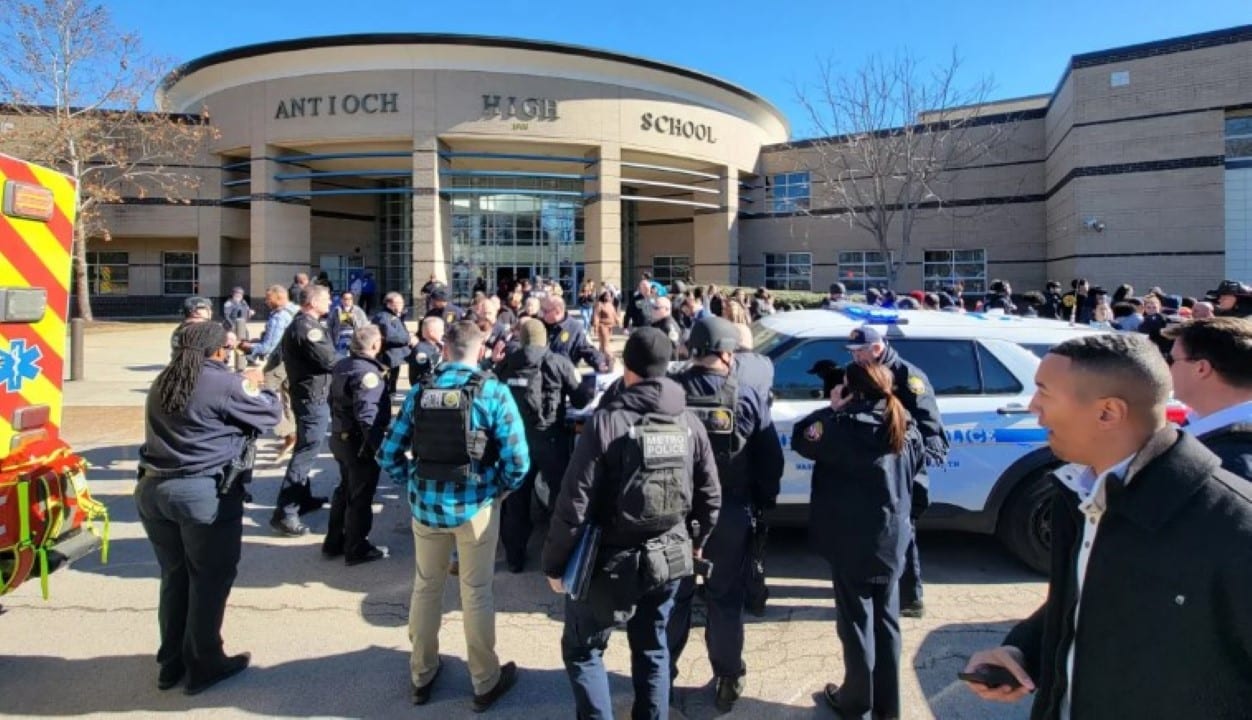
On the morning of Wednesday, January 22, 2025, the community of Nashville, Tennessee, was shaken by a tragic shooting at Antioch High School. The incident occurred around 11 a.m. local time when a 17-year-old student opened fire inside the school cafeteria. The attack resulted in the death of a female student and injured two others before the shooter took his own life. The incident once again raises concerns about school safety in the United States and the growing issue of gun violence among young people.
Antioch High School, which serves approximately 2,000 students from grades 9 to 12, was immediately placed on lockdown. Parents and guardians were instructed to wait for further updates regarding their children’s safety. Nashville law enforcement responded quickly to contain the situation and ensure the safety of those present. The identities of the shooter and the victims have not yet been officially released by authorities.
This incident comes less than two years after a similar attack in Nashville, where a former student entered a private Christian elementary school and killed three children and three adults. The tragedy once again sparks debates over school security policies and the need for more effective preventive measures.
Authorities’ response and emergency measures taken
Minutes after the first shots were fired, Nashville police arrived at the scene and confirmed that the shooter no longer posed a threat. The school’s superintendent reported that two school resource officers were present on campus at the time but were not near the cafeteria when the shooting occurred. Students were gathered in the school auditorium, and a reunification center was established to facilitate the meeting of students with their families.
The Nashville city government announced immediate measures to strengthen school security. Police presence was increased at local schools, and school security experts were deployed to assess vulnerabilities in the system.
History of violent incidents in U.S. schools
Gun violence in American schools has become a growing concern. According to data from the Gun Violence Archive, more than 300 school shooting incidents have been reported in the U.S. in 2024 alone. The Antioch High School shooting adds to a series of tragedies that have occurred over the years, highlighting the urgent need for effective measures to prevent such crimes.
Over the past decade, some of the most violent school shootings have taken place in high schools and elementary schools, including:
- Sandy Hook Elementary School (2012): 26 fatalities, including 20 children.
- Marjory Stoneman Douglas High School (2018): 17 killed and 17 injured.
- Robb Elementary School (2022): 21 fatalities, including 19 children.
These events have led to increased pressure for legislative reforms and stricter security policies in schools.

Possible causes and factors contributing to school violence
Experts point to several factors that can contribute to school violence incidents, including:
- Easy access to firearms: Gun ownership laws in the U.S. vary by state, making access to weapons easier in certain areas.
- Mental health issues: Lack of adequate psychological support in schools can lead to extreme actions by students facing emotional distress.
- Bullying and social isolation: Many school shooting cases involve students who reported experiences of exclusion or intimidation.
- Influence of social media: The spread of violent content and dangerous online challenges can influence aggressive behavior among young people.
- Lack of adequate school security: Despite preventive measures, many schools still have gaps in visitor monitoring and entrance control.
Preventive measures implemented after the shooting
In response to the tragedy at Antioch High School, local and state authorities have announced a series of measures to enhance security in area schools. Planned actions include:
- Installation of metal detectors at school entrances.
- Frequent training for students and staff on emergency situations.
- Increased police presence around school facilities.
- Expansion of psychological support services for students and teachers.
- Creation of anonymous channels for reporting suspicious behavior.
The implementation of these initiatives aims to prevent future incidents and provide a safer environment for students.
Emotional and psychological impact on the school community
The shooting at Antioch High School left deep scars on students, teachers, and families. Many reported moments of panic and fear upon hearing gunshots inside the cafeteria. The Nashville school district is offering counseling and psychological support services to those in need.
Studies show that violent events in schools can have long-term effects on students’ mental health, including:
- Increased levels of anxiety and post-traumatic stress disorder (PTSD).
- Difficulties in concentration and academic performance.
- A constant sense of insecurity within the school environment.
- Fear of returning to school after the incident.
Proper psychological support and awareness initiatives are essential to help the school community recover from traumatic events like this.
Key statistics on school safety in the U.S.
- It is estimated that 95% of public schools in the U.S. have security measures in place, such as evacuation drills and surveillance cameras.
- Approximately 43% of teachers report feeling unsafe in their work environment due to the risk of shootings.
- The average cost to implement an effective security system in a medium-sized school can exceed $500,000.
- 78% of parents support stricter gun control policies to prevent new school violence incidents.
These numbers highlight the growing concern among the population regarding school safety and the need for more effective measures to ensure student protection.
Government actions and legislative debates on gun control
The U.S. Congress has faced challenges in passing stricter gun control laws due to political disagreements between parties. While some argue for the need for tighter regulations to prevent easy access to firearms by minors, others believe the issue lies in inadequate school security rather than gun laws.
In recent years, legislative proposals have been suggested, including:
- Stricter background checks for firearm purchases.
- Restrictions on the sale of semi-automatic weapons.
- Awareness programs on responsible gun ownership.
- Increasing the minimum age for purchasing firearms.
The implementation of these policies continues to face resistance from sectors of society that advocate for the right to bear arms as guaranteed by the Second Amendment of the U.S. Constitution.