Salar de Uyuni: The World’s Largest Salt Desert and Its Impact on Tourism and Economy Por Luís Henrique Costa
6 min de leitura
 |
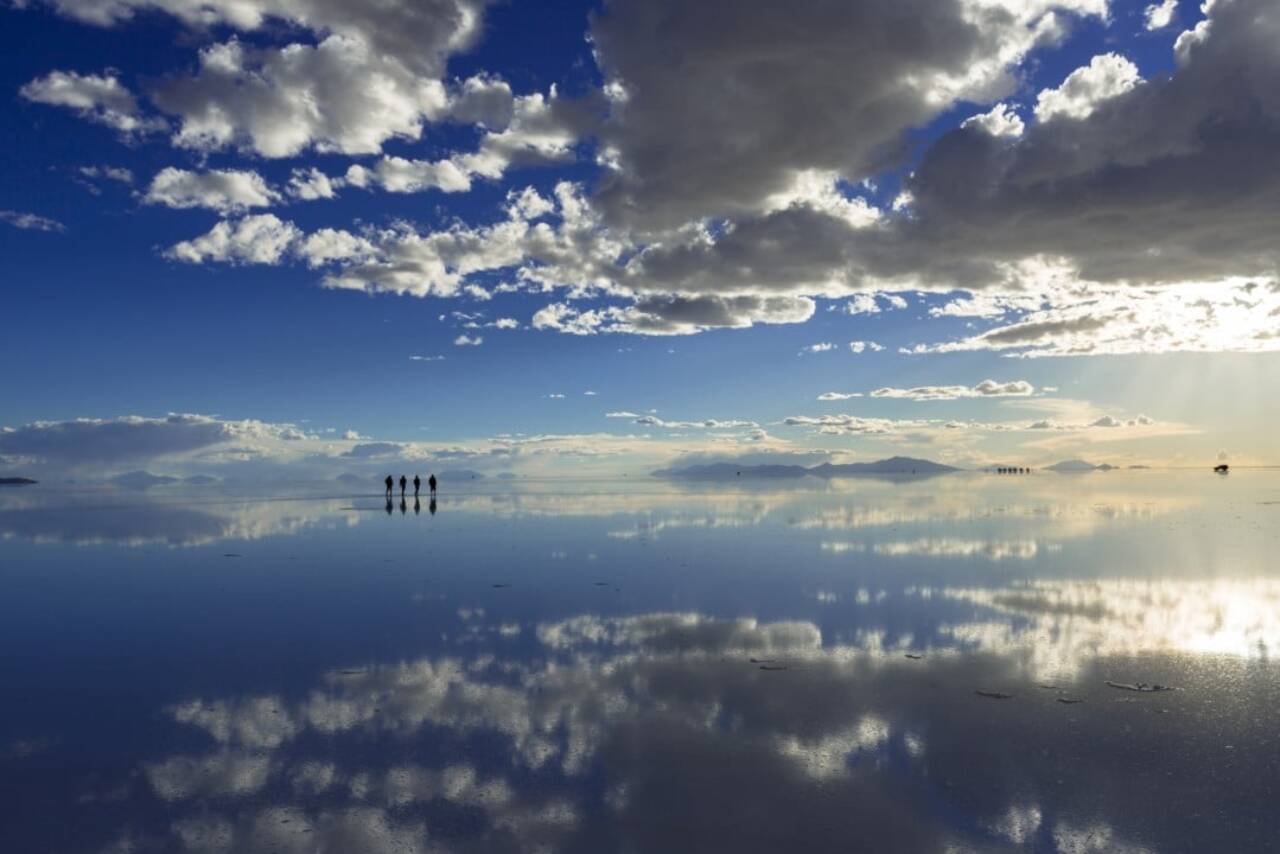
The Salar de Uyuni, located in southwestern Bolivia, is the world’s largest salt flat, covering approximately 10,582 square kilometers. This vast white expanse was formed by the evaporation of prehistoric lakes over thousands of years, leaving behind a thick crust of salt that reflects the sky, creating a stunning visual effect. Situated at about 3,600 meters above sea level, the salt desert attracts hundreds of thousands of tourists annually, making it one of South America’s top travel destinations. Besides its natural beauty, the Salar de Uyuni holds one of the world’s largest lithium reserves, a crucial mineral for manufacturing batteries used in electronic devices and electric vehicles. The economic potential of this resource raises debates about sustainable extraction and the environmental impact that could affect this unique ecosystem.
The landscape of Salar de Uyuni varies according to the season. During the rainy season, from December to April, a thin layer of water covers the surface, creating a mirror effect that perfectly reflects the sky. In the dry season, from May to November, the desert turns into a solid white expanse with natural geometric patterns formed by crystallized salt.
Access to Salar de Uyuni is mainly through the town of Uyuni, which serves as the base for visitors. The town can be reached by air, with flights from La Paz, or by land via buses and trains. Most tourists opt for guided 4×4 excursions, which range from one to four days and include visits to attractions such as the Train Cemetery, the Colored Lagoons, and the Siloli Desert.
Must-See Attractions in Salar de Uyuni
- Incahuasi Island: A rock formation covered with giant cacti, located in the middle of the salt flats.
- Laguna Colorada: A reddish-colored lake due to the presence of algae and minerals, home to pink flamingos.
- Sol de Mañana Geysers: A volcanic area with bubbling mud pools and steam fumaroles.
- Train Cemetery: An abandoned train graveyard that reflects the region’s historical railway past.
- Salt Hotels: Unique accommodations built entirely from salt, offering an extraordinary lodging experience.
Tourism Growth in Salar de Uyuni
Tourism in Salar de Uyuni has grown significantly in recent years. The region now receives over 300,000 visitors annually, drawn by its surreal landscapes and one-of-a-kind experiences. Social media exposure and its inclusion in adventure travel itineraries across South America have further increased its popularity.
Key factors driving tourism in Salar de Uyuni:
- Photogenic landscapes: The mesmerizing mirror effect of the salt flats has gone viral on social media, attracting travelers worldwide.
- Sense of isolation: The Salar provides a direct connection with nature and a rare sense of vastness.
- Exploration of new routes: Travel agencies offer customized tours, including cross-border trips to Chile’s Atacama Desert.
- Expanding infrastructure: New hotels and tourism services improve visitor experiences.
The Importance of Lithium and Economic Impact on Salar de Uyuni
Beyond tourism, Salar de Uyuni plays a vital role in Bolivia’s economy due to its vast lithium reserves. It is estimated that the region holds around 70% of the world’s lithium supply, a mineral essential for manufacturing lithium-ion batteries used in smartphones, laptops, and electric vehicles.
The Bolivian government has invested in lithium extraction as a national development strategy, forming partnerships with foreign companies while promoting policies to nationalize mineral resources. However, lithium extraction raises environmental and social concerns, including its impact on local ecosystems and indigenous communities living in the region.
Environmental Risks and Sustainability Measures
Lithium mining in Salar de Uyuni raises significant environmental concerns, particularly due to excessive water consumption required for extraction. Mining activities can disrupt the ecological balance, leading to desertification and depletion of water resources. Additionally, it may impact local tourism, which relies on the preservation of the landscape to continue attracting visitors.
Measures to ensure sustainable lithium extraction:
- Use of eco-friendly extraction technologies: Alternative methods can minimize environmental damage.
- Environmental compensation: Reforestation and conservation projects can help offset the mining impact.
- Involvement of local communities: Ensuring that economic benefits from lithium mining are shared with local populations.
Fascinating Facts About Salar de Uyuni
- The salt crust can support heavy vehicles: The thickness of the salt layer ranges from 1 to 10 meters, allowing safe vehicle travel.
- Once a prehistoric lake: Salar de Uyuni was formed from the evaporation of ancient lakes thousands of years ago.
- Extreme weather conditions: Daytime temperatures can exceed 20°C, while nighttime temperatures drop to -10°C.
- Used by NASA for satellite calibration: The flat surface of the salt flats serves as a reference point for space measurements.
- Ideal for stargazing: The absence of light pollution makes Salar de Uyuni one of the best places in the world for astronomical observation.
Best Time to Visit Salar de Uyuni
The best time to visit Salar de Uyuni depends on the desired experience:
- December to April (rainy season): The salt flat turns into a giant mirror reflecting the sky, creating breathtaking landscapes.
- May to November (dry season): The solid salt formations create geometric patterns, allowing for unrestricted exploration.
Timeline of Salar de Uyuni’s Development
- Thousands of years ago: Formation of Salar due to the evaporation of prehistoric lakes.
- 20th century: Commercial salt extraction begins in Bolivia.
- 1980s: First tourists start visiting the region.
- 2000s: Rapid tourism growth due to social media exposure.
- Present: Salar is recognized as one of South America’s top tourist destinations and a crucial global lithium reserve.
Economic Impact of Tourism in Salar de Uyuni
- Job creation: The tourism sector employs thousands of people, from guides to hotel and restaurant staff.
- Improved local infrastructure: New hotels, lodges, and tourism services have developed to meet increasing demand.
- Revenue boost for Bolivia: Tourism has become a significant source of foreign currency for the country.