Nasa lowers chance of asteroid 2024 YR4 colliding with Earth to under 0.000019%

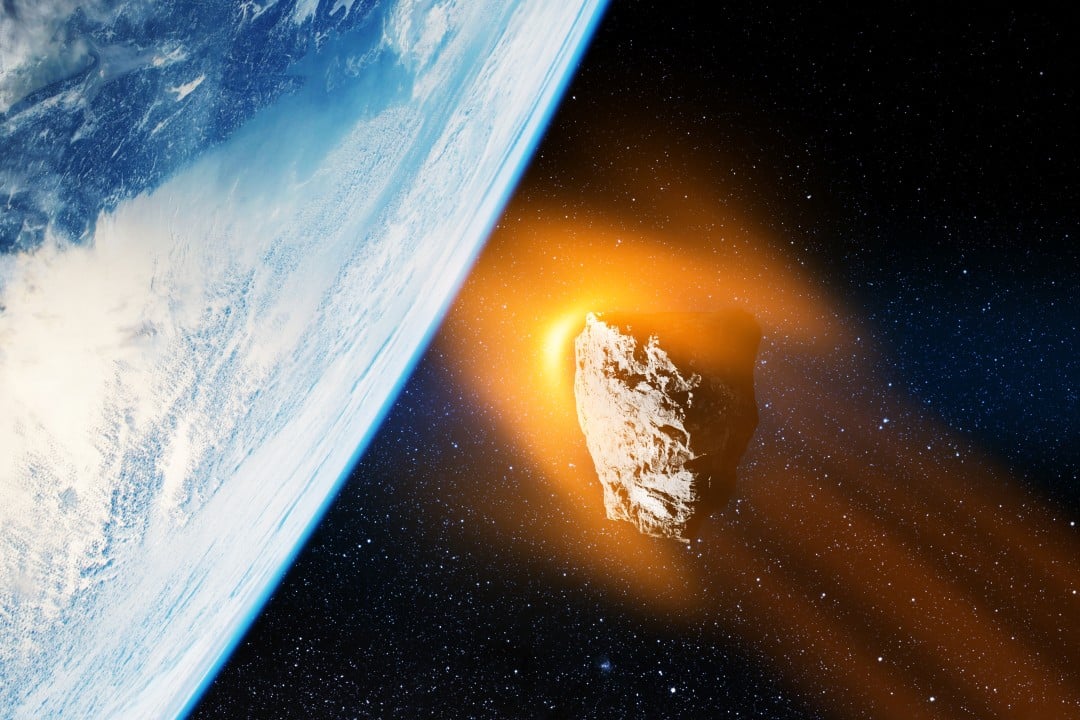
The threat of a devastating impact on Earth has been virtually ruled out by Nasa with updated data on asteroid 2024 YR4. Recently discovered, the object, estimated at 55 meters in size—comparable to an 18-story building—once raised concerns among scientists with a 3.1% chance of collision in initial measurements. Now, with more precise observations, the U.S. space agency announced that the risk has dropped to 0.000019%, or one in over 5 million. Traveling at nearly 48,000 km/h, the rock is currently about 80 million kilometers from Earth and remains under close watch, despite challenges posed by its faint brightness.
Relief from this new estimate does not eliminate the need for constant vigilance. Asteroids like 2024 YR4 belong to a group of near-Earth objects (NEOs) that demand attention due to their destructive potential. If it were to strike the planet, the energy released in the atmosphere would equate to 8 megatons, over 500 times the power of the atomic bomb dropped on Hiroshima in 1945. While it wouldn’t trigger a global event, the impact could obliterate an entire city, leaving behind significant destruction.
The asteroid’s trajectory was refined based on months of collected data, ruling out a collision in 2032, a date previously deemed critical. This progress highlights the effectiveness of Nasa’s monitoring systems, such as the Center for Near-Earth Object Studies (CNEOS), which tracks thousands of celestial bodies in real time to safeguard the planet from space threats.
Asteroide 2024 YR4: da minaccia a opportunità scientifica spaziale https://t.co/Lo5jj4RILM
— HDblog (@HDblog) March 19, 2025
Recalculated trajectory eases scientists’ concerns
The discovery of asteroid 2024 YR4 took place in late 2024, when ground-based telescopes first detected it in an orbit nearing Earth. Early calculations suggested a 2% chance of impact, which later rose to 3.1% with additional observations. This uptick sparked alertness among astronomers, given that objects of this size can cause substantial harm. However, recent measurements using advanced tracking technology have drastically reduced this estimate, bringing the collision probability to a near-negligible level.
Currently, the asteroid follows an elliptical path that keeps it at a safe distance. Its impressive speed of nearly 48,000 km/h and its 80-million-kilometer distance complicate continuous observation, especially as its brightness continues to fade. Tools like the Pan-STARRS telescope in Hawaii and the Goldstone radar in California have been vital in refining data and ensuring the accuracy of predictions.
Tracking such objects is routine for Nasa, which maintains an updated catalog of NEOs. As of March 2025, over 34,000 asteroids have been identified in this category, with around 1,300 classified as potentially hazardous due to their size and proximity to Earth. For now, 2024 YR4 has been removed from the list of immediate risks.
Destructive potential amazes experts
Even with the reduced likelihood of impact, asteroid 2024 YR4 stands out for its destructive potential. At 55 meters in diameter, it’s small compared to celestial bodies capable of causing mass extinctions, such as the one that struck Earth 66 million years ago and wiped out the dinosaurs. Still, its ability to release 8 megatons of energy makes it a significant local threat. By comparison, the Hiroshima bomb unleashed about 0.015 megatons, underscoring the scale of devastation such an event could bring.
Should a collision occur, the asteroid would explode upon entering the atmosphere, generating a shockwave capable of leveling buildings, igniting fires, and forming a crater up to 1 kilometer wide, depending on the terrain. Densely populated cities would be the most vulnerable, with the potential for thousands of casualties and damages costing billions of dollars. Rural areas might fare better but would still face fallout like debris showers and tremors.
Continuous monitoring remains critical due to these possibilities. Although the current risk is minimal, orbital variations influenced by gravitational forces or collisions with other space objects could alter its path in the future. This is why Nasa and other space agencies sustain dedicated programs to study and, if needed, develop technologies to deflect hazardous asteroids.
Timeline of 2024 YR4 monitoring
Tracking asteroid 2024 YR4 followed a detailed process that reflects the meticulous work of scientists:
- Late 2024: Asteroid discovered by ground telescopes, with an initial collision risk estimated at 2%.
- Early 2025: Probability rises to 3.1% based on new data, raising concerns among experts.
- March 2025: Orbit recalculation lowers the chance to 0.000019%, ruling out impact in 2032.
This timeline illustrates how predictions evolve as more data is gathered. Advanced computational models and frequent observations enable scientists to refine projections and avoid unnecessary alarms.
Protective measures against space threats
Nasa and international organizations have been investing in strategies to mitigate cosmic collision risks. A milestone in this effort was the DART (Double Asteroid Redirection Test) mission in 2022, which successfully altered a small asteroid’s orbit by crashing a spacecraft into it. The experiment proved that redirecting space objects is feasible—a technology that could be applied to cases like 2024 YR4 if the risk escalates.
Additionally, projects like the NEO Surveyor, a space telescope slated for launch in 2028, promise to enhance early detection of asteroids. Equipped with infrared sensors, it will excel at spotting dark or faint objects like 2024 YR4 with greater efficiency. Until then, surveillance relies on ground-based facilities and global scientific collaboration.
Another key focus is mapping NEOs. Of the over 34,000 known objects, about 10% exceed 140 meters in diameter, the threshold for being considered potentially catastrophic. At 55 meters, 2024 YR4 falls below this mark but still warrants attention for its localized destructive capacity.
Curious facts about near-Earth asteroids
Asteroids like 2024 YR4 are part of a dynamic landscape that fascinates scientists and the public alike. Here are some relevant insights:
- Small meteoroids strike Earth daily, but most disintegrate in the atmosphere without causing harm.
- Objects over 50 meters, like 2024 YR4, frequently cross Earth’s orbit, though collisions are rare.
- The most notable recent impact occurred in 2013 in Chelyabinsk, Russia, where a 17-meter asteroid exploded, injuring over 1,000 people.
These facts underscore the value of early warning systems and planetary defense technologies, which continue to advance to ensure Earth’s safety.
Advances in space observation
Monitoring asteroids like 2024 YR4 is a challenge that demands cutting-edge equipment and international coordination. The object’s faint brightness, which has been steadily decreasing, hinders visibility with traditional optical telescopes. To overcome this, scientists rely on radars and advanced sensors capable of pinpointing the position and speed of celestial bodies even at vast distances.
The current 80-million-kilometer distance may seem reassuring, but in space terms, it’s relatively close. A minor orbital shift, triggered by gravitational interactions with planets like Jupiter or Mars, could bring the asteroid back into focus as a concern. Fortunately, current models suggest this won’t happen for decades.
Collaboration among space agencies, including Nasa, the European Space Agency (ESA), and Japan’s National Observatory, plays a vital role. Real-time data sharing provides a fuller picture of these objects’ behavior, boosting prediction accuracy and response capabilities to potential threats.