Eddie Jordan dies at 76: Formula 1 legend leaves legacy of innovation and charisma

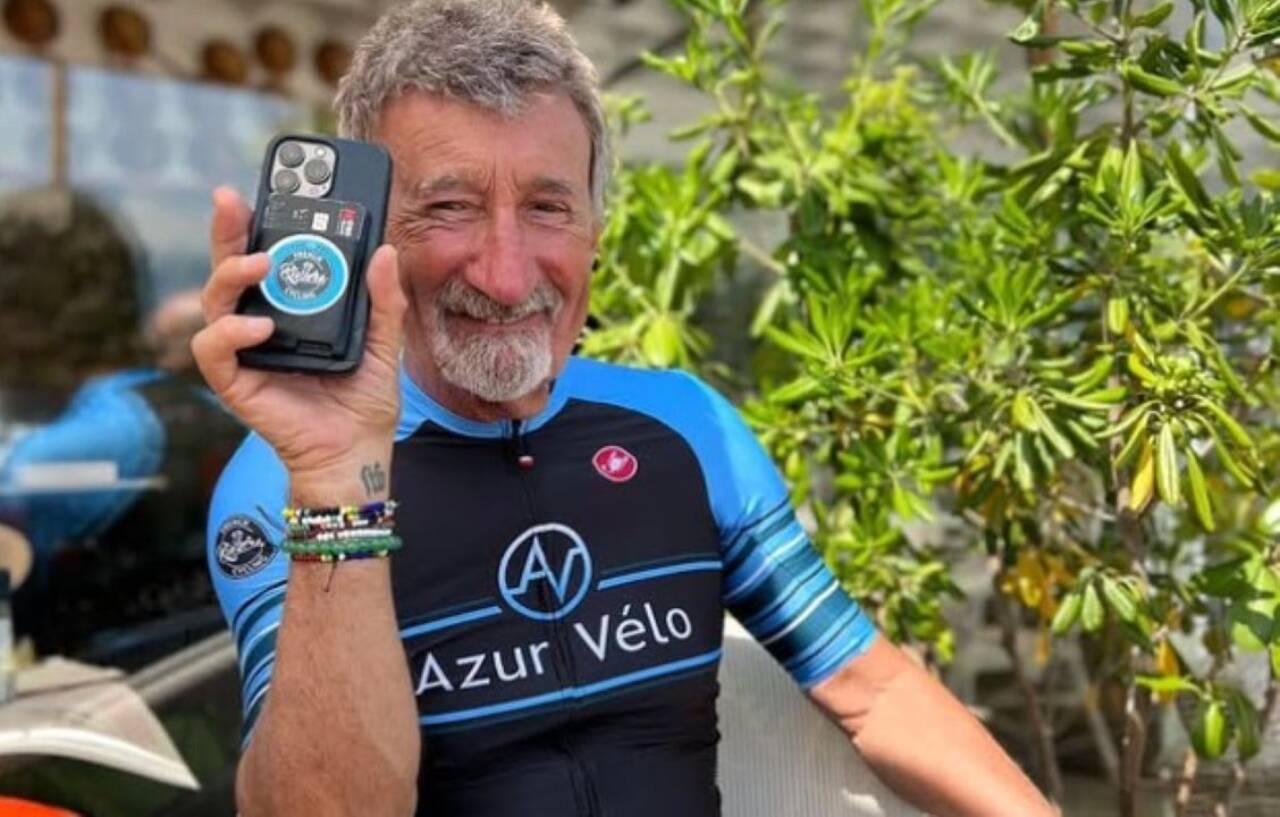
The Formula 1 community awoke in mourning this Thursday, March 20, with the news of the passing of Eddie Jordan, one of the most iconic and charismatic figures in the sport’s history. At 76 years old, the former owner of Jordan Grand Prix died peacefully in Cape Town, South Africa, surrounded by his family, following a 12-month battle with aggressive prostate cancer. Diagnosed early last year, Jordan faced the illness with the same determination that drove him to build a competitive team in a landscape dominated by financial giants. His death marks the end of an era for motorsport, but his legacy as an entrepreneur, talent scout, and vibrant personality remains indelible. Born in Dublin, Ireland, on March 30, 1948, he turned his passion for racing into a career that reshaped Formula 1, launching the careers of stars like Michael Schumacher and Damon Hill.
Eddie Jordan was more than just a team boss; he was a symbol of boldness and creativity in a sport often rigid and predictable. His journey began on Ireland’s karting tracks, progressed through categories like Formula Ford and Formula 3, and culminated in the founding of Jordan Grand Prix in 1991—a team that defied expectations and secured memorable victories. Even after selling the team in 2005, his influence endured, whether as a commentator for the BBC and Channel 4 or as an agent for figures like Adrian Newey, the renowned designer who recently moved from Red Bull to Aston Martin under Jordan’s management.
???? ÚLTIMA HORA ????
— Grande Prêmio (@grandepremio) March 20, 2025
Ex-dono de equipe na #F1, Eddie Jordan morre aos 76 anos https://t.co/5QfkIZZu1O #F12025 #F1noGP
Beyond motorsport, Jordan left his mark in other fields, such as rugby, by leading a consortium that saved London Irish from bankruptcy, and in music, with his band and drumming skills. His family noted in a statement the “huge hole” left by his absence, but also the “Irish charm” and “tons of happy memories” he gave to everyone who knew him.
A life dedicated to racing
From karting to Formula 1’s doorstep: Eddie Jordan’s early steps
Eddie Jordan was born in an Ireland of the 1940s that was far removed from the glamour of Formula 1 circuits. His passion for motorsport ignited early, winning the Irish Karting Championship in the 1970s. The shift to single-seaters followed soon after, with stints in Formula Ford, Formula 3, and even a run at the 24 Hours of Le Mans. Though he never reached the pinnacle as a driver, his vision and grit led him to pivot from competitor to manager. By the late 1970s, he founded Eddie Jordan Racing, a team that quickly gained prominence in junior categories, nurturing talents like Martin Brundle, with whom he contested the 1983 British Formula 3 title against Ayrton Senna. This was the first hint of Jordan’s knack for spotting future champions.
His rise continued with a move to Formula 3000, where his team built a reputation for competence and innovation. In 1991, the big leap came: Jordan Grand Prix debuted in Formula 1, bringing a laid-back approach and an independent spirit to a sport ruled by major manufacturers. With a car designed by Gary Anderson, the debut season stunned observers, finishing fifth in the constructors’ championship—a remarkable achievement for a rookie outfit with limited resources.
Schumacher’s debut and the initial impact
That same year, Jordan made a decision that would alter Formula 1 history. During the Belgian Grand Prix, he gave Michael Schumacher, then a 22-year-old German driver, his first shot in the category. Schumacher impressed by qualifying seventh, though a clutch failure sidelined him at the start. Despite the retirement, his talent shone through, and he was soon snapped up by Benetton, beginning a career that would yield seven world titles. Jordan’s choice underscored his unique ability to see potential where others saw uncertainty, a trait that would define his path in the sport.
The peak of Jordan Grand Prix
1998: the historic win in Belgium
Eddie Jordan’s crowning moment as a team boss arrived in 1998 at the Belgian Grand Prix, held under torrential rain at Spa-Francorchamps. Damon Hill, a former world champion overlooked by other teams after leaving Williams, led a historic one-two finish alongside Ralf Schumacher, Michael’s younger brother. The victory, Jordan’s first in Formula 1, stemmed from bold strategy and a direct order from Jordan to Ralf not to overtake Hill, securing the 1-2 in chaotic conditions. It was a triumphant moment for an independent team battling rivals with far larger budgets.
The 1998 success wasn’t a fluke. The following year, Jordan enjoyed its most competitive season, with Heinz-Harald Frentzen winning two races—in France and Italy—and vying for the world title until the final rounds. The team finished third in the constructors’ championship, an extraordinary feat for an outfit relying more on ingenuity than finances. Another win came in 2003 at the chaotic Brazilian Grand Prix, where Giancarlo Fisichella capitalized on a brilliant strategy amid rain and crashes.
Financial struggles and the team’s sale
Despite the triumphs, Jordan Grand Prix faced mounting challenges in the early 2000s. Losing Honda’s engine supply to BAR in 2002 was a severe blow, and the team struggled to stay competitive against the financial might of manufacturers like Ferrari and McLaren. In 2005, Eddie Jordan sold the team to the Midland Group, ending a 15-year run in Formula 1 that spanned 250 races, four wins, and an impact far beyond the numbers. The team’s structure evolved through various iterations—Spyker, Force India, Racing Point—before becoming today’s Aston Martin, which still operates from the original Silverstone base as part of Jordan’s legacy.
Beyond the track: a multifaceted legacy
Eddie Jordan as commentator and businessman
After stepping away from Formula 1 as a team owner, Eddie Jordan found a new platform on television. In 2009, he joined the BBC’s broadcast team alongside David Coulthard and Jake Humphrey, delivering sharp insights and his signature humor that won over fans. It was during this stint that he broke the news of Lewis Hamilton’s move from McLaren to Mercedes in 2012, a scoop that cemented his status as a sport insider. He later continued as a commentator for Channel 4 and co-hosted the “Formula For Success” podcast with Coulthard, staying relevant to a new generation of motorsport enthusiasts.
Off the track, Jordan excelled as a versatile entrepreneur. He invested in various sectors, held shares in Celtic Football Club, and recently led a group that acquired the London Irish Rugby Football Club, rescuing it from administration. His influence also extended to talent management, notably with Adrian Newey, whose move to Aston Martin last September was brokered by Jordan, even amidst his health struggles.
Key moments in Eddie Jordan’s career
Eddie Jordan’s Formula 1 journey is filled with defining episodes that shaped his reputation. Here are some of the most notable:
- Michael Schumacher’s debut: In 1991, Jordan gave the future seven-time champion his first Formula 1 opportunity, launching a legendary career.
- Spa one-two: The 1998 victory with Hill and Ralf Schumacher remains the team’s greatest achievement, symbolizing its competitive peak.
- Title contention: In 1999, Heinz-Harald Frentzen drove Jordan to an improbable third place in the championship, challenging giants like Ferrari and McLaren.
- Final win: Fisichella’s 2003 triumph in Brazil, in a rain-disrupted race, marked the team’s victorious farewell in Formula 1.
The enduring impact of a visionary
Timeline of Eddie Jordan’s life
Eddie Jordan’s life can be charted through milestones that trace his evolution from driver to sport icon:
- 1948: Born in Dublin, Ireland, on March 30.
- 1970: Wins the Irish Karting Championship and begins his racing career.
- 1979: Founds Eddie Jordan Racing, starting his path as a team manager.
- 1991: Launches Jordan Grand Prix in Formula 1, finishing fifth in the constructors’ championship in its debut year.
- 2005: Sells the team to the Midland Group, ending his direct involvement in the category.
- 2009: Becomes a BBC commentator, expanding his media presence.
- 2025: Dies in Cape Town at 76, after battling prostate cancer.
Tributes from motorsport figures
Eddie Jordan’s death sparked a wave of tributes across the motorsport world. Stefano Domenicali, Formula 1’s president, praised his boundless energy and said he was a key figure in an era of the sport, deeply missed by the entire community. Martin Brundle, who raced under Jordan in Formula 3 and Formula 1, emphasized his role in countless drivers’ careers, calling him a “rock star” and “born racer.” Christian Horner, Red Bull’s team principal, recalled meeting Jordan in 1991 and the cheeky advice he received: “Get a good sponsor… welcome to the piranha club!”
A void in Formula 1’s paddock
Even while battling aggressive cancer, Jordan stayed active until his final days. Last December, he revealed his diagnosis of bladder and prostate cancer, which had spread to his spine and pelvis. Despite chemotherapy, he kept working, including ambitious plans for the London Irish Rugby Football Club, where he became a patron. His last public message, shared on St. Patrick’s Day, reflected his unrelenting optimism. He leaves behind his wife Marie and children Zoe, Miki, Zak, and Kyle, along with a legacy that spans generations in motorsport and beyond.