
Schumacher leads: meet the 9 drivers with the most wins in the Japan GP of F1

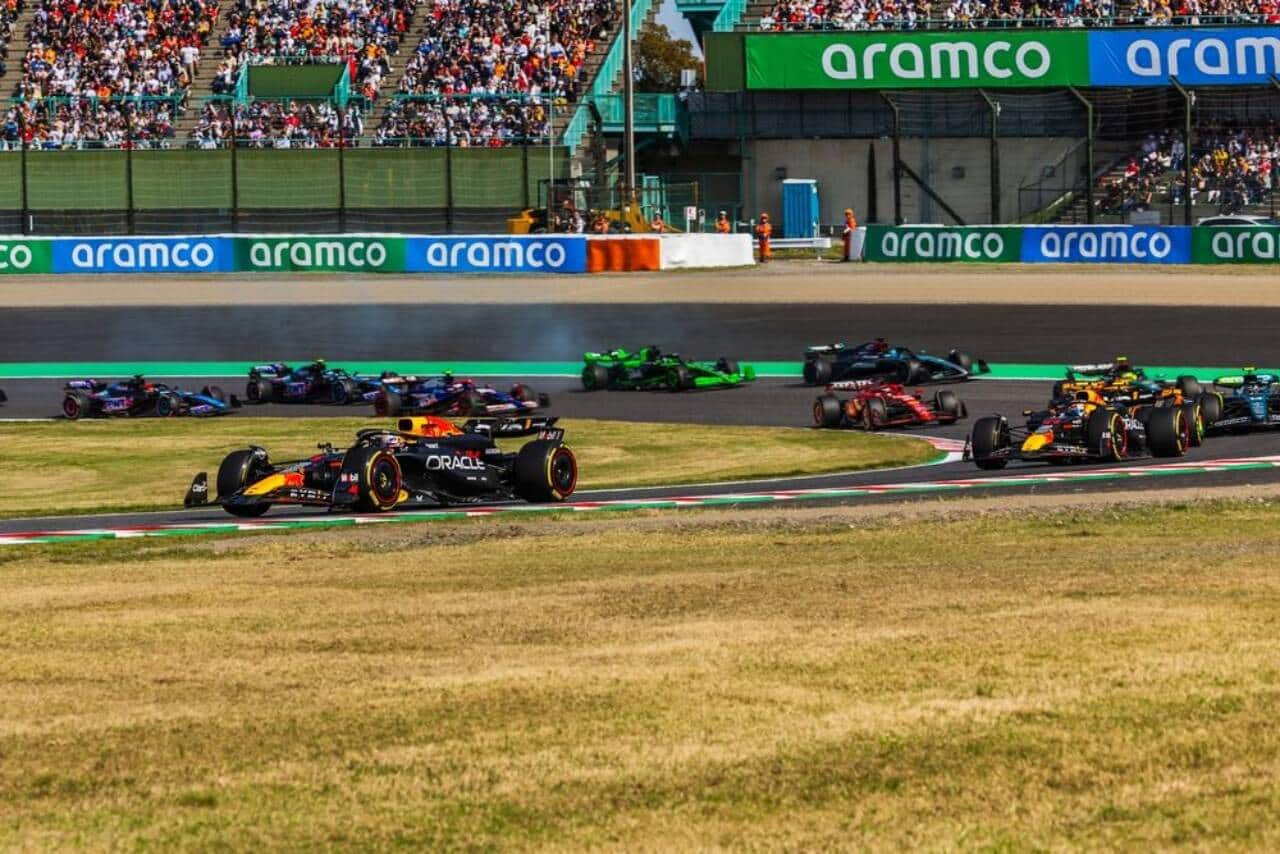
Michael Schumacher raised the trophy at the Suzuka circuit six times, establishing himself as the most successful driver in the history of the Japan Grand Prix of Formula 1. Known for its demanding corners and passionate local fans, the track has hosted unforgettable battles since joining the F1 calendar in 1987. Alongside the German legend, iconic names like Lewis Hamilton, Sebastian Vettel, and Ayrton Senna have also left their mark on the Japanese asphalt, turning the race into a proving ground for the sport’s elite. The blend of skill, speed, and strategy required makes the Japan GP a defining challenge, with the numbers showcasing who has conquered it most often.
Schumacher’s reign began in 1995, when he claimed his first Japan victory with Benetton. Later, driving for Ferrari, he added five more wins, with standout performances in 2000 and 2001 that clinched world titles. Lewis Hamilton follows with five victories, his most recent in 2018 during Mercedes’ dominant era. The Briton’s consistency at Suzuka cements him as a modern F1 giant, while Sebastian Vettel, with four wins, shone brightest between 2009 and 2012 with Red Bull. These drivers’ triumphs highlight their ability to master a circuit that punishes mistakes and rewards precision.
Max Verstappen, the current star of Formula 1, has already secured three wins in Japan, all in recent years, including the 2024 edition. The Dutchman, rewriting records in the sport, excels on a track that demands accuracy in corners like the 130R and Spoon. Meanwhile, legends such as Ayrton Senna, Gerhard Berger, Damon Hill, Mika Hakkinen, and Fernando Alonso, each with two victories, round out the list of top winners, bringing tales of rivalries and iconic moments to the forefront of motorsport history.
Suzuka’s legacy in Formula 1
Nestled in Mie Prefecture, the Suzuka circuit was originally built as a test track for Honda in the 1960s. It debuted in Formula 1 in 1987, with Gerhard Berger taking the inaugural win, kicking off a legacy that soon attracted the world’s best drivers. Unlike most circuits, Suzuka boasts a unique figure-eight layout, stretching 5.8 kilometers with 18 corners that test driver skill. The race quickly became a fan and driver favorite, thanks to its technical demands and the electric atmosphere created by Japanese spectators, renowned for their love of the sport.
Over the decades, the Japan GP has delivered championship-defining moments and dramatic incidents. In 1989, a collision between Ayrton Senna and Alain Prost at the final chicane handed the title to the Frenchman, only for Senna to strike back in 1990 at the same track, securing his second crown. Schumacher sealed five of his seven world titles between 1998 and 2004 at Suzuka, adding to the circuit’s mystique. Its blend of history and unforgiving design keeps it a cornerstone of Formula 1, drawing global attention each year.
- Iconic Suzuka moments:
- 1988: Senna wins his first Japan GP and clinches his maiden world title.
- 2000: Schumacher outduels Hakkinen in an epic fight to claim his third championship.
- 2014: Heavy rain overshadows the race with Jules Bianchi’s tragic crash.
- 2022: Verstappen seals his second title in a chaotic, rain-soaked event.
German dominance in the land of the rising sun
German drivers stand out among the Japan GP’s top winners, amassing ten victories combined. Michael Schumacher’s six triumphs lead the pack, while Sebastian Vettel adds four, achieved consecutively from 2009 to 2012. Schumacher’s success at Suzuka showcased his adaptability to technical tracks, a hallmark of his illustrious career. Vettel capitalized on Red Bull’s edge in the naturally aspirated engine era, with his 2009 win relying on a flawless pit-stop strategy.
This German consistency contrasts with the diverse nationalities on the list. Lewis Hamilton, the sole Briton in the top nine, boasts five wins and remains the most successful active driver alongside Verstappen. Ayrton Senna, the only Brazilian, claimed two victories in 1988 and 1991, becoming a Japanese fan favorite for his daring style and charisma. Mika Hakkinen (Finland), Gerhard Berger (Austria), and Fernando Alonso (Spain) further highlight the global appeal of Formula 1 and the challenge of winning at such a grueling circuit.
Verstappen and the rise of a new era
Max Verstappen has turned the Japan GP into his playground in recent years. His first Suzuka win came in 2022, overcoming treacherous rain to secure his second world title. In 2023, he dominated from start to finish, leading every lap and setting the fastest time. The 2024 edition saw him repeat the feat, solidifying his place among the track’s greats. At just 27, Verstappen’s three wins suggest he could climb higher in the rankings in the coming seasons.
Verstappen’s success mirrors the evolution of Formula 1, with faster cars and cutting-edge technology. Unlike the Senna-Schumacher era of raw duels and limited electronics, he benefits from a Red Bull car built for high-speed corners. His mastery of Suzuka, particularly the high-G 130R curve, underscores how the new generation is pushing the sport’s boundaries, blending talent with advanced engineering.
Numbers behind Japan’s F1 history
The stats paint a clear picture of dominance at Suzuka. Schumacher tops the list with six wins, followed by Hamilton (five) and Vettel (four). Verstappen’s three victories already outpace legends like Senna, Berger, Hill, Hakkinen, and Alonso, each with two. These figures reflect not just individual brilliance but also the strength of teams across different eras. Ferrari, McLaren, and Red Bull stand out as the most successful outfits at the circuit, especially during Schumacher’s and Vettel’s peak years.
- Top winners’ rankings:
- Michael Schumacher: 6 wins (1995, 1997, 2000, 2001, 2002, 2004)
- Lewis Hamilton: 5 wins (2007, 2014, 2015, 2017, 2018)
- Sebastian Vettel: 4 wins (2009, 2010, 2011, 2012)
- Max Verstappen: 3 wins (2022, 2023, 2024)
- Ayrton Senna, Gerhard Berger, Damon Hill, Mika Hakkinen, Fernando Alonso: 2 wins each
Senna’s special bond with Japanese fans
Ayrton Senna captured the hearts of Japanese fans with his Suzuka performances. His 1988 victory, after a botched start, saw him overtake Alain Prost on lap 28 to clinch his first world title. In 1991, he triumphed again, deepening his connection with the local crowd. Japanese spectators, known for filling the stands with flags and banners, embraced Senna’s relentless drive, which resonated with their cultural values.
Senna’s influence in Japan extended beyond racing. His partnership with Honda, McLaren’s engine supplier at the time, strengthened his ties to the nation. Even today, tributes to the Brazilian dot Suzuka during race weekends, with fans waving his iconic yellow helmet colors. Though his two wins pale in number compared to Schumacher or Hamilton, their emotional weight keeps his legacy alive among motorsport enthusiasts.
Corners and challenges that crown champions
Suzuka’s reputation hinges on its corners, which push drivers to their limits. The opening Esses demand pinpoint accuracy, while the high-speed 130R separates the bold from the timid. The slower Spoon Curve requires finesse to maintain momentum into the following straight. These features make the track a driver’s delight but a nightmare for errors, as seen in historic crashes involving Prost, Senna, and Bianchi.
Schumacher and Verstappen thrived in these sections. The German leveraged his skill in fast corners to pull ahead, while Verstappen uses modern aerodynamics to attack the 130R with confidence. Hamilton, meanwhile, has emphasized strategy at Suzuka, where tire choices and pit-stop timing often decide the outcome. This mix of bravery and calculation explains why only the best consistently reach the podium here.
Timeline of Japan’s standout victories
The Japan GP has produced moments etched in Formula 1 lore. Here are some of its most memorable wins:
- 1987: Gerhard Berger takes the first Suzuka victory for Ferrari.
- 1988: Senna beats Prost to secure his first world championship.
- 1995: Schumacher kicks off his Japan win streak with Benetton.
- 2009: Vettel begins his four-year winning run at Suzuka.
- 2022: Verstappen locks in his second title amid chaotic conditions.
The enduring appeal of the Japan GP
The Japan Grand Prix remains a highlight of the Formula 1 season. Suzuka, upgraded over the years for safety, retains its challenging core. The 2024 race, won by Verstappen, drew over 220,000 fans across the weekend, underscoring its global pull. With Honda committed to the sport until 2026, the circuit is poised to host more epic battles in the years ahead.
Emerging stars like Verstappen have the chance to build on their Suzuka records, while legends like Schumacher, Hamilton, and Senna stand as benchmarks of excellence. The track’s rich history and unique layout continue to reveal the sport’s true masters, year after year. Its status as a driver’s circuit ensures it remains a crucible for talent and technology.
Japan’s automotive industry bolsters the event’s longevity. Honda, which powered Senna and Berger to victory, now fuels Red Bull’s success with Verstappen. This synergy has coincided with the Dutchman’s rise, hinting he could match or surpass Vettel and Hamilton in the future. Suzuka, then, is more than a race—it’s a living testament to Formula 1’s evolution.





