Pink Moon lights up 2025: Unravel the microlunar phenomenon in detail


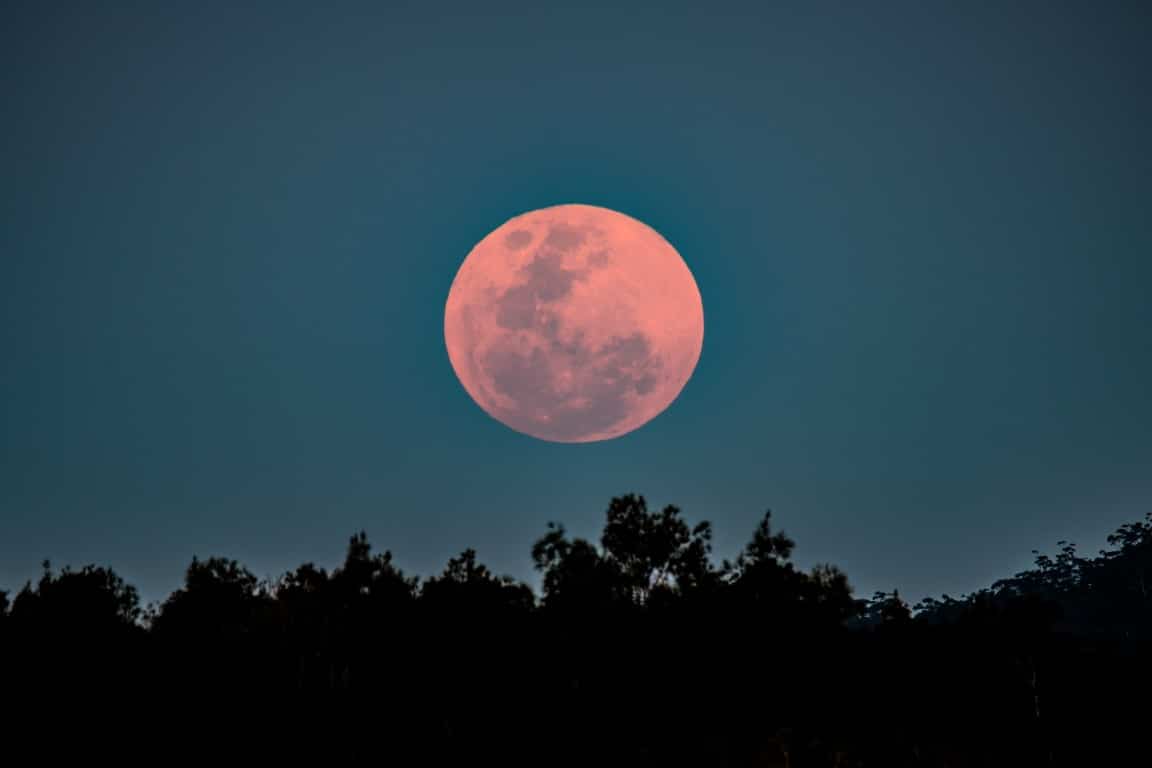
The first microluna of 2025 illuminated the night sky from Saturday (12) to Sunday (13), offering a celestial spectacle that drew eyes worldwide. Known as the Pink Moon, this full moon carries a name rooted in cultural and seasonal traditions rather than any change in hue. Occurring at apogee—the point when the moon is farthest from Earth, roughly 403,000 kilometers away—it appeared smaller and less radiant but no less captivating. This event, marking the first full moon of spring in the Northern Hemisphere and autumn in the Southern Hemisphere, blended astronomical precision with historical significance, captivating observers across continents.
In the Northern Hemisphere, the Pink Moon heralds spring’s arrival, a time of blooming flowers and renewal. Conversely, in the Southern Hemisphere, it aligns with autumn’s golden and crimson landscapes. The name originates from Native American tribes in the United States, inspired by the pink phlox flowers that blossom in the eastern U.S. during April. This connection to nature transforms the Pink Moon into more than an astronomical event—it’s a cultural touchstone, uniting people through shared moments of sky-gazing.
Unlike super moons, which dazzle with their proximity to Earth, microlunas require a keener eye. Their smaller appearance doesn’t diminish their allure, as they carry deep historical and seasonal meaning. In 2025, the Pink Moon kicked off the lunar calendar with a quiet elegance, captured in stunning photographs from cities like Istanbul, Turkey, and Tirana, Albania, where clear skies framed the moon’s subtle glow against urban and natural backdrops.
Origin of the Pink Moon name
The term Pink Moon has nothing to do with the moon’s color, which remains its usual silvery glow. It stems from Native American traditions, particularly the Algonquin tribes, who named full moons based on seasonal events. In April, the vibrant pink petals of phlox subulata flowers inspired the moniker. This naming practice reflects a profound bond with the environment, a legacy that resonates with modern observers who marvel at the same celestial rhythms.
Beyond its Native American roots, the Pink Moon holds significance in various global traditions. In some cultures, it marks moments of spiritual renewal or celebrations tied to the land’s fertility. Astronomically, it stands out as the first full moon after the March equinox in the Northern Hemisphere, influencing dates for religious observances like Easter in many Christian communities. This blend of science, culture, and history elevates the Pink Moon into a multifaceted phenomenon.
For Native peoples, naming full moons served as a guide for seasonal tasks like planting or harvesting. The Pink Moon signaled the time to prepare fields for new crops. Documented by European settlers and preserved in almanacs like the Old Farmer’s Almanac, these names endure, linking past and present through shared celestial observation. Today, the Pink Moon invites people to pause and connect with both nature and tradition.
What is a microluna?
A microluna occurs when a full moon aligns with apogee, the farthest point in its orbit from Earth. At roughly 403,000 kilometers away, it contrasts with the perigee, when super moons shine at about 356,000 kilometers. This variation results from the moon’s elliptical orbit, which causes it to swing closer and farther from Earth each month. The 2025 Pink Moon, as the year’s first microluna, stood out for its delicate presence.
Though smaller in appearance, microlunas retain their visual impact. In 2025, clear skies in regions like Europe and Asia allowed for breathtaking views, with the moon standing out against the night. Its dimmer glow—about 30% less bright than a super moon—demands ideal viewing conditions, such as areas free from light pollution, making rural settings or elevated urban spots prime locations for observation.
Microlunas also affect natural phenomena like tides. Their influence is subtler than that of super moons, contributing to neap tides, which occur when the moon and sun form right angles relative to Earth. These tides are less extreme but still noticeable in coastal areas, where communities track lunar cycles for fishing and navigation, integrating celestial rhythms into daily life.
Microluna vs. super moon differences
Understanding the contrast between microlunas and super moons enhances appreciation of lunar diversity. Microlunas occur at apogee, making the moon appear smaller, while super moons, at perigee, dazzle with proximity. This closeness can make super moons look up to 14% larger and significantly brighter, creating a more dramatic visual effect.
- Apparent size: Microlunas seem smaller, while super moons dominate the sky.
- Brightness: Super moons shine up to 30% brighter, perfect for night photography.
- Frequency: 2025 will see three super moons and multiple microlunas, starting with the Pink Moon.
- Cultural impact: Both carry seasonal names, but super moons often steal the media spotlight.
Neither event outshines the other in value. Microlunas encourage quiet contemplation, while super moons inspire awe. The 2025 lunar calendar promises a balance of these moments, with dates already circled by astronomers and skywatchers alike.
Cultural significance of the Pink Moon
The Pink Moon extends beyond astronomy, shaping traditions worldwide. In the U.S., it marks spring with flower festivals and outdoor ceremonies. In Asia, full moons in April sometimes align with Buddhist celebrations like Vesak, though dates vary by lunar calendars. These connections highlight the moon’s role as a universal symbol of renewal and reflection.
Social media amplifies the Pink Moon’s reach, with thousands sharing photos and stories online. Cities like São Paulo, London, and Tokyo saw surges in posts during the event, showcasing the moon framed by skyscrapers or natural landscapes. This digital engagement transforms the Pink Moon into a global moment, bridging cultures through shared wonder.
In popular culture, the Pink Moon inspires music, poetry, and art, often tied to themes of rebirth. For many, watching the moon offers a rare pause, a chance to reconnect with nature’s cycles. This emotional resonance, though personal, underscores why the Pink Moon remains a cherished event across generations.
Lunar events in 2025
The Pink Moon is just the start of 2025’s lunar lineup. The year promises super moons, eclipses, and other full moons with traditional names, like the Wolf Moon in January or the Harvest Moon in September. Each offers a chance to engage with the sky, whether for science, culture, or pure enjoyment.
- January: Wolf Moon, tied to winter’s chill in the Northern Hemisphere.
- September: Harvest Moon, linked to agricultural abundance.
- October: Hunter’s Moon, signaling autumn’s shift.
- November: Beaver Moon, named for winter preparations.
These events, alongside the Pink Moon, form a cycle that mirrors seasonal changes and reinforces the lunar calendar’s role in human history. Astronomers anticipate 2025 as a vibrant year for skywatching, with favorable conditions expected globally.
How to observe a microluna
Viewing a microluna like the Pink Moon requires specific conditions for the best experience. Unlike super moons, which shine through clouds, microlunas benefit from dark, clear skies and unobstructed horizons. In urban areas, finding a high vantage point—like a rooftop or hill—enhances visibility.
Binoculars or small telescopes reveal lunar details, such as craters and maria, but the naked eye suffices for casual enjoyment. In 2025, stable weather in many regions made the Pink Moon accessible to millions, with no equipment needed beyond curiosity and a good spot.
Photography is also popular. For crisp shots, experts suggest manual camera settings, long exposures, and a tripod. Focusing on the moon’s texture can yield stunning results, turning a simple image into a lasting memento of the night.
Pink Moon curiosities
The Pink Moon brims with intriguing facts that deepen its appeal. Beyond its floral namesake, it carries alternative titles across cultures, reflecting diverse interpretations of the same event.
- Other names: Known as the Egg Moon for springtime bird nesting or Grass Moon for new growth.
- Religious ties: It helps set Easter’s date, falling on the first Sunday after the equinox full moon.
- Nature’s response: Nocturnal animals, like owls, may shift behaviors under brighter moonlight.
- Global visibility: In 2025, the Pink Moon graced every continent, with timings varying by time zone.
These tidbits reveal the Pink Moon’s layered significance, blending science, tradition, and ecology into one luminous moment.
The science of apogee
Apogee, when the moon is farthest from Earth, follows the mechanics of orbital dynamics. The moon’s elliptical path ranges from 356,000 to 406,000 kilometers, with microlunas marking the outer edge. At this distance, Earth’s gravity exerts less pull, leading to milder tidal effects.
Astronomers use apogee to refine orbital models, critical for future lunar missions. In 2025, precise measurements of the Pink Moon aided predictions of long-term lunar behavior, supporting space exploration goals. These calculations underscore the moon’s role in advancing human knowledge.
The smaller appearance of a microluna is an optical effect of distance. Despite this, its light carries the story of the solar system’s formation, a reminder of the universe’s vast history visible from any backyard.
The moon’s global cultural role
Across history, the moon has shaped human culture, and+I4 the Pink Moon is no exception. In Japan, spring full moons inspire lunar hanami, a quieter cousin to cherry blossom viewing. In Latin America, indigenous groups tie full moons to planting or fishing, practices still alive in rural Brazil among Tupi-Guarani descendants.
Social media now extends this legacy, with Pink Moon hashtags trending worldwide. Photographers blend the moon with urban or natural scenes, creating a modern archive of lunar awe. This mix of ancient reverence and digital connection keeps the moon central to human storytelling.
The Pink Moon’s universal appeal lies in its cyclical nature, a symbol of continuity that speaks to both ancestors and algorithms. Its glow invites reflection, no matter the era or platform.
Amateur astronomy and lunar events
The 2025 Pink Moon sparked enthusiasm among amateur astronomers, a growing community worldwide. Astronomy clubs in cities like Rio de Janeiro, New York, and Sydney hosted viewing events, offering telescopes to the public. These gatherings make science accessible, fostering curiosity across ages.
Amateurs play a vital role, contributing photos and observations that complement professional research. During the Pink Moon, crowd-sourced images helped track atmospheric conditions, aiding climate studies. This collaboration highlights the power of collective skywatching.
For young observers, events like these can ignite lifelong passions. A child peering through a telescope at the Pink Moon might one day study astrophysics, showing how microlunas quietly shape the future of science.
Capturing the microluna’s beauty
The Pink Moon of 2025 produced breathtaking images globally. In Istanbul, photographers framed the moon against minarets. In Tirana, Albania, it glowed over hills. In Brazil, coastal cities like Florianópolis shared shots that went viral, blending lunar light with ocean horizons.
Lunar photography blends skill and creativity. Including foreground elements—like trees or buildings—adds depth, while the microluna’s softer light challenges photographers to perfect their settings. The results are more than images; they’re stories of a shared night under the same sky.
Each photo captures a unique perspective, from quiet rural moments to bustling urban scenes. The Pink Moon’s understated glow inspired countless lenses to turn upward, preserving its beauty for posterity.
The future of lunar observation
Interest in events like the Pink Moon will likely surge, fueled by technology and space exploration. Programs like Artemis, aiming to return humans to the moon, heighten public curiosity. The 2025 microluna reminded skywatchers of this nearing frontier, blending wonder with anticipation.
Affordable telescopes and astronomy apps now make the sky accessible to all. During the Pink Moon, these tools helped novices navigate the stars, enriching the experience. As technology evolves, lunar observation will become even more immersive.
The moon remains a bridge between past and future, its cycles guiding both ancient farmers and modern astronauts. Events like the Pink Moon ensure it stays a beacon for exploration and unity.