Most fuel-efficient hybrid cars in Brazil: Kia Stonic, Toyota Corolla Cross, and Chery Tiggo lead with prices from $26,998


The rise of hybrid cars in Brazil reflects a significant shift in the automotive market, with consumers seeking options that combine fuel efficiency, sustainability, and advanced technology. In 2024, hybrid vehicle sales surged by 67% in the first seven months compared to the same period the previous year, according to data from the National Federation of Motor Vehicle Distribution (Fenabrave). These figures highlight the growing demand for models that integrate electric and combustion engines, offering an efficient alternative for those looking to cut costs without relying solely on charging infrastructure. With prices starting at $26,998, the 11 most affordable hybrids in the Brazilian market cater to diverse profiles, from compact models like the Kia Stonic to robust SUVs like the Haval H6 PHEV34.
Hybrids stand out for their versatility, available in three categories: mild (MHEV), full (HEV), and plug-in (PHEV). Each type offers specific benefits, from the simplicity of mild systems to the electric range of plug-ins, which can exceed 100 km in electric mode. Brands like Toyota, BYD, Chery, and Kia dominate the segment, delivering models equipped with driving assistants, modern multimedia systems, and advanced safety features. Below is a detailed analysis of the most economical models, focusing on prices, fuel economy, and features that make them attractive options in the Brazilian market.
The increased demand for hybrids also reflects government incentives and the expansion of charging infrastructure, although most listed models do not rely solely on charging stations. The combination of energy efficiency and competitive pricing positions these vehicles as a bridge between traditional cars and electric vehicles, meeting the needs of a public that values economy and reduced environmental impact.
- Kia Stonic: Most affordable mild hybrid, priced at $26,998 with 32.2 mpg in the city.
- Toyota Corolla Cross: Flex-fuel SUV with 41.6 mpg in the city, starting at $40,538.
- Haval H6 PHEV34: Plug-in hybrid with 116 km electric range, priced at $56,200.
What are hybrid cars and why are they trending
Hybrid cars combine a combustion engine with one or more electric motors, using batteries to store energy and optimize fuel consumption. This technology reduces pollutant emissions and offers significant savings, especially in urban environments where heavy traffic favors electric mode. In Brazil, the popularity of hybrids has grown due to rising fuel prices and increased environmental awareness, with 43,000 units registered between January and August 2023.
There are three main types of hybrids in the market. Mild hybrids (MHEV) use a small battery to assist the combustion engine but cannot propel the vehicle alone. Full hybrids (HEV) allow the car to run briefly on electricity alone, with batteries recharged through regenerative braking. Plug-in hybrids (PHEV) offer greater electric range, with charging via outlets or stations, achieving impressive fuel economies, such as the 103.8 mpg of the BYD King in hybrid mode.
The expansion of the hybrid market is also driven by the entry of Chinese brands like BYD and Chery, offering affordable and well-equipped models. These companies compete directly with giants like Toyota, which leads sales with the Corolla and Corolla Cross, and Kia, whose Stonic is the cheapest hybrid in the country. The combination of technology, economy, and competitive pricing makes hybrids an increasingly popular choice among Brazilians.
Types of hybrids and their features
Mild hybrids, like the Kia Stonic and Chery Arrizo 6 Pro, use a 48V system that assists the combustion engine during acceleration and starts, reducing fuel consumption by about 10% compared to traditional models. These vehicles are ideal for those seeking savings without major changes to refueling routines, as they do not require external charging. The average fuel economy, such as the 32.2 mpg of the Stonic, is competitive for the compact SUV segment.
Full hybrids, such as the Toyota Corolla Cross and Kia Niro, offer greater energy efficiency, with batteries that enable short distances in electric mode. The Corolla Cross, for instance, achieves 41.6 mpg in the city with gasoline, benefiting from its flex-fuel system that also accepts ethanol. These models are ideal for those seeking a balance between electric range and versatility for long trips, without relying on charging.
Plug-in hybrids, like the BYD Song Plus and Haval H6 PHEV34, represent the pinnacle of fuel economy, with efficiencies that can exceed 94 mpg in hybrid mode. With electric ranges of up to 116 km, these vehicles are perfect for urban use, where most driving can be done without consuming gasoline. However, their higher prices, starting at $39,160, reflect the advanced technology and need for charging infrastructure.
- Mild hybrid (MHEV): 48V battery, average 30.6 mpg, no external charging.
- Full hybrid (HEV): Limited electric range, up to 47 mpg, recharges via braking.
- Plug-in hybrid (PHEV): Up to 116 km electric range, over 94 mpg, charges via outlets.
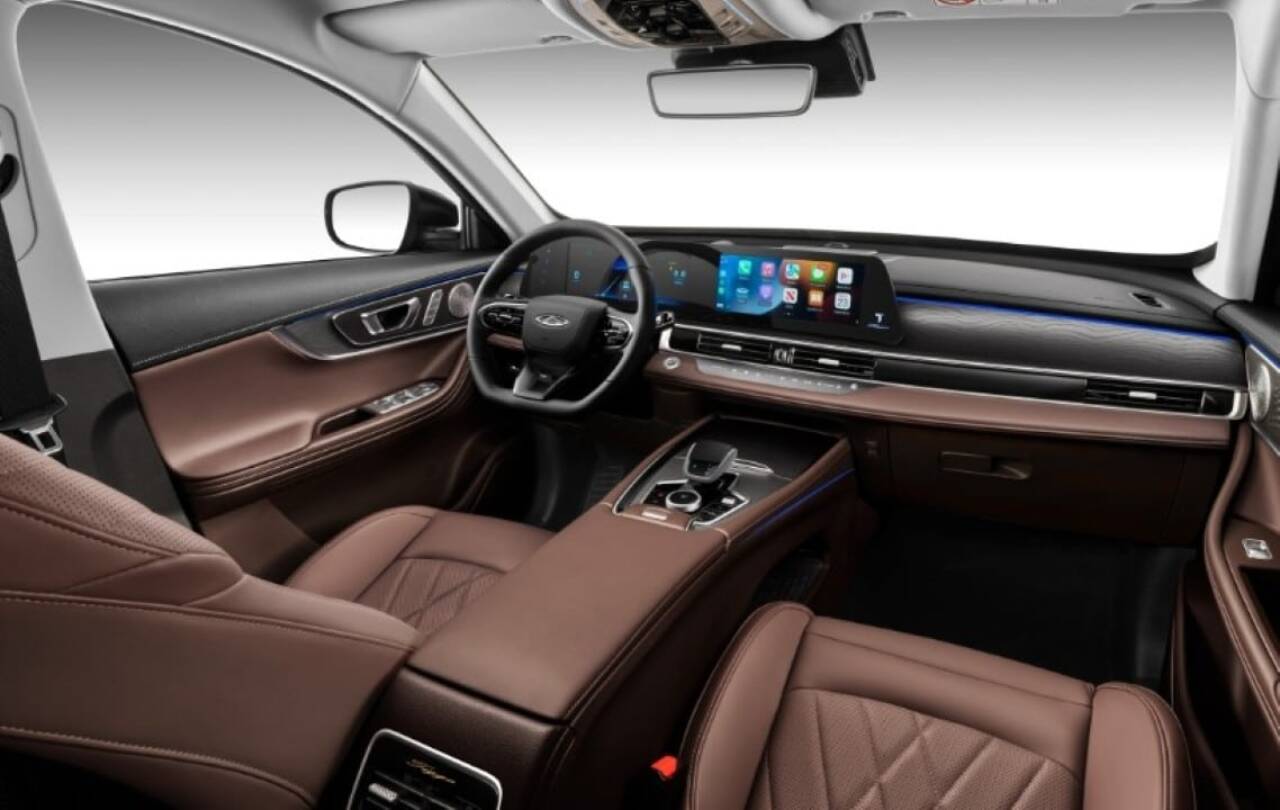
Kia Stonic: the most affordable hybrid on the market
The Kia Stonic leads the list as Brazil’s cheapest hybrid car, priced at $26,998. Equipped with a 1.0-liter turbo gasoline engine producing 120 hp and a 48V mild hybrid system, the compact SUV offers 32.2 mpg in the city and 32.5 mpg on the highway. Its modern design, featuring Kia’s signature front grille, and technologies like an 8-inch multimedia system and lane-keeping assist, make it an attractive option for those entering the hybrid segment.
Although it cannot run in fully electric mode, the MHEV system reduces the strain on the combustion engine, ensuring savings in urban conditions. The Stonic also stands out for its agile handling, with a seven-speed dual-clutch automated transmission that provides smooth shifts and quick responses. For consumers seeking a compact SUV with value for money, the Stonic is a practical and efficient choice.
Maintenance for the Stonic is another strong point, with competitive revision costs and a five-year warranty. However, limited availability in some regions can be a challenge, as the model has faced high demand since its launch. For those prioritizing economy and simplicity, the Stonic is an ideal entry point into the hybrid world.
Chery Arrizo 6 Pro Hybrid: economical and sophisticated sedan
Priced at $27,998, the Chery Arrizo 6 Pro Hybrid is the second most affordable hybrid in Brazil and the most economical sedan on the list. Its 1.5-liter turbo flex engine producing 160 hp, paired with a 48V mild hybrid system, delivers 29.4 mpg in the city and 31.7 mpg on the highway with gasoline. The model stands out for its elegant design, with sleek lines and LED headlights, and a well-finished interior featuring a 10.25-inch digital dashboard and multimedia system.
The Arrizo 6 Pro offers advanced technologies, such as 360-degree cameras, blind-spot monitoring, and autonomous emergency braking, enhancing safety levels. Its four-wheel independent suspension ensures comfort on various road surfaces, making it a versatile option for urban and highway use. The nine-speed simulated CVT transmission contributes to smooth driving, though performance is more restrained compared to SUVs from the same brand.
Chery has been expanding its dealership network, making the Arrizo 6 Pro more accessible across Brazil. With affordable revisions and a three-year warranty, the sedan is a solid choice for those seeking sophistication and economy without sacrificing modern technologies.
Chery Tiggo 5X and Tiggo 7: affordable hybrid SUVs
The Chery Tiggo 5X Pro Hybrid, priced at $29,598, is the most affordable hybrid SUV on the list. Equipped with the same 1.5-liter turbo flex engine producing 160 hp and 48V mild hybrid system as the Arrizo 6 Pro, the model delivers 27.7 mpg in the city and 28.9 mpg on the highway. Its robust design, with a chrome front grille and LED headlights, pairs with an interior featuring a 10.25-inch multimedia system, dual-zone air conditioning, and driving assistants like forward collision warning.
The Chery Tiggo 7 Pro Hybrid, priced at $34,798, is a midsize SUV with the same mechanical setup but more interior space and superior finishes. Fuel economy is slightly lower, at 27.3 mpg in the city and 26.8 mpg on the highway, due to its larger size and weight. Both models benefit from independent suspension, ensuring comfort on long trips, and technologies like autonomous braking and cross-traffic monitoring.
The presence of two Chery SUVs among the most affordable reflects the brand’s strategy to offer competitive hybrids in price and features. With 2,398 units of the Tiggo 5X sold in 2023, Chery strengthens its position in the Brazilian market, attracting consumers seeking hybrid SUVs with good value and affordable maintenance.
- Chery Tiggo 5X Pro Hybrid: $29,598, 27.7 mpg in the city, ideal for urban use.
- Chery Tiggo 7 Pro Hybrid: $34,798, more interior space, 27.3 mpg in the city.
- Common technologies: 360-degree cameras, autonomous braking, 10.25-inch multimedia system.
BYD King and Song Pro: strong competition with plug-in technology
The BYD King, priced at $35,160 (GL) and $37,560 (GS), is Brazil’s most economical plug-in hybrid sedan, with 103.8 mpg in the city and 86.3 mpg on the highway. Its 1.5-liter naturally aspirated engine producing 110 hp, combined with a 179 hp electric motor, delivers 209 hp combined and an electric range of up to 80 km in the GS version. The model directly challenges the Toyota Corolla, with a modern design, 12.8-inch multimedia system, and technologies like lane-keeping assist and adaptive cruise control.
The BYD Song Pro, available for $39,160 (GS) and $39,960 (GL), is a plug-in hybrid SUV with 35.7 mpg in the city and 31 mpg on the highway. Though less efficient than the King, the Song Pro offers more interior space and features like a sunroof, air purifier, and 360-degree cameras. Its 32 km electric range in the GS version is sufficient for urban commutes, while the 1.5-liter and electric motor ensure versatility for longer trips.
BYD has stood out in the Brazilian market, with 7,669 units of the Song Plus (a higher-end version of the Song Pro) sold in 2023. The Chinese brand invests in advanced technologies and competitive pricing, positioning the King and Song Pro as attractive options for those seeking plug-in hybrids with high efficiency and comfort.
Toyota Corolla Cross: sales leader with flex technology
The Toyota Corolla Cross XRX Hybrid, priced at $40,538, is one of Brazil’s best-selling hybrids, with 6,867 units registered in 2023. Its 1.8-liter flex engine producing 98 hp, paired with a 72 hp electric motor, delivers 122 hp combined and 41.6 mpg in the city and 34.3 mpg on the highway with gasoline. The flex technology, a pioneer in the segment, allows ethanol use, with 29.4 mpg in the city and 23.7 mpg on the highway.
The SUV stands out for its modern design, with 18-inch wheels and LED headlights, and technologies like the Toyota Safety Sense, which includes adaptive cruise control, autonomous braking, and lane-keeping assist. The interior features a 12.3-inch digital dashboard, 10.1-inch multimedia system, and leather upholstery, ensuring comfort and sophistication.
Toyota’s reliability, combined with a wide dealership network and fixed-price revisions, makes the Corolla Cross a popular choice. Its versatility, with ample interior space and a 440-liter trunk, caters to families and consumers seeking a hybrid SUV for urban and highway use.
Kia Niro and Ford Maverick: modern and robust options
The Kia Niro HEV EX, priced at $40,598, is a compact crossover with 46.5 mpg in the city and 41.6 mpg on the highway. Its 1.6-liter naturally aspirated engine, paired with an electric motor, delivers 141 hp combined and a six-speed dual-clutch transmission, ensuring agile handling. Equipped with adaptive cruise control, blind-spot monitoring, and a 10.25-inch multimedia system, the Niro is ideal for those seeking efficiency and modernity.
The Ford Maverick Lariat Hybrid, priced at $47,900, is the only hybrid pickup in the Brazilian market. Its full hybrid engine delivers 36.9 mpg in the city and 32 mpg on the highway, with a robust design and interior featuring an 8-inch multimedia system and leather seats. Despite lower fuel economy than SUVs, the Maverick combines versatility and efficiency, appealing to consumers needing a vehicle for work and leisure.
Both models benefit from advanced technologies, such as driving assistants and connectivity, and reflect the diversification of the hybrid market, now spanning from crossovers to pickups. Kia and Ford bet on distinct designs and specific functionalities to capture different audiences.
- Kia Niro HEV EX: 46.5 mpg in the city, $40,598, compact design.
- Ford Maverick Lariat Hybrid: Only hybrid pickup, 36.9 mpg in the city, $47,900.
- Technologies: Adaptive cruise control, multimedia systems, safety assistants.
BYD Song Plus and Haval H6 PHEV34: premium plug-in hybrids
The BYD Song Plus, priced at $47,960, is Brazil’s best-selling plug-in hybrid, with a 105 km electric range and 91.8 mpg in the city. Its 1.5-liter naturally aspirated engine, paired with an electric motor, delivers 235 hp combined, achieving 0-100 km/h in 8.5 seconds. The 15.6-inch rotating multimedia system, panoramic sunroof, and driving assistants like autonomous braking make the Song Plus a benchmark in technology and comfort.
The Haval H6 PHEV34, priced at $56,200, offers the highest electric range on the list, at 116 km, and 67.4 mpg in the city. Equipped with a 1.5-liter turbo engine and two electric motors, it delivers 393 hp combined and 0-100 km/h in 4.9 seconds. Technologies like adaptive cruise control, 360-degree cameras, and a 12.3-inch digital dashboard elevate its sophistication, though its price is the highest on the list.
Both models highlight the potential of plug-in hybrids to combine high efficiency with performance, attracting consumers seeking premium vehicles with low emissions. BYD and GWM (Haval’s manufacturer) invest in advanced technologies to solidify their presence in the Brazilian market.
Trends and outlook for the hybrid market
The hybrid market in Brazil is rapidly expanding, driven by tax incentives, such as reduced import taxes for electrified vehicles, and the growing supply of affordable models. Asian brands like Toyota, BYD, Chery, and Kia dominate the segment, accounting for over 80% of sales in 2024. The entry of new players, like GWM with the Haval H6, intensifies competition, benefiting consumers with more competitive prices and advanced technologies.
Charging infrastructure, though still limited, has grown, with over 3,500 charging stations installed by the end of 2024, especially in urban centers. For full and mild hybrids, which do not rely on external charging, adoption is even more practical, as drivers can rely on the fuel station network. The expectation is that hybrid sales will reach 100,000 units in 2025, surpassing pure electric vehicle numbers.
The market’s diversification, with options ranging from sedans like the BYD King to pickups like the Ford Maverick, reflects automakers’ adaptation to Brazilian consumers’ needs. With a focus on economy, sustainability, and technology, hybrids are establishing themselves as a practical solution for a country with infrastructure challenges.
Highlighted models in the Brazilian market
- Kia Stonic: $26,998, mild hybrid, 32.2 mpg in the city, ideal for urban use.
- Chery Arrizo 6 Pro Hybrid: $27,998, sedan with 29.4 mpg in the city, sophisticated design.
- BYD King: $35,160, plug-in hybrid with 103.8 mpg in the city, 80 km range.
- Toyota Corolla Cross XRX Hybrid: $40,538, flex-fuel SUV with 41.6 mpg in the city, sales leader.