King Charles III and Queen lead tributes to VE Day 80th anniversary in London

The 80th anniversary celebrations of Victory in Europe (VE Day) kicked off with a significant event in Denmark. Last Sunday, authorities and members of the British royal family attended ceremonies highlighting the country’s liberation, launching a week filled with tributes. The date, marking the end of World War II in Europe, serves as a moment to reflect on the conflict’s impact and the resilience of the people involved.
In the United Kingdom, the commemorations gained momentum with the presence of the king and queen, joined by other royals. Thousands gathered in London to witness events blending solemnity and celebration. The schedule featured parades, religious services, and meetings with veterans, emphasizing the importance of preserving historical memory.
- Key events of the week:
- Commemorations in Denmark on Sunday.
- Military procession in London on Monday.
- Thanksgiving service at Westminster on Thursday.
- Live concert at Horse Guards Parade.
The involvement of the royals and public figures, such as the prime minister, added a special tone to the celebrations. Each activity was designed to honor the sacrifices of the World War II generation and celebrate the peace achieved.
Military procession and palace salute
On Monday, the king and queen led one of the most anticipated moments of the commemorations. A military procession, featuring historic regiments, marched down The Mall toward Buckingham Palace. The crowd, waving British flags, cheered as the soldiers moved in perfect formation.
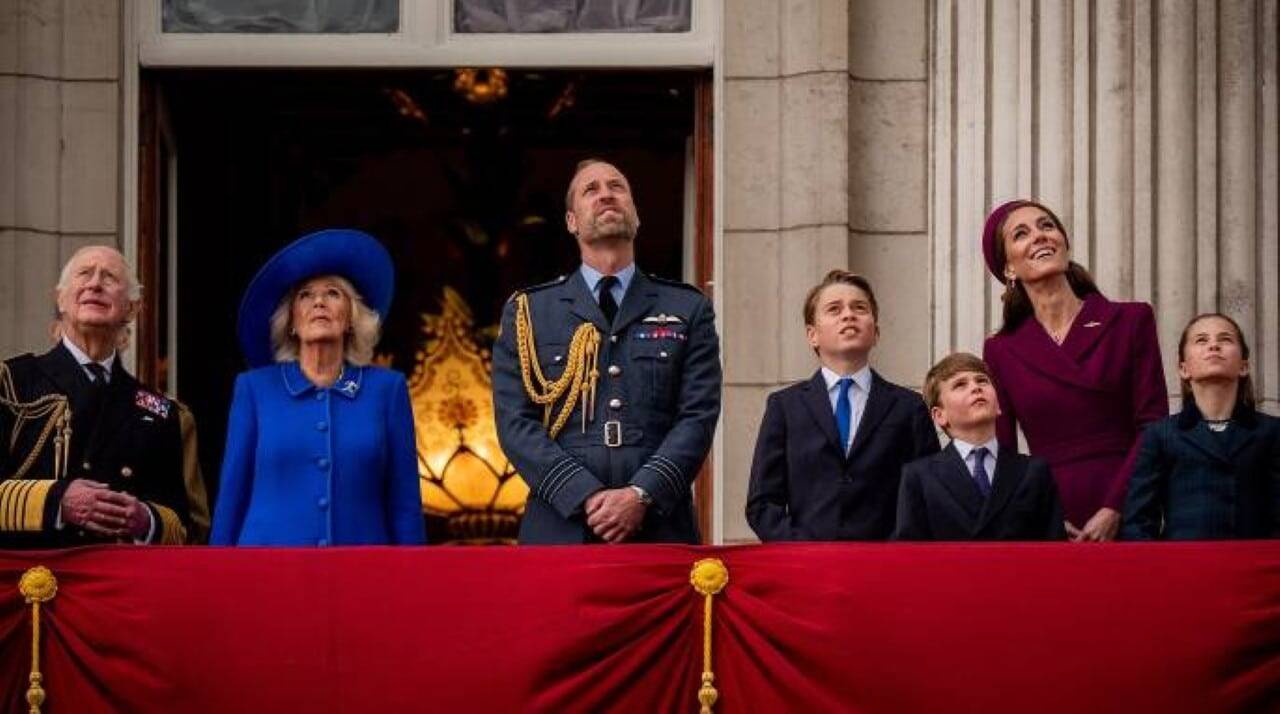
From the palace balcony, the royal family waved to the public, recreating a historic scene. Eighty years ago, King George VI and his family stood in the same spot to greet the nation after the victory. The moment, captured by photographers and broadcast live, moved many viewers. It was described as a symbol of continuity and respect for British history.
Following the procession, the king and queen hosted veterans and members of the World War II generation for tea at Buckingham Palace. The event, held in the palace gardens, brought together about 200 guests, including war survivors and their families. Conversations about war memories and stories of resilience marked the afternoon, with the royal couple showing genuine interest in the shared accounts.
- Details of the palace tea:
- Around 200 guests, including veterans.
- Event held in Buckingham Palace gardens.
- Menu featuring traditional teas and British cakes.
- Presence of representatives from veteran support organizations.
Poppy display at the Tower of London
On Tuesday, the queen visited the Tower of London to view a new display of ceramic poppies. The installation, covering part of the fortress moat, pays tribute to soldiers who lost their lives in World War II. Each poppy represents a fallen British or Commonwealth soldier, creating a powerful visual impact. The queen walked through the site with curators who explained the creation process.
The display has drawn thousands of visitors since its opening. Many left messages of gratitude to veterans in a condolence book available at the site. The initiative also raises funds for charities supporting former servicemen, reinforcing the UK’s commitment to those who served.
Westminster religious service
Thursday featured a solemn ceremony at Westminster Abbey. The king and queen, joined by other royals, attended a Thanksgiving Service that brought together religious leaders, politicians, and military figures. The event underscored the importance of national unity during the war and the subsequent reconstruction.
Traditional hymns, such as “Jerusalem” and “Abide With Me,” echoed through the abbey, while readings of soldiers’ letters were delivered by veterans’ descendants. A children’s choir performed a piece composed for the occasion, adding a contemporary touch to the ceremony. Representatives from allied nations, including the United States and Canada, reinforced the international nature of the tributes.
- Highlights of the service:
- Readings of letters written by WWII soldiers.
- Traditional hymns sung by a 50-voice choir.
- Presence of delegations from allied countries.
- Tribute to civilians who contributed to the war effort.
- Minute of silence in memory of the fallen.
The event was broadcast live on British television, reaching millions of viewers. Many Britons followed the ceremony from home, while others gathered in local churches for parallel services.
Live concert in London
Also on Thursday, the king and queen attended a live concert at Horse Guards Parade, concluding the national VE Day commemorations. The performance, featuring military orchestras and contemporary artists, celebrated music from the war era. Songs like Vera Lynn’s “We’ll Meet Again” were performed, evoking memories of a time of challenges and hope.
Thousands filled the venue, and large screens were set up across London to allow more citizens to follow the event. The concert included visual projections narrating the story of the victory in Europe, from battles to the German surrender. Veterans present received warm applause from the audience in a gesture of gratitude.
Tributes in the Channel Islands
On Friday and Saturday, the Princess Royal, accompanied by Vice Admiral Sir Tim Laurence, traveled to the Channel Islands to mark the 80th anniversary of the liberation of Guernsey and Sark. The islands, occupied by the Germans during the war, celebrated the date with parades and community ceremonies. The Princess Royal attended events that included speeches by local authorities and meetings with residents who lived through the occupation.
In Guernsey, a parade with British flags and allied insignia marched through the streets of the capital, St. Peter Port. The Princess Royal laid a wreath at a memorial dedicated to the liberators, in a moment of silence observed by hundreds. In Sark, the celebrations were more intimate, with a ceremony at a local church and a reception for elderly residents who shared their war memories.
- Activities in the Channel Islands:
- Parade in St. Peter Port, Guernsey.
- Wreath-laying at a memorial.
- Religious ceremony in Sark.
- Meetings with survivors of the German occupation.
Veterans’ participation
World War II veterans were the focus of all events. Many, now in their 90s, shared stories of courage and sacrifice with the younger generation. Organizations like the Royal British Legion provided logistical support to ensure veterans could attend the ceremonies, including transportation and medical assistance.
In London, a group of veterans was invited to share their experiences on a nationally broadcast radio program. Their stories, ranging from frontline combat to rear-guard work, offered a human perspective on the conflict. The initiative also encouraged young people to engage in projects preserving historical memory.
Diverse programming
The week of commemorations was designed to engage different audiences and regions. Beyond the royal-led events, local communities organized their own tributes. In cities like Manchester and Birmingham, museums opened temporary WWII exhibitions, while schools held special lessons about VE Day.
In London, the Imperial War Museum offered free admission during the week, attracting thousands interested in war artifacts. Interactive panels and historian lectures complemented the experience, highlighting the UK’s and its allies’ roles in the victory.
- Local initiatives:
- Exhibitions in Manchester and Birmingham museums.
- Themed lessons in British schools.
- Free admission to the Imperial War Museum.
- Historian lectures on VE Day.
- War film screenings in public squares.
Legacy of the victory
The 80th VE Day anniversary celebrations reinforced the importance of remembering 1945. The royal family’s participation, combined with community involvement across the UK, fostered a sense of unity. Each event was carefully planned to highlight different aspects of the victory, from military efforts to civilian resilience.
Speeches delivered during the week emphasized gratitude to those who fought and the need to preserve peace. Community and religious leaders also highlighted the role of current generations in upholding the values of freedom and solidarity won eight decades ago.
Historic moments recreated
Recreating iconic moments, such as the balcony salute at Buckingham Palace, brought nostalgia to the commemorations. Archival footage, displayed on screens during the Horse Guards Parade concert, showed crowds celebrating in 1945. The comparison between past and present moved many spectators, who saw similarities in the collective joy.
Museums and cultural organizations also contributed with displays of photos, uniforms, and wartime objects. In London, an open-air exhibition in Trafalgar Square featured replicas of military vehicles used in the war, attracting families and tourists.
International involvement
The presence of representatives from allied countries, such as Denmark, the United States, and Canada, highlighted the global nature of the victory in Europe. Ambassadors attended events in London and the Channel Islands, reinforcing historical ties between nations. Denmark, in particular, played a prominent role due to the liberation commemorations that opened the week.
The Channel Islands celebrations also drew international attention, with foreign broadcasters covering the Princess Royal’s visits. The media coverage reinforced the message that VE Day is not just a British date but a milestone for all nations that fought against Nazism.
- International participation:
- US and Canadian delegations at Westminster.
- Commemorations in Denmark with British authorities.
- Coverage by international broadcasters in the Channel Islands.
- Messages from allied leaders displayed at events.
Living memory
The 80th VE Day anniversary events were designed to engage different generations. Children participated in educational activities, such as workshops writing letters inspired by soldiers’ correspondence. Young volunteers assisted in organizing parades and supporting veterans, ensuring the war’s memory remains alive.
Across the UK, digital initiatives also marked the celebrations. An official website launched an interactive archive with veterans’ testimonies and rare images from the era. The platform all