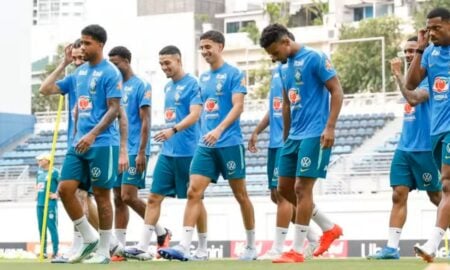
New Brazil coach Carlo Ancelotti brings European experience to 2026 World Cup


Brazilian football is undergoing a transformation. The Brazilian Football Confederation (CBF) announced Carlo Ancelotti as the new coach of the national team, marking the start of a new era for the five-time world champions. The Italian coach, renowned for his successful career in European clubs, will take charge in June 2025, tasked with preparing Brazil for the 2026 World Cup. This decision reflects a pursuit of innovation and tactical discipline at a time when the team faces challenges in the qualifiers and pressure for results.
Ancelotti, who will leave Real Madrid after a season of mixed results, brings an impressive resume. His arrival is seen as a milestone, being the first foreign coach to lead Brazil in nearly six decades. Expectations are high, with fans and analysts eager to see how he will blend his pragmatic style with Brazilian flair. The CBF is banking on the Italian’s experience to restructure the team and reclaim global prominence.
The negotiation to bring Ancelotti was lengthy and complex, marked by back-and-forth discussions. After months of speculation, the deal was finalized, and the coach will depart Real Madrid following the clásico against Barcelona in May 2025. Below are key points defining the new commander’s arrival:
- International experience: Ancelotti has won all five major European leagues and five Champions Leagues.
- Unprecedented challenge: This will be his first time coaching a national team.
- Focus on 2026 World Cup: His contract targets leadership through the tournament in the USA, Canada, and Mexico.
- Real Madrid exit: The transition follows the end of the Spanish season.
Ancelotti’s hiring has sparked debates about how he will adapt his philosophy to Brazil’s creative and offensive style. The coach will have little time to implement changes before the upcoming qualifier matches against Ecuador and Paraguay in June.
Career achievements
Carlo Ancelotti, born in Reggiolo, Italy, on June 10, 1959, is one of the most decorated coaches in football history. His coaching career began in 1995 with Reggiana, but it was at Milan where he cemented his reputation, winning two Champions Leagues (2003 and 2007) and a Club World Cup (2007). He also managed clubs like Juventus, Chelsea, Paris Saint-Germain, Bayern Munich, Napoli, Everton, and Real Madrid, amassing 27 titles.
At Real Madrid, Ancelotti had two distinct stints. In his first (2013-2015), he led the club to their tenth Champions League and a Copa del Rey. In his second (2021-2025), he secured two more Champions Leagues (2022 and 2024) and two La Liga titles. He became the first coach to win all five major European leagues: Italy (Milan), England (Chelsea), France (PSG), Germany (Bayern), and Spain (Real Madrid).
His ability to manage star-studded squads is a key reason the CBF chose him. Ancelotti is known for getting the best out of players like Cristiano Ronaldo, Zinedine Zidane (as a player), and Vinícius Júnior. In Brazil, he will have talents like Neymar, Rodrygo, and Vitor Roque at his disposal, raising expectations for a competitive team.
A maior Seleção da história do futebol agora será liderada pelo técnico mais vitorioso do mundo. Carlo Ancelotti, sinônimo de conquistas históricas, foi anunciado nesta segunda-feira (12) pelo presidente da CBF, Ednaldo Rodrigues, como o novo técnico da Seleção Brasileira. Ele… pic.twitter.com/grw3Rb1BmL
— CBF Futebol (@CBF_Futebol) May 12, 2025
Negotiations with CBF
Bringing Ancelotti to the Brazilian national team was no simple feat. Talks with the CBF began in 2023, when the coach was still tied to Real Madrid. At the time, CBF president Ednaldo Rodrigues expressed public interest, but Ancelotti’s contract extension with the Spanish club, valid until June 2026, delayed plans.
In 2025, with Real Madrid struggling—eliminated in the Champions League quarterfinals by Arsenal and runners-up in the Copa del Rey—Ancelotti’s exit gained momentum. The CBF resumed negotiations in March, and a verbal agreement was reached in April. The coach faced resistance from Real Madrid, which initially refused to pay the release clause.
The deal was finalized after the clásico against Barcelona, scheduled for May 11, 2025. According to Spanish newspaper Marca, Ancelotti and the club reached an amicable agreement, allowing his release. The Italian will take over the national team before the June FIFA window, when Brazil faces Ecuador and Paraguay in the qualifiers.
- Negotiation timeline:
- 2023: Initial contacts between CBF and Ancelotti, without progress.
- March 2025: Talks resumed after pressure on Dorival Júnior.
- April 2025: Verbal agreement sealed, per Fabrizio Romano.
- May 2025: Official announcement after the Barcelona clásico.
Playing philosophy
Ancelotti is known for his flexible tactical approach. Unlike coaches with rigid systems, he adapts strategies to the players available, prioritizing balance between defense and attack. At Real Madrid, he deployed a 4-3-3 that leveraged Vinícius Júnior’s speed and Jude Bellingham’s creativity. At Milan, he used a 4-4-2 diamond to highlight Kaká.
For the Brazilian national team, he is expected to maintain the nation’s offensive essence while improving defensive organization. Brazil struggled with tactical inconsistencies under Dorival Júnior, including a 4-1 thrashing by Argentina in the qualifiers. Ancelotti will need to address these flaws, utilizing the versatility of players like Bruno Guimarães and Raphinha.
The coach is also recognized for his group management. He fosters a relaxed environment with open dialogue, which is crucial for handling Brazil’s star-heavy squad. His experience with Brazilian players like Kaká, Ronaldo, and Casemiro may ease his adaptation.
Reactions in Brazil
Ancelotti’s appointment has generated significant buzz among fans, players, and journalists. On social media, the hashtag #AncelottiNaSeleção trended, with divided opinions. Some celebrate the arrival of a coach with an unmatched resume, while others question the choice of a foreigner, a rarity in the national team’s history.
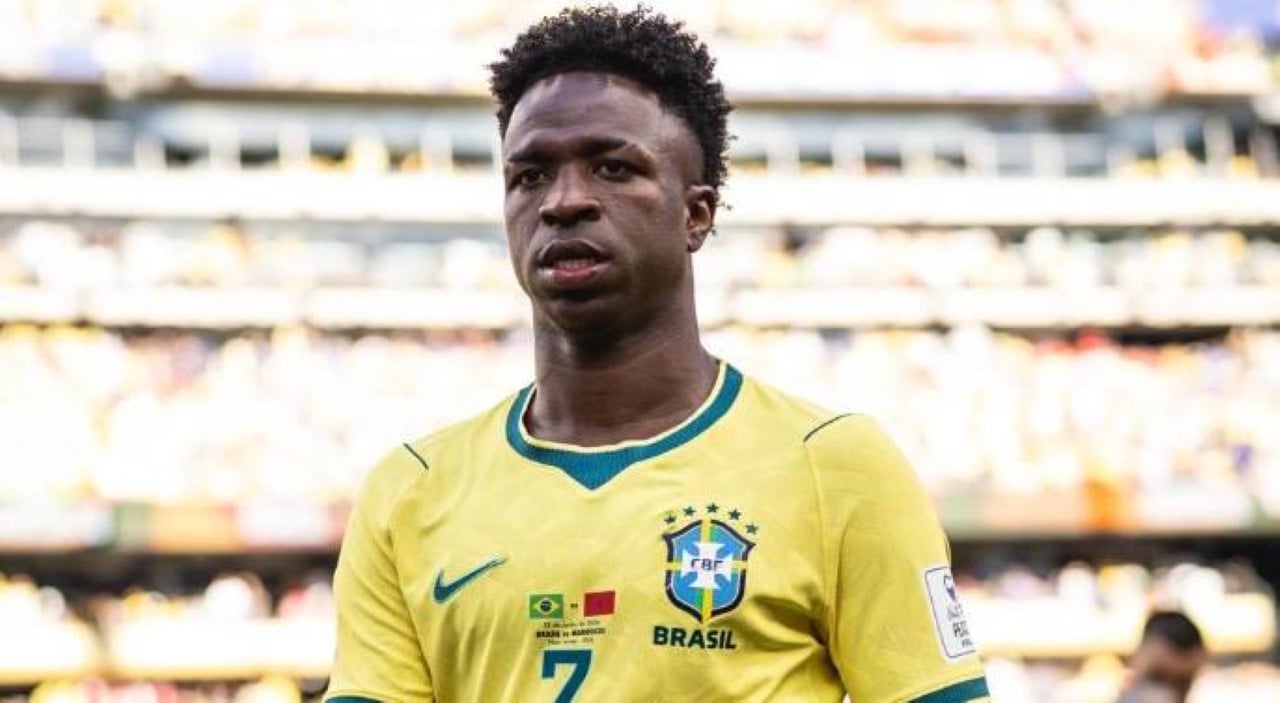
Players like Neymar voiced support. In an interview after a Santos match, the forward said Ancelotti “can bring the discipline we need to return to the top.” Vinícius Júnior, who worked with the Italian at Real Madrid, also praised the hire, highlighting Ancelotti’s ability to enhance young talents.
However, some media outlets point to challenges. SporTV commentator André Rizek noted that Ancelotti will need to quickly grasp Brazilian football’s improvisational culture. The pressure for immediate results, especially in the qualifiers, will be another hurdle.
Playing career
Before becoming a coach, Ancelotti had a solid career as a player. As a midfielder, he started at Parma, helping the club earn promotion to Serie B in 1979. At Roma, he enjoyed his peak, winning a Serie A title (1983) and four Coppa Italia trophies. At Milan, he claimed two Champions Leagues (1989 and 1990).
With the Italian national team, Ancelotti played 26 matches and featured in the 1986 and 1990 World Cups. An injury kept him out of the 1982 World Cup, which Italy won. His playing experience, combined with the tactical insight gained at clubs, shaped his coaching approach.
- Key achievements as a player:
- Serie A: 1983 (Roma).
- Coppa Italia: 1980, 1981, 1984, 1986 (Roma).
- Champions Leagues: 1989, 1990 (Milan).
Preparation for 2026 World Cup
The 2026 World Cup, hosted by the United States, Canada, and Mexico, is Ancelotti’s ultimate goal. Brazil, currently fourth in the qualifiers with 21 points, must secure a direct spot among the top six. The tournament will be the first with 48 teams, increasing its complexity.
Ancelotti will have roughly a year to build the team. Beyond the qualifiers, the CBF plans friendlies against European teams in 2026 to adapt the squad to the playing style they will face in the World Cup. The coach will also need to integrate young prospects like Endrick into the main roster.
The Italian’s appointment reflects the CBF’s ambition to reclaim the World Cup title, last won in 2002. Ancelotti will have a talented generation to work with but will face the pressure of a football-obsessed nation demanding excellence.
Relationship with Brazilian players
One of Ancelotti’s strengths is his strong rapport with Brazilian players. At Real Madrid, he was pivotal in Vinícius Júnior’s development into one of the world’s top forwards. He also worked with Rodrygo, Casemiro, and Éder Militão, building trust.
At Milan, Ancelotti coached Kaká, whom he considers one of the greatest players he ever managed. His ability to handle egos and maximize individual talents will be vital for Brazil, where players like Neymar and Gabriel Martinelli have distinct styles.
- Brazilians coached by Ancelotti:
- Kaká: Star at Milan, Ballon d’Or winner in 2007.
- Vinícius Júnior: Key figure at Real Madrid.
- Rodrygo: Tactical growth at the Spanish club.
- Casemiro: Midfield anchor for Real Madrid.
Tactical challenges
Brazilian football is renowned for its attacking flair, but the national team has faced defensive issues recently. In the 4-1 loss to Argentina, marking errors and tactical disarray were evident. Ancelotti, who prioritizes balance, will need to shore up the defense without stifling creativity.
In Europe, the Italian is praised for adapting formations. At Chelsea, he used a 4-2-3-1 to highlight Didier Drogba. At Bayern, he opted for a 4-3-3 emphasizing wing play. For Brazil, he may deploy a 4-3-3 or 4-2-3-1, depending on the selected players.
Integrating youngsters like Yan Couto and André, who shine in Europe, will be another challenge. Ancelotti must balance experience and renewal to maintain competitiveness in a squad blending veterans and newcomers.
Fan expectations
Brazil’s passionate and demanding fans are already buzzing about Ancelotti’s arrival. In polls by sports outlets like Globo Esporte, 68% of supporters approve of the hire, while 20% preferred a Brazilian coach. The expectation is that the Italian will bring organization and quick results.
In the streets of Rio de Janeiro and São Paulo, fans are optimistic. In bars and on social media, discussions about potential lineups and tactics have begun. Ancelotti’s track record of titles rekindles hope for Brazil’s return to the pinnacle of world football.
- Fan sentiment:
- Optimism: 68% approve of the choice, per polls.
- Curiosity: How will Ancelotti adapt to Brazil’s style?
- Pressure: Demand for immediate results in the qualifiers.
Legacy in European clubs
Ancelotti’s career is defined by success across diverse contexts. At Chelsea, he won the Premier League and FA Cup in 2010. At PSG, he claimed Ligue 1 in 2013. At Bayern, he secured the Bundesliga in 2017. His versatility and ability to handle pressure in competitive markets make him a strategic choice for the CBF.
Even in less successful stints, like at Napoli and Everton, Ancelotti left positive marks, such as implementing tactical systems that empowered young players. His departure from Real Madrid, though driven by subpar results, does not diminish his prestige. The Spanish club plans to honor him in their final match of the season.
The Italian is also known for his off-field demeanor. Calm and approachable, he avoids controversies and maintains good relations with the media, which could be an asset in Brazil’s intense football environment.