Sinner makes history by defeating Djokovic and securing the final against Carlos Alcaraz at Roland Garros

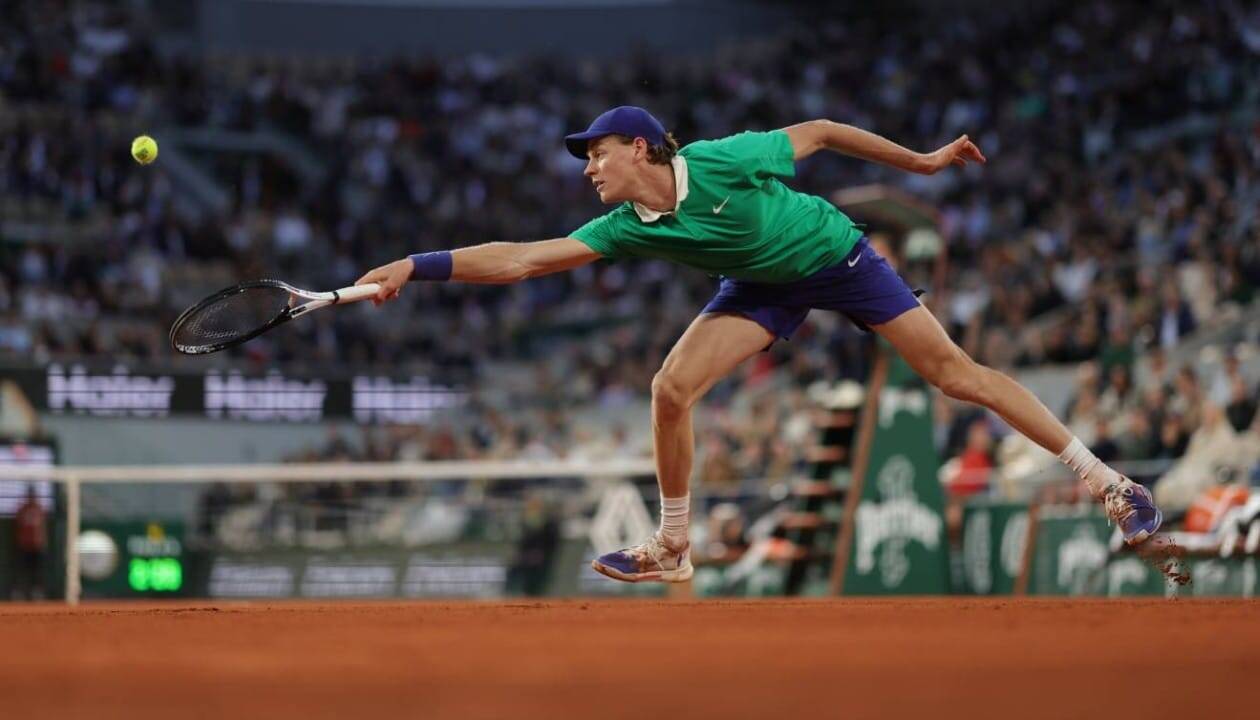
In an electrifying clash on the Philippe-Chatrier court, Jannik Sinner, world number 1, overcame Novak Djokovic, six-time Roland Garros champion, in a semifinal that etched its mark in tournament history on June 6, 2025. The match, currently in the third set with Sinner leading 6-4, 7-5, and 6-6 in the tiebreak, propelled the Italian into the final against Carlos Alcaraz, the defending champion. With precise serves and aggressive rallies, Sinner frustrated the Serb, who is chasing his 25th Grand Slam title. The crowd roared with every point in a match defined by intense exchanges and moments of tactical brilliance. The final promises to be a milestone, featuring two young talents of the new generation of world tennis.
The match began with Sinner setting the pace from the first game. He won 79% of points on his first serve and capitalized on three of nine break points. Djokovic, despite his experience, struggled to counter the Italian’s power, with Sinner winning 62% of points on his second serve. The match, now surpassing two hours and 43 minutes, reflects a balance of forces, but Sinner has shown greater consistency in critical moments.
- Match highlights so far:
- Sinner hit 10 aces compared to Djokovic’s 4.
- The Italian won 117 total points, against 104 for the Serb.
- Djokovic had a 72% first-serve success rate but failed to convert five of six break points.
The head-to-head, previously tied at 4-4, now favors Sinner, who has won the last three matches against Djokovic. This is their second Roland Garros encounter, with the Italian aiming for his first final in the tournament.
Sinner’s tactics and consistency
Jannik Sinner took to the court with a clear strategy: attack early and maintain constant pressure. His adjusted return stance, refined before the tournament, allowed him to neutralize Djokovic’s serves, especially in the second set. The Italian varied his shots, using crosscourt and down-the-line angles to push the Serb out of his comfort zone. In a pivotal moment of the second set, Sinner saved three break points with an ace down the T and a forehand winner, securing a 7-5 lead. The packed Philippe-Chatrier crowd erupted with enthusiasm for each well-crafted point.
Sinner’s composure under pressure shone in the third-set tiebreak. Despite Djokovic’s attempts to disrupt with drop shots and net approaches, the Italian countered with precise passing shots and solid defense. His reaction speed and physical conditioning, despite earlier doping-related scrutiny, proved impeccable.
Djokovic’s resilience
Novak Djokovic, at 38, showed why he remains a living legend. Despite dropping the first set, he fought back in the second, balancing the match with his trademark defensive play. The Serb won 68% of first-serve points and tried to unsettle Sinner with drop shots, like the one that sealed a key game in the third set. However, unforced errors, such as a mishit smash into the net, proved costly.
Djokovic’s Grand Slam experience, with 24 titles, was tested by Sinner’s aggression. In a 41-shot rally in the third set, the Serb showed resilience but lost the point with a backhand error. His interaction with the crowd, speaking in French after the match, reinforced his bond with the Parisian audience, even on a challenging day.
Decisive tiebreak moment
The third set, tied at 6-6 in the tiebreak, is the match’s climax so far. Sinner started with a mini-break, capitalizing on a Djokovic backhand error. The Italian, with powerful serves and crosscourt shots, held a 4-2 lead at the change of ends. Djokovic responded with an ace and tried to press with net approaches, but Sinner neutralized with a masterful passing shot.
- Key tiebreak moments:
- Sinner took a 2-0 lead with a forehand winner after a long rally.
- Djokovic tied at 2-2 with a service winner.
- A Djokovic net error gave Sinner a 4-2 advantage.
The tight scoreline reflects the intensity, with both players probing for weaknesses.
Road to the semifinal
Sinner reached the semifinal without dropping a set in Roland Garros 2025, a remarkable feat for a player with three Grand Slam titles but no Paris final. His win over Alexander Bublik in the quarterfinals, 6-1, 7-5, 6-0, showcased his consistency and power. The Italian, who faced a three-month doping suspension from February to May, returned to the circuit hungry for titles, riding a 19-match Grand Slam win streak.
Djokovic had a tougher path. His victory over Alexander Zverev in the quarters, 4-6, 6-3, 6-2, 6-4, featured tactical variety, with 35 drop shots and 27 points won at the net. The Serb, who claimed his 100th ATP title in Geneva before the tournament, arrived in Paris as the sixth seed but performed like his dominant prime.
Final against Alcaraz looms
Sinner’s partial victory sets him up for a clash with Carlos Alcaraz in the Roland Garros final. Alcaraz, who advanced after Lorenzo Musetti retired in the fourth set of the other semifinal, is the defending champion and beat Sinner in the 2024 semifinal. The Spaniard, world number 2, holds a favorable head-to-head, but Sinner has shown significant growth on clay this year.
The Sinner-Alcaraz rivalry, both born after 2000, represents the future of men’s tennis. While Djokovic, at 38, continues to challenge the new generation, the final promises a clash of styles: Sinner’s power versus Alcaraz’s versatility. The Sunday match, June 8, will be the first Grand Slam final between such young players at Roland Garros.
Factors shaping the match
The semifinal has been defined by technical and physical details highlighting the elite level of play. Sinner’s ability to take the ball early neutralized Djokovic’s defensive game, while the Serb varied with net approaches and drop shots. The physical endurance of both, especially after nearly three hours, is critical in the tiebreak.
- Key technical elements:
- Sinner leads with 77 service points won, against Djokovic’s 72.
- Djokovic committed one double fault, matching Sinner.
- The Italian won 40 points receiving serve, compared to 32 for the Serb.
Pressure and crowd support
The Philippe-Chatrier atmosphere has been a spectacle. The passionate French crowd alternated support for both players, with special cheers for Djokovic, who spoke in French after key games. Sinner, with his calm demeanor, seemed unfazed by pressure, staying focused even when saving a set point in the second set.
A Mexican wave during the third set added a touch of levity to the high-stakes match. The players’ crowd interactions underscore Roland Garros’s unique blend of tradition and emotion.
Sinner’s Paris history
Sinner, yet to win Roland Garros, faces his biggest challenge on clay. His only prior semifinal, in 2024, ended in a loss to Alcaraz. This year, however, he arrived in Paris with a flawless campaign, dropping just 36 games in five matches. His win over Andrey Rublev in the fourth round, 6-1, 6-3, 6-4, signaled his dominant form.
The 23-year-old Italian is the first from his country to go this far in Paris since Adriano Panatta in 1976. His rise, despite doping controversies, underscores his resilient mindset and exceptional talent.
Djokovic’s record chase
For Djokovic, the semifinal was another chance to make history. With 24 Grand Slam titles, he aims to surpass the record he shares with Margaret Court. His Roland Garros campaign, where he won three times (2016, 2021, 2023), features memorable duels against Rafael Nadal and others. Despite the partial loss to Sinner, his Paris performance proves he remains competitive against the next generation.
At 38, Djokovic is the second-oldest Roland Garros semifinalist, behind Richard Gonzales in 1968. His determination in long rallies and crucial points continues to inspire fans and rivals.
O jogo começou com Sinner impondo seu ritmo. O italiano, conhecido pela consistência e potência nos