Flavio Briatore, interim Alpine chief, revealed in an interview with the Italian newspaper Corriere della Serra that he has never visited Michael Schumacher, the seven-time Formula 1 champion, since the severe skiing accident the former driver suffered in 2013 in the French Alps. Briatore’s decision, he explained, is to preserve the joyful memories of Schumacher smiling after track victories. He maintains frequent contact with Corinna Betsch, Schumacher’s wife, to stay updated on the German’s health. The statement, made in 2025, reignites discussions about the condition of the motorsport icon, who lives under intensive care at home. Briatore’s account highlights the emotional challenge of facing his friend’s reality, as Schumacher cannot speak and communicates only with his eyes. The news, reported by outlets like The Sun, also underscores the privacy maintained by the Schumacher family.
The friendship between Briatore and Schumacher, forged in the world of Formula 1, is marked by moments of rivalry and camaraderie. Despite not visiting, the Italian emphasizes his respect for the former driver’s legacy. Below, details on the accident, their relationship, and Schumacher’s current health status.
- Case timeline: The accident occurred on December 29, 2013, during a skiing session.
- Formula 1 impact: Schumacher is one of the sport’s greatest, with seven world titles.
- Family privacy: Corinna restricts visits to protect the former driver.
- Recent statements: Briatore and Mick Schumacher highlight the German’s nonverbal communication.
Friendship marked by victories
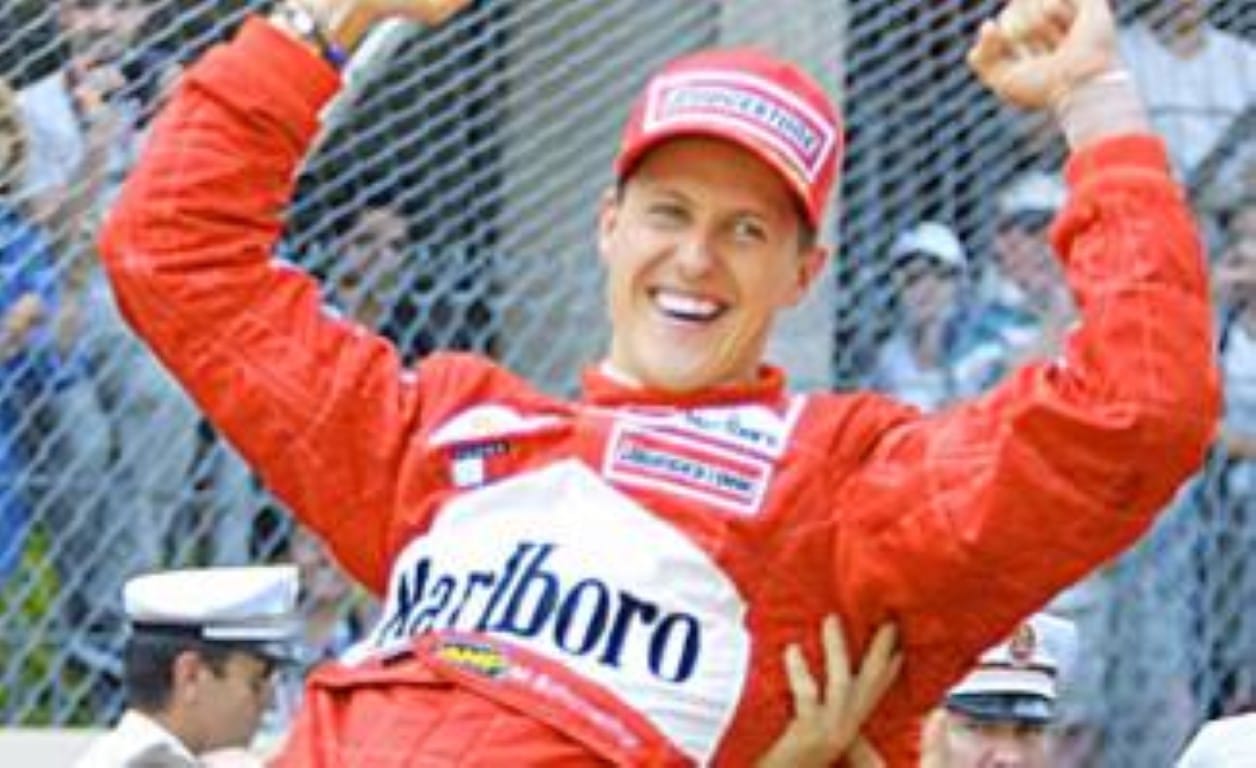
Flavio Briatore and Michael Schumacher shared years of interaction in the Formula 1 world, even while working for different teams. Briatore, former head of Benetton and Renault, collaborated with Schumacher during pivotal moments of his career, particularly in the 1990s when the German won his first titles. Their relationship, according to the Italian, was one of mutual respect and admiration. He recalls trackside celebrations, with Schumacher raising trophies and smiling, images Briatore prefers to keep untouched.
The Alpine chief stressed that his choice not to visit Schumacher is personal. He fears that seeing his friend bedridden, unable to speak, would overshadow memories of a vibrant, competitive man. The decision reflects the emotional toll the 2013 accident has taken on Schumacher’s friends and colleagues. Briatore, however, stays connected with the family, particularly Corinna, who has taken the lead in managing Schumacher’s care.
The accident that changed everything
On December 29, 2013, Michael Schumacher suffered a severe traumatic brain injury while skiing in Méribel, French Alps. He struck his head on a rock, and the impact, despite wearing a helmet, caused significant brain damage. Rushed to the hospital, Schumacher underwent emergency surgeries and was placed in an induced coma for months. Since then, the family has chosen to maintain privacy, releasing minimal information about his condition.
After leaving the hospital, Schumacher was transferred to his home in Gland, Switzerland, where Corinna converted part of the residence into an intensive care unit. Medical professionals provide round-the-clock care, ensuring comfort and stability. The setup reflects the family’s effort to offer the best possible care, but it also underscores the severity of the injuries.
- Accident date: December 29, 2013.
- Location: Méribel, French Alps.
- Current condition: Schumacher cannot speak and communicates with his eyes.
- Care: Home-based medical unit.
Current health status
Michael Schumacher lives in a controlled environment with continuous medical assistance. According to sources cited by the British newspaper The Sun, the former driver remains stable but with no significant recovery prospects. Communication, as reported by his son Mick Schumacher, occurs through eye contact, as the accident’s aftermath prevents speech. The family maintains a tight circle of visitors, limited to a few trusted individuals.
Corinna Betsch, Schumacher’s wife, is the primary overseer of his care and privacy. She rarely makes public statements but is described by Briatore as a central figure in the former driver’s life. Corinna’s dedication includes managing a medical team and maintaining a secure environment for Schumacher, away from the spotlight.
Statements from those close
In addition to Briatore, others close to Schumacher have commented on his condition. In 2020, Elisabetta Gregoraci, Briatore’s ex-wife, revealed on an Italian TV show that Schumacher communicates with his eyes and that only three people are allowed to visit him. The statement, though brief, reinforced the family’s strict control over access to the former driver.
Mick Schumacher, the champion’s son, also spoke about his relationship with his father. In interviews, he noted that communication with Schumacher differs from before the accident, but an emotional connection remains. Mick, who follows in his father’s footsteps as a racer, expresses admiration for the family’s resilience and Schumacher’s track legacy.
Privacy as a priority
The Schumacher family has adopted a reserved stance since the accident. Corinna, in particular, limits information shared with the press to shield the former driver from speculation. This decision has sparked debates among fans and journalists seeking updates on the idol’s health. The focus on privacy, however, is seen as a way to preserve Schumacher’s dignity and emphasize his sporting legacy.
The restriction on visitors, as mentioned by Gregoraci and echoed by Briatore, ensures only a handful of trusted individuals see the former driver. This approach reflects Corinna’s intent to avoid unnecessary exposure and maintain a calm environment for Schumacher.
- Visitor restrictions: Only three people have regular access.
- Corinna’s role: Oversees care and privacy.
- Communication: Limited to eye contact, no speech.
Schumacher’s legacy
Michael Schumacher is widely regarded as one of Formula 1’s greatest drivers. With seven world championships, won between 1994 and 2004, he transformed the sport with his dedication, talent, and competitiveness. His stints with teams like Benetton and Ferrari inspired generations of fans and drivers, including Lewis Hamilton and Max Verstappen.
Even after the accident, Schumacher’s legacy endures. Documentaries, such as the 2021 Netflix release, and tributes from teams and drivers underscore his significance. Mick Schumacher, competing in Formula 1, carries the family name with pride, though he faces the pressure of living up to his father’s achievements.
Reaction to Briatore’s words
Briatore’s interview with Corriere della Serra sparked reactions among fans and journalists. Many understood his choice to preserve Schumacher’s memories, while others questioned the lack of visits, given their long friendship. The statement also reignited discussions about how friends and colleagues cope with the former driver’s new reality.
On social media, messages of support for the Schumacher family and calls for privacy prevailed. Briatore’s stance, though personal, mirrors a common sentiment among those who knew Schumacher at his peak: the desire to remember the driver as a winner, not a victim of a tragic accident.
Life after the accident
Schumacher resides in an environment tailored to his medical needs, equipped with advanced technology and a dedicated team. The home in Gland, Switzerland, was adapted to meet intensive care demands. Despite stability, sources indicate no expectation of significant improvement, making the family’s routine centered on comfort and quality of life.
The commitment of Corinna and their children, Mick and Gina-Maria, is often highlighted by those close to them. The family avoids public appearances but maintains ties with friends like Briatore, who, even from a distance, expresses support and respect. Schumacher’s story, defined by triumphs and challenges, continues to move fans worldwide.