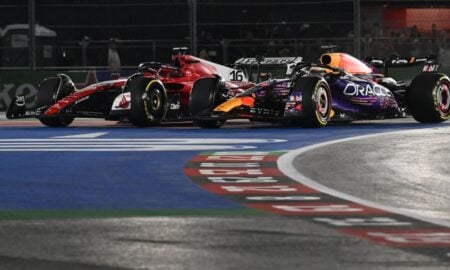
GP of Canada: Montreal’s Iconic Circuit Marks 44 Years of Thrilling Races


The Canadian Grand Prix, the tenth round of the 2025 Formula 1 season, kicks off on June 13 at the renowned Gilles Villeneuve Circuit in Montreal. Located on Notre Dame Island, the 4.361-km track is famed for its 14 demanding corners and the notorious “Wall of Champions” at the final chicane. Opened in 1978, the circuit honors Canadian racing legend Gilles Villeneuve, who claimed victory in its inaugural race. With five layout changes since its debut, the latest in 2002, the track blends high-speed corners and a long straight, drawing crowds to Jean-Drapeau Park. Michael Schumacher holds the record with seven wins, setting a high bar for 2025’s contenders.
Montreal’s circuit has become a cornerstone of Formula 1, known for testing drivers’ precision. The “Wall of Champions” has claimed victims like Damon Hill and Sebastian Vettel, cementing its fearsome reputation. Its unique setting and technical demands make it a fan favorite.
- Track highlights: 14 corners, with high-speed sections.
- Key straight: Over 320 km/h with DRS.
- Fan experience: Vibrant atmosphere at Jean-Drapeau Park.
The 2025 race promises intense competition as teams tackle this historic track.
Roots of the Gilles Villeneuve Circuit
Built on Notre Dame Island, an artificial site from the 1967 Expo, the circuit debuted in 1978 with Gilles Villeneuve’s Ferrari triumph. Named after him following his 1982 death, the track has seen tweaks, with the 2002 update enhancing safety. Its 4.361-km layout, one of the shorter F1 tracks, demands skill with its mix of fast corners and long straights.
The circuit’s scenic location, surrounded by water, adds to its allure. It draws global fans, filling grandstands and boosting Montreal’s profile. The track’s design, rooted in its natural setting, remains a testament to innovative urban planning.
Breaking Down the Track Layout
The Gilles Villeneuve Circuit splits into three sectors, each with unique challenges. The first starts at the pit straight, with a sharp brake into turn 1, followed by a 180º left at turn 2. High-speed turns 3 and 4 push cars close to the walls, demanding pinpoint accuracy at over 200 km/h.
Sector two features the chicane of turns 6 and 7, slowing drivers before a straight where DRS boosts speeds to 320 km/h. The high-speed chicane of turns 8 and 9 keeps cars near the walls, testing nerve.
- Turn 10 hairpin: Heavy braking before the longest straight.
- DRS zones: Two key overtaking spots.
- Tire wear: Moderate, from braking and fast corners.
- Average speed: Around 200 km/h in technical sections.
The third sector includes the “Wall of Champions” at turns 13 and 14. After a full-throttle straight, drivers brake hard for this chicane, where missteps have ended races for champions like Schumacher and Button.
The closest of calls! 🫣
— Formula 1 (@F1) June 12, 2025
Yuki Tsunoda spins on the wet grass and onto the racing line in Montreal last season 😱#F1 #CanadianGP pic.twitter.com/j2RmdTIwEg
The Wall of Champions Legacy
The final chicane earned its “Wall of Champions” nickname in 1999 when Hill, Jacques Villeneuve, and Schumacher crashed there in one race. Jenson Button and Sebastian Vettel later joined the list, highlighting the turn’s difficulty. Drivers must exit turn 13 at speed but nail turn 14’s entry, with concrete just meters away.
This section shapes race strategies, as teams tweak suspensions for traction. Simulators play a big role in preparing drivers for the chicane’s unforgiving margins. Its fame extends beyond F1, featuring in media and track lore.
Records and Top Performers
Michael Schumacher leads with seven Canadian GP wins from 1994 to 2004. Lewis Hamilton follows with six, and Nelson Piquet has three. Ferrari tops teams with 11 victories. The fastest lap, 1:13.078, was set by Valtteri Bottas in 2019 with Mercedes.
- Most poles: Lewis Hamilton, with six.
- Team wins: Ferrari (11), McLaren (9), Williams (7).
- Shortest race: 1998, cut to 44 laps due to rain.
The track suits cars with strong straight-line speed and braking stability, favoring teams like Ferrari and Mercedes. Red Bull and McLaren aim to challenge in 2025 with aero upgrades.
Gearing Up for 2025
Montreal expects 300,000 fans for the 2025 race weekend, with preparations underway to transform Jean-Drapeau Park. The city buzzes with festivals, and the track’s closure creates exclusive fan zones. Teams shift from Monaco’s tight corners to Montreal’s high-speed layout, adjusting wings for speed without losing grip.
Weather forecasts predict 15-25°C with possible rain, a factor in past races. Teams will ready wet tires and adaptable strategies to handle Montreal’s unpredictable conditions.
Economic and Cultural Impact
The Canadian GP drives millions into Montreal’s economy, filling hotels and eateries. In 2024, it drew 305,000 fans, and 2025 ticket sales suggest even higher attendance. The event showcases Canada’s racing heritage, spotlighting Gilles Villeneuve, Jacques Villeneuve, and Lance Stroll.
Fan events, like classic car displays and driver meet-and-greets, enhance the festive vibe. The race strengthens Montreal’s global image as a dynamic host city.
Driver Challenges
The Gilles Villeneuve Circuit tests skill and nerve. High-speed corners in sector one demand confidence, while heavy braking at turn 10 and the final chicane requires precision. The “Wall of Champions” adds mental strain, especially in close races.
Fuel and tire management are key, with most teams planning one or two pit stops. The track’s layout rewards bold overtaking but punishes mistakes harshly.
Race Highlights and Trivia
The 2011 Canadian GP, lasting over four hours due to rain, saw Jenson Button win from last place, a historic feat. The track’s marmots occasionally disrupt practice, adding unpredictability.
- First win: Gilles Villeneuve, 1978, Ferrari.
- Record crowd: 315,000 in 2019.
- Notable crashes: Turn 1 pile-ups and Wall of Champions incidents.
- Weather impact: Rain has hit 30% of races.
These moments keep the Canadian GP etched in F1 history.
Season Outlook
The 2025 season introduces greener tech rules, testing teams’ engineering. Montreal’s track will challenge car reliability and driver skill. Max Verstappen leads the pack, but Lando Norris and Charles Leclerc are strong contenders.
The Gilles Villeneuve Circuit remains a thrilling stage, blending history, speed, and drama for another unforgettable Canadian Grand Prix.