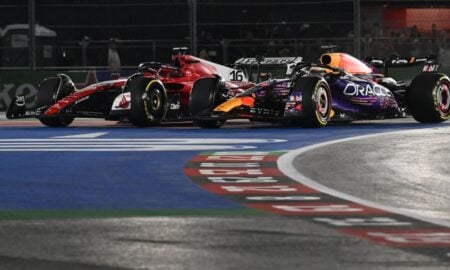
Max Verstappen and Kimi Antonelli out of Austrian GP after competitions on lap 2 of F1


Spielberg, Austria, June 29, 2025 – The Austrian Grand Prix, the 11th round of the 2025 Formula 1 season, kicked off with chaos at the Spielberg circuit. On lap 2 of 70, a collision between Max Verstappen (RBR) and Kimi Antonelli (Mercedes) forced both drivers out of the race, prompting the safety car’s deployment. The incident, caused by a risky dive from Antonelli, also involved Brazilian Gabriel Bortoleto (Sauber), who emerged unscathed but lost positions. Before the race even started, Carlos Sainz (Williams) retired due to a fire in his car’s brakes, which halted the formation lap. Lando Norris (McLaren), starting from pole, holds the lead as the race remains tense. The event, marked by unexpected setbacks, underscores the season’s competitiveness and exposes teams’ technical challenges.
The race, which began at 10 a.m. (Brasília time), faced a delayed start after Sainz’s car locked in first gear, releasing smoke and flames. The situation demanded swift action from Williams’ mechanics, who used extinguishers to douse the fire. The Austrian crowd, out in force, cheered Sainz as he returned to the pits.
- Early incidents: Fire in Sainz’s car and Verstappen-Antonelli crash.
- Norris’s position: Leading after a solid start, followed by Oscar Piastri.
- Brazilian highlight: Bortoleto, starting eighth, avoids chaos but loses ground.
- Track conditions: 30°C ambient temperature, 49.7°C on the track, no rain expected.
The Austrian GP, secured on the F1 calendar until 2041, already stands out as one of the season’s most eventful races. The mix of mechanical failures and intense on-track battles keeps the world’s attention fixed on Spielberg.
Crash that reshaped the race
The lap 2 collision between Verstappen and Antonelli at Turn 1 was a turning point in the Austrian GP. Antonelli, a young Mercedes prospect, attempted an aggressive overtake, striking the rear of Verstappen’s car. The impact spun the Dutchman out, while the Italian also retired. The move, described as a “dive” by the ge team, triggered a yellow flag and the safety car.
Bortoleto, who started eighth after his career-best Q3 appearance, was alongside the two drivers during the incident. The Brazilian avoided contact but was overtaken by Pierre Gasly (Alpine) and Alexander Albon (Williams), dropping to tenth. Despite losing positions, his skill in keeping the car on track earned praise.
The crash highlighted the pressure on drivers in a fiercely competitive grid. Verstappen, third in the championship with 155 points, suffered a setback in his bid to close the gap on Norris (176 points) and Piastri (198 points). Antonelli, with 63 points, faces scrutiny for his bold approach.
Issues before the start
Even before the race began, Carlos Sainz’s car suffered severe mechanical issues. During the formation lap, the Spaniard reported that his vehicle was stuck in first gear, unable to move. As he entered the pits, the brakes caught fire, producing heavy smoke. Williams’ mechanics acted swiftly, but the incident marked Sainz’s early exit.
The mechanical failure forced a start postponement, reducing the race from 71 to 70 laps. The new formation lap, starting at 10:15 a.m., proceeded without issues, but the delay sparked complaints from drivers like Fernando Alonso (Aston Martin), who reported extreme cockpit temperatures, reaching “about 200 degrees.”
- Technical failure: First-gear lock and brake fire in Sainz’s car.
- Team response: Mechanics used extinguishers to control the flames.
- Race impact: Delayed start and one lap reduction.
Williams, already struggling this season, took another hit with Sainz’s retirement, while Albon, their other driver, capitalized on the chaos to gain positions.
Lando Norris and McLaren’s performance
Lando Norris, who secured pole position with a “spectacular” lap on Saturday, started strongly and maintained the lead. His McLaren showed consistency, even under pressure from Oscar Piastri, who overtook Charles Leclerc (Ferrari) to take second place. The McLaren duo, leading the constructors’ championship, leveraged the incidents to solidify their track advantage.
Norris praised his team’s progress over the weekend. “It was a perfect lap in Q3. I knew if I executed well, I could find more time,” he said after qualifying. Ferrari, with Leclerc in third, introduced upgrades that improved performance but couldn’t yet challenge McLaren directly.
Norris’s early lead reflects his strong form. With 176 points in the championship, he trails Piastri by just 22 points, and Verstappen’s absence could widen his advantage.
Brazilian standout in the season
Gabriel Bortoleto, a rookie with Sauber, is having a memorable weekend. The Brazilian, who reached Q3 for the first time, started eighth and showed consistency in practice sessions, notably finishing sixth in the first free practice. Despite losing positions in the lap 2 chaos, his ability to avoid the crash was a highlight.
During qualifying, Bortoleto shared the thrill of his Q2 performance: “The last two corners were insane, I pushed the car to the limit. When I saw I was fifth, I thought ‘that’s awesome.’” His Q3 lap, though not perfect, secured his best-ever starting position.
- Historic achievement: First Q3 in 11 F1 qualifying sessions.
- Practice performance: Sixth in FP1, eighth in FP2, tenth in FP3.
- Race strategy: Avoided crash and aims to recover positions.
- Outlook: Best Brazilian result since Felipe Massa in 2017.
Bortoleto’s performance is a milestone for Brazilian motorsport, which hasn’t had a competitive F1 driver since Massa’s era. His consistency in Spielberg reinforces his potential as a future star.
Track conditions and strategies
The 4.326-km Spielberg circuit poses unique challenges due to high temperatures and its short layout. With 30°C ambient and 49.7°C on the track, tire management is critical. Most drivers chose medium tires, while Gasly, Hadjar, Colapinto, Bearman, and Hulkenberg opted for softs, seeking an early advantage.
The FIA’s confirmation of no rain favors one- or two-stop strategies, depending on tire wear. Teams like McLaren and Ferrari, with aerodynamic upgrades, hold an edge in race pace, while RBR, without Verstappen, relies on Sergio Pérez to score points.
Notable attendees at the event
The Austrian GP drew high-profile figures, including Jurgen Klopp, former Liverpool manager. Now the global head of football for the company controlling RBR, Klopp’s presence added glamour to the event. His appearance underscores F1’s global appeal, blending sport, technology, and entertainment.
The race also saw strong local support, with packed grandstands. The announcement of the Austrian GP’s contract extension until 2041, made before the race, highlights the circuit’s significance to the sport. Spielberg, with its history and vibrant atmosphere, remains a fan-favorite F1 destination.
Moments of tension and resilience
The race, still ongoing on lap 2, has already delivered high drama. The Verstappen-Antonelli crash, Sainz’s car fire, and the delayed start created an unpredictable scenario. While Norris leads, drivers like Piastri, Leclerc, and Gasly aim to capitalize on the incidents to gain positions.
Bortoleto, despite losing ground, remains in the points zone, potentially securing his first points of the season. Sauber, grappling with technical issues, sees the Brazilian as a hope for recovery. With 68 laps remaining, the race promises more thrills and twists.