
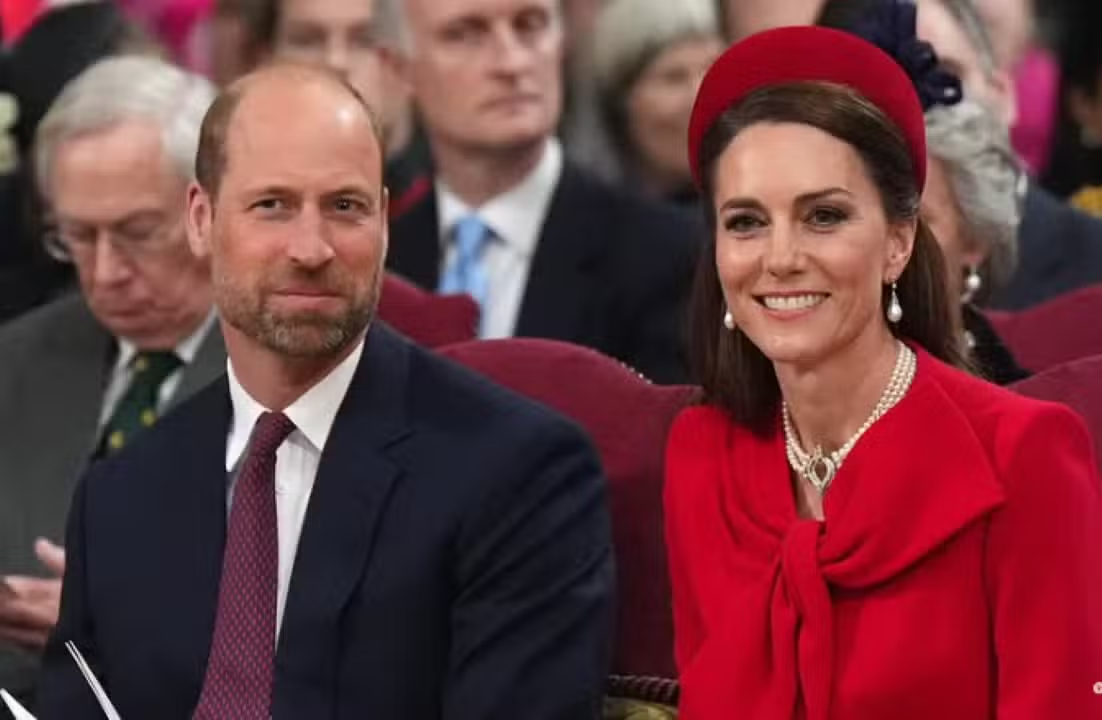
Prince William, aged 42, is intensifying his preparation to assume the British throne as King Charles III, 76, faces ongoing health challenges from a cancer diagnosis announced in February 2024. The transition, reported on April 18, 2025, reflects urgency due to Charles’s limited public engagements caused by treatment side effects, with a notable hospitalization in March 2025. William has taken on significant roles, including representing the Crown at the Notre-Dame Cathedral reopening in Paris, while Kate Middleton, also 42, resumes duties after her own cancer recovery in 2024. The couple’s training focuses on diplomacy, social initiatives like the Earthshot Prize, and managing the Duchy of Cornwall, ensuring monarchy stability. Based in Windsor, they balance royal duties with raising their children, George, Charlotte, and Louis, amid public and familial pressures.
The monarchy faces scrutiny over its relevance, intensified by Harry and Meghan’s 2020 exit. William’s rising prominence aims to modernize the institution through environmental and social projects.
Key aspects of the transition:
- William’s leadership: Managing high-profile diplomatic and charitable roles.
- Kate’s recovery: Resuming public duties post-cancer treatment.
- Charles’s health: Ongoing cancer treatment limits his schedule.
- Modernization efforts: Earthshot Prize and housing projects enhance relevance.
Health challenges for Charles III
Charles III’s cancer, detected after a prostate procedure in January 2024, has reshaped royal operations. By April 2025, his reduced public appearances, coupled with a March hospitalization for treatment side effects, shifted responsibilities to William. Queen Camilla’s 2024 pneumonia recovery further highlighted the need for succession planning.
The king maintains private audiences but delegates major events, such as Commonwealth summits, to William. The lack of details about the cancer type fuels speculation, but the Palace prioritizes continuity, with Charles mentoring William in state affairs to ensure a seamless transition.
William’s expanding duties
William has assumed a central role, attending global events like the 80th D-Day anniversary in 2024, where he engaged with leaders like Joe Biden. His management of the Duchy of Cornwall, valued at over 1 billion pounds, includes initiatives like affordable housing in Nansledan, Cornwall, reflecting his focus on social impact.
The Earthshot Prize, awarding 5 million pounds annually to climate solutions, underscores William’s environmental leadership, building on Charles’s legacy. With a 72% approval rating in 2025, William’s approachable style strengthens public support, critical for the monarchy’s future.
Kate Middleton’s return to duties
Kate’s 2024 cancer diagnosis, following abdominal surgery, led to a temporary withdrawal from public life. Her remission, announced in January 2025, allowed her to resume engagements like the Together at Christmas concert. Her work with the Shout charity and early childhood initiatives maintains her 65% approval rating.
Relocating to Adelaide Cottage in 2022, Kate and William prioritize privacy for their children, who attend Lambrook School. Kate’s focus on mental health aligns with William’s modernization efforts, enhancing the monarchy’s connection to contemporary issues.

Line of succession
The royal succession is structured as follows:
- Prince William: First in line to become king.
- Prince George: Second, aged 11, with gradual preparation.
- Princess Charlotte: Third, followed by Prince Louis.
- Prince Harry: Fifth, with limited involvement post-2020.
Kate would become queen consort upon William’s ascension, with Camilla as queen dowager. George’s youth emphasizes William and Kate’s long-term role.
Modernizing the monarchy
William’s vision includes projects like St. Mary’s Community Hospital, improving healthcare in the Isles of Scilly. The Earthshot Prize, with global events in 2025, draws international attention, reinforcing his environmental commitment. Kate’s mental health advocacy, through initiatives like Shout, complements these efforts, targeting younger audiences.
The couple’s use of social media, with personal videos on platforms like Instagram, marks a shift from traditional royal communication, boosting engagement with 70% of Britons under 35 supporting the monarchy in 2025 surveys.
Younger royals’ involvement
William plans to involve cousins Lady Louise Windsor, 21, and James, Viscount Severn, 17, in royal duties. As Prince Edward’s children, they bring youth and discretion, countering the reduced active royal roster post-Harry’s exit. Lady Louise’s choice to forgo her princess title aligns with William’s vision for a relatable monarchy.
Family and institutional pressures
The rift with Harry, now in California with Meghan, persists. Their independent projects, like Netflix series, strain relations, with William likely limiting Harry’s future role. Prince Andrew’s 2022 title loss, due to Epstein ties, fuels public criticism, pushing William to emphasize transparency and social good.
Commonwealth nations like Jamaica debate republicanism, with Barbados’s 2021 exit as a precedent. William and Kate plan 2025 visits to Australia and Canada to strengthen ties, addressing these tensions.
Key moments in succession
Significant events shaping the transition:
- September 2022: Elizabeth II’s death, Charles III’s ascension.
- February 2024: Charles’s cancer diagnosis.
- March 2024: Kate’s cancer announcement.
- January 2025: Kate’s remission, return to duties.
- April 2025: William leads Notre-Dame reopening.
These milestones highlight the urgency of preparing William for a potential early reign, learning from past transitions like Edward VIII’s 1936 abdication.
Balancing family and duty
William and Kate shield George, Charlotte, and Louis from excessive scrutiny, ensuring a normal childhood at Lambrook School. William attends their sports events, while Kate organizes community activities, maintaining a relatable image. George’s gradual introduction to royal duties balances preparation with freedom.
William’s background, including a geography master’s and military service, shapes his pragmatic leadership, while his Aston Villa fandom adds a personal touch. Kate’s resilience post-cancer strengthens her role as a future queen consort, vital for public goodwill.