
In the heart of London, King Charles III, aged 76, faces the final moments of his reign, which began in September 2022 following Elizabeth II’s death. Diagnosed with terminal cancer in February 2024 after a medical procedure, the monarch revealed the severity of his condition to Prince William in March 2025, in an emotional conversation. Buckingham Palace is discreetly organizing a farewell ceremony, while William, aged 42, prepares to assume the throne. The illness, possibly pancreatic, no longer responds to treatments, limiting the king’s public appearances. The nation watches with anticipation and sorrow as a brief but impactful reign, dedicated to modernizing the British monarchy, nears its end.
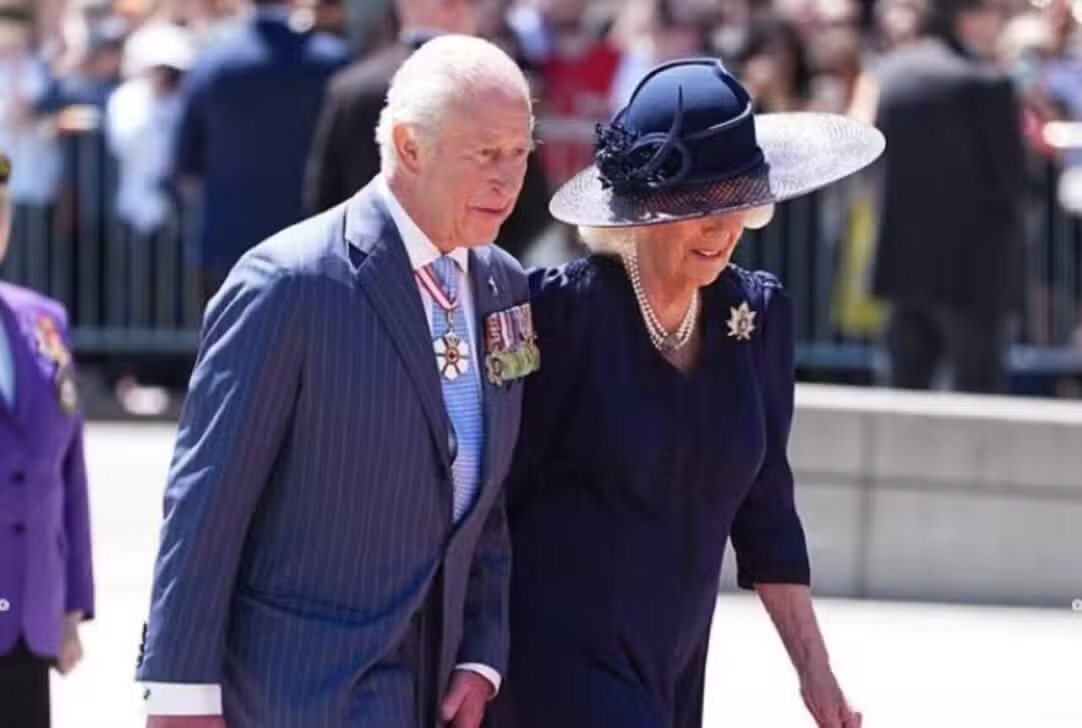
Charles III’s health has deteriorated rapidly in recent months, restricting his activities to essential events alongside Camilla Parker Bowles. The royal family, still shaken by Kate Middleton’s cancer recovery in 2024, faces renewed emotional strain. Prince Harry, estranged from royal duties since 2020, was informed by William about their father’s condition, but his attendance at a potential ceremony remains uncertain. The monarchy, a historic symbol, balances grief and continuity with William at the center of preparations.
The imminent transition mobilizes the United Kingdom, which observes Charles III’s legacy with respect. His efforts to modernize the institution, focusing on environmental causes, leave significant marks. Meanwhile, William and Kate bolster their image as accessible leaders, essential for the Crown’s stability.

- Key facts of the reign: Charles III ascended after Elizabeth II, focusing on sustainability.
- Impact of the illness: Cancer has limited his schedule, accelerating succession plans.
- William’s preparation: The prince positions himself as a modern leader for the future.
Charles III’s health trajectory
Charles III’s battle with cancer began in February 2024, when a medical procedure revealed an advanced-stage tumor. Initially, treatments offered hope, but throughout 2025, the disease progressed rapidly, exhausting therapeutic options. Speculation points to the pancreas as the tumor’s origin, given the guarded prognosis and rapid deterioration, though the Palace maintains silence on clinical details. The king’s sharply reduced public schedule reflects the condition’s severity, with appearances limited to priority engagements.
In recent months, Charles III has been seen at ceremonial events, always accompanied by Camilla, who has taken on greater visibility. The nation, still marked by Elizabeth II’s loss, follows the monarch’s decline with reverence, aware of the historic transition approaching. The British monarchy, known for its discretion, faces the challenge of maintaining stability in a moment of imminent mourning.
- Initial diagnosis: Revealed in February 2024 after surgery.
- Disease progression: Treatments failed to halt the cancer’s advance.
- Public appearances: Reduced to essential events, with Camilla’s support.
- Royal secrecy: The Palace avoids details, upholding its tradition of discretion.
Succession preparations
Buckingham Palace is intensifying efforts to ensure a smooth transition of the Crown. The organization of a farewell ceremony, kept confidential, signals the nearing end of Charles III’s reign. William, groomed for years to assume the throne, now faces the responsibility of leading amid national mourning. His popularity, with over 60% approval in recent polls, is a key asset in maintaining the monarchy’s relevance.
The royal team refines protocol details for William’s ascension, prioritizing institutional continuity. Kate Middleton, recently recovered from her own cancer, plays a central role, offering emotional support to her husband. The strategy includes positioning William as a modern leader aligned with contemporary values like sustainability and accessibility to strengthen public trust in the monarchy.
Logistical planning covers everything from public communication to adjustments to avoid political crises. William and Kate’s accessible and engaged image is vital for the transition. The monarchy seeks to balance the moment’s solemnity with a projection of stability for the future.
- Logistical planning: Protocols are refined for William’s ascension.
- William’s popularity: Public approval bolsters Crown continuity.
- Kate’s role: Recovered, she is key in emotional and public support.
- Strategic communication: The Palace monitors public opinion to maintain trust.
Family dynamics under pressure
The royal family faces a period of intense emotional challenges. Kate Middleton’s recovery in 2024 brought relief, but Charles III’s terminal condition reignites concerns. Camilla, by the king’s side since 2005, maintains a supportive role, appearing at public events to preserve an image of stability. The relationship between William and Harry, however, remains strained, exacerbated by Harry’s departure from royal duties in 2020.
William informed his brother, who lives in the United States with Meghan Markle and their children, about their father’s health. Despite this, a family reconciliation is uncertain. Sources close to the Palace suggest Harry may return to bid farewell, but Meghan’s presence at the ceremony is unlikely, reflecting the complexities of family dynamics. William and Kate’s children—George, Charlotte, and Louis—are shielded from the crisis’s public impact, but family tensions remain a challenge.
- Tension with Harry: Distance between the brothers hinders reconciliation.
- Camilla’s role: The queen consort maintains discretion and public support.
- Kate as a pillar: She balances personal recovery and support for her husband.
- Royal children: George, Charlotte, and Louis are protected from public exposure.
Legacy of a brief reign
Charles III ascended the throne with a mission to modernize the monarchy, promoting causes like sustainability and interfaith dialogue. Initiatives like the Earthshot Prize, led by William, reflect his vision for an engaged reign. However, his illness curtailed these ambitions, leaving a legacy for his son to carry forward. William and Kate’s popularity, coupled with their practical approach, provides a solid foundation for the monarchy’s future.
The transition, though planned, will be marked by national mourning that will test the royal family’s resilience. William will face the challenge of maintaining the institution’s relevance in a rapidly changing world. Charles III’s reign, though short, leaves marks in areas like the environment and modernization, now passed to his successor.
- Monarchy modernization: Charles III focused on environmental causes and accessibility.
- Earthshot Prize: Initiative reflects commitment to sustainability.
- William’s challenge: Maintaining the Crown’s relevance in a modern context.
- National mourning: The transition will be marked by emotion and expectation.
Key moments of the illness
Charles III’s cancer battle is defined by events illustrating its severity:
- February 2024: Diagnosis after a medical procedure reveals an advanced tumor.
- Early 2024: Treatments begin with hope but fail to stop the disease.
- March 2025: Charles confirms the terminal nature to William, accelerating succession plans.
- Mid-2025: Public appearances become rare, with Camilla more visible.
This timeline reflects not only the monarch’s personal struggle but also the impact of his condition on the monarchy and the nation. The succession preparations, now advanced, aim to ensure a serene and continuous transition, maintaining institutional stability in a delicate moment.
William in the spotlight
At 42, Prince William faces one of the most demanding periods of his life. Beyond supporting his father, he prepares to assume the throne amid grief and public expectations. His experience as a father to George, Charlotte, and Louis, alongside Kate’s support, strengthens his image as an accessible leader. Succeeding Charles III in a context of family and social instability will be a significant test.
William has shown skill in public causes like mental health and the environment, positioning him as a monarch aligned with contemporary issues. His relationship with Harry, though distant, is managed carefully to avoid distractions during the transition. The nation places hope in William to lead with balance and renewal, keeping the monarchy relevant.
- William’s leadership: Focus on mental health and sustainability positions him as modern.
- Relationship with Harry: Managed cautiously to avoid impacting the transition.
- Kate’s support: Critical for his public and emotional image.
- Public expectation: The nation anticipates a renewed and stable reign.