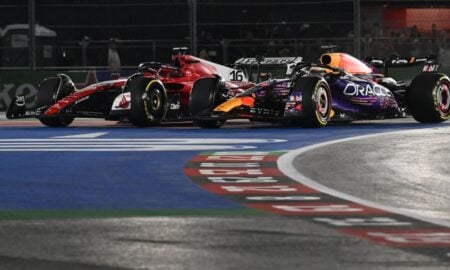
McLaren dominates Hungary GP free practice 3 with Piastri leading and Bortoleto in ninth


Oscar Piastri set the fastest time in the third free practice session for the Hungary Grand Prix of Formula 1, held on Saturday, August 2, 2025, at the Hungaroring circuit in Budapest. With a lap of 1m14s916, the McLaren driver edged out his teammate Lando Norris by just 0.032 seconds, solidifying the British team’s dominance in the 14th round of the season. Charles Leclerc of Ferrari completed the top 3, while Brazilian Gabriel Bortoleto of Sauber impressed with a ninth-place finish. The session, which precedes the qualifying set for 11 a.m. Brasília time, underscored McLaren’s strength and brought positive signs for Bortoleto, who aims to cement his progress in the category. The race, the last before Formula 1’s summer break, promises a fierce battle for the starting grid, with favorable weather conditions and tire strategies in focus.
McLaren maintained its commanding form from previous sessions, with Piastri and Norris trading the lead. The British team, which also topped Friday’s two practice sessions, appears a step ahead of rivals on the twisty Hungarian track. Ferrari, with Leclerc, remained competitive, while Lewis Hamilton, now with the Italian team, finished fourth. Bortoleto, meanwhile, showed consistency by improving throughout the session, finishing ahead of experienced drivers like Max Verstappen, who had a subdued performance in 12th.
- Key highlights from FP3:
- Oscar Piastri led with 1m14s916, beating the 2024 pole time.
- McLaren secured a one-two with Norris just 0.032 seconds behind.
- Gabriel Bortoleto achieved ninth place, shining for Sauber.
- Charles Leclerc kept Ferrari in the top 3, with Hamilton in fourth.
The session saw varied strategies, with teams testing soft and medium tires to optimize qualifying performance. The Hungaroring, known as the “F1 karting track” for its technical corners, demands high mechanical grip and precise car setup.
McLaren’s strong pace
McLaren arrived at the Hungary GP as the favorite, following recent wins and car upgrades. Oscar Piastri, the championship leader with 266 points, reinforced his position with a flawless lap in FP3. His 1m14s916 outperformed the 2024 pole time set by Lando Norris at 1m15s227, signaling McLaren’s increased competitiveness this year. Norris, second in the championship with 250 points, trailed his teammate by just 0.032 seconds, hinting at a tight internal battle for pole position.
The team focused on quick laps in the final minutes, using soft tires to maximize performance. McLaren’s consistency across all practice sessions positions them as the top contenders for Sunday’s race. The rivalry between Piastri and Norris, which sparked intense battles in 2024, could be a defining factor, especially on a track where overtaking is challenging.
McLaren’s aerodynamic upgrades, introduced in recent races, have clearly paid off. The team seems to have found the perfect balance between straight-line speed and cornering grip, crucial at Hungaroring. Piastri highlighted the “car’s stability” in post-session interviews, reflecting the team’s confidence.
Brazilian standout Bortoleto
Gabriel Bortoleto, Sauber’s driver, was a highlight of FP3, finishing ninth with a time of 1m16s025. The Brazilian, who showed progress in Friday’s sessions, made effective use of soft tires to improve his lap times throughout the practice. His performance put Sauber in the spotlight, with teammate Nico Hulkenberg rounding out the top 10.
Bortoleto started the session with a solid lap, securing tenth place initially. With car adjustments and a qualifying simulation strategy, he climbed to seventh with 11 minutes remaining before settling in ninth. The Brazilian emphasized his growing confidence in Sauber, stating he can now “drive with calmness and precision.”
- Factors boosting Bortoleto’s performance:
- Efficient use of soft tires in the session’s final phase.
- Sauber’s suspension tweaks optimized for Hungaroring.
- Competitive pace in the track’s technical sectors.
- Consistency compared to teammate Nico Hulkenberg.
Bortoleto’s result is a positive sign for Sauber, which aims to solidify its mid-grid position. The Swiss team, with updates tested in Belgium, appears to be finding its footing to compete with rivals like Haas and Williams.
Ferrari competitive, Verstappen struggles
Charles Leclerc of Ferrari stayed among the top three in all practice sessions, positioning the Italian team as a strong contender for pole. With a lap of 1m15s315, Leclerc was 0.399 seconds off Piastri, showing Ferrari’s pace to fight for a podium. Lewis Hamilton, in his first season with Ferrari, finished fourth, 0.768 seconds behind the leader, reinforcing the team’s strong form on technical tracks.
Ferrari tested a new suspension introduced in Belgium, which seems to be performing well at Hungaroring. The track’s slow corners and high downforce demands suit the Italian car, which excels in medium- and low-speed sectors. Leclerc briefly led FP3 but was overtaken by McLaren in the final minutes.
Conversely, Max Verstappen of Red Bull had a lackluster weekend so far. The four-time world champion finished FP3 in 12th, 1.246 seconds off Piastri, struggling to find the ideal pace. Verstappen, who confirmed his stay with Red Bull for 2026, drew attention for throwing an object out of his car in FP2, sparking social media buzz. His FP3 performance suggests Red Bull is still searching for the right setup for the Hungarian track.
Tires and strategies in focus
Tire choice was a key factor in FP3, with most teams alternating between medium and soft compounds. Soft tires, offering greater grip, dominated fast laps, while mediums were used for race pace simulations. Pirelli, the official tire supplier, brought C3, C4, and C5 compounds to the Hungary GP, with the C5 (soft) being the most used in FP3.
- Strategies observed in FP3:
- McLaren prioritized soft tires for fast laps.
- Ferrari tested medium and soft tire combinations for race pace.
- Sauber focused on suspension tweaks with soft tires.
- Red Bull struggled with grip on medium tires.
Tire management will be critical in the race, as Hungaroring’s high temperatures and relentless corners lead to significant tire wear. Teams that balance qualifying performance and race durability will have an edge in grid positioning and Sunday’s strategy.
Hungaroring’s historical context
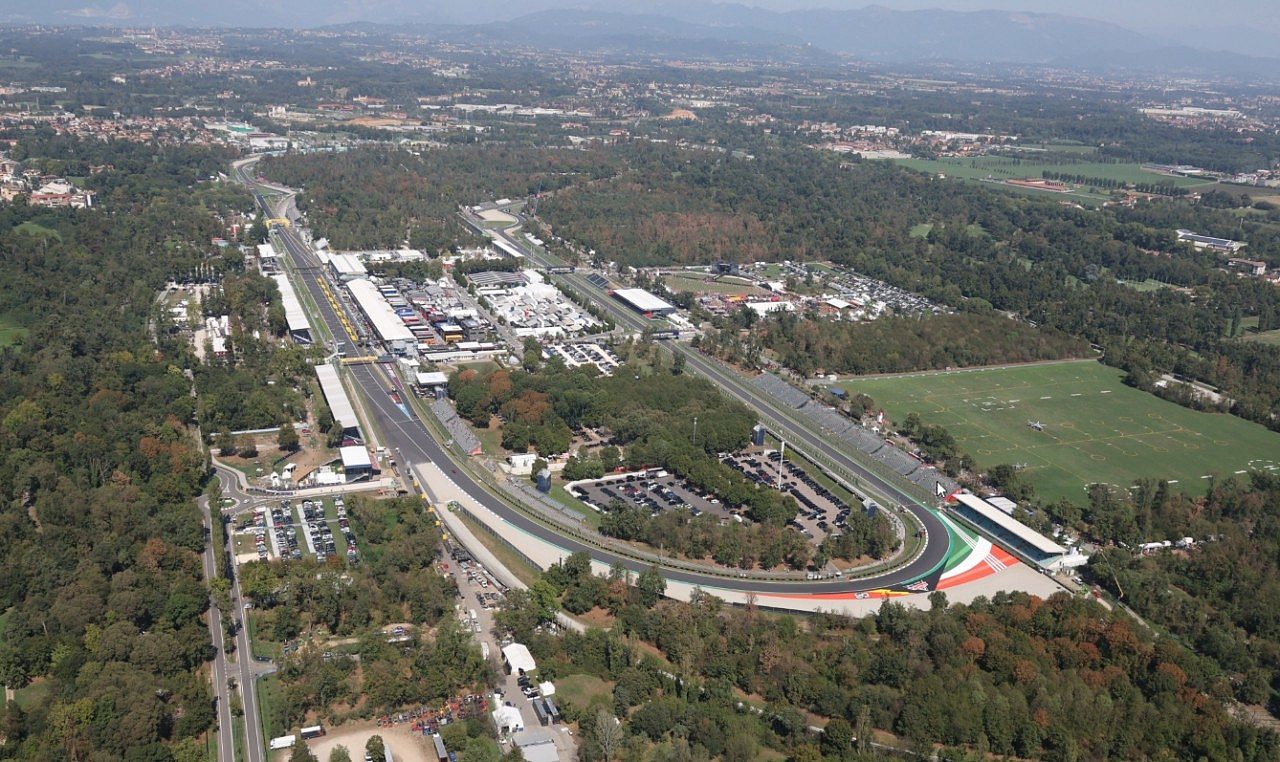
The Hungaroring, located 20 km from Budapest, is one of Formula 1’s most iconic circuits, hosting races since 1986. Nicknamed the “F1 karting track” for its technical layout, it has seen historic wins by Brazilian drivers like Nelson Piquet (1986 and 1987), Ayrton Senna (1988), and Rubens Barrichello (2002). Lewis Hamilton holds the record for most wins at the track, with eight, the latest in 2020.
Among current drivers, besides Hamilton, Max Verstappen (two wins), Fernando Alonso, Oscar Piastri, and Esteban Ocon have triumphed at Hungaroring. The track demands precision in corners and a high-downforce setup, similar to Monaco, making overtaking challenging. The 2024 pole, set by Norris at 1m15s227, is a benchmark for the pace needed to lead the grid.
- Hungaroring facts:
- First F1 race in Eastern Europe, held in 1986.
- Lewis Hamilton holds records for poles (9) and wins (8).
- Track has only two clear overtaking points.
- Average speed is among the lowest in the calendar, around 200 km/h.
Qualifying expectations
The qualifying session, set for 11 a.m. on Saturday, will be crucial for determining the starting grid. McLaren enters as the favorite, but Ferrari, with Leclerc and Hamilton, could surprise, especially if the new suspension continues to deliver. Bortoleto’s promising pace gives him a shot at reaching Q3, a milestone for the Brazilian rookie.
Red Bull needs urgent adjustments to recover Verstappen’s form. The Austrian team, dominant in recent years, faces instability, with Verstappen 81 points behind Piastri in the championship. Aston Martin, with Fernando Alonso and Lance Stroll, also showed promise, finishing FP3 in sixth and seventh.
Weather forecasts indicate a 46% chance of rain for Saturday afternoon, with temperatures between 16°C and 27°C and moderate winds, favoring soft tires for fast laps.
Mid-grid team performances
Beyond McLaren and Ferrari, teams like Mercedes, Aston Martin, and Sauber stood out in FP3. Kimi Antonelli of Mercedes finished fifth, showing potential in his debut season. Aston Martin, after Alonso’s absence in FP1 due to back pain, regained pace with the Spaniard in sixth and Stroll in seventh. Sauber, with Bortoleto and Hulkenberg, impressed by placing both cars in the top 10.
Teams like Williams, Alpine, and RB struggled. Carlos Sainz (Williams) finished 15th, while Pierre Gasly (Alpine) and Yuki Tsunoda (RB) stayed outside the top 10. Haas, with Oliver Bearman in 11th and Esteban Ocon in 17th, is also seeking setup improvements for qualifying.
- Mid-grid team challenges:
- Williams faced telemetry issues, as seen in FP2.
- Alpine struggles with consistency on soft tires.
- RB lacks grip in technical sectors.
- Haas bets on upgrades to boost race pace.
Summer break implications
The Hungary GP marks the final race before Formula 1’s summer break, with the next round on August 31 at the Dutch GP. The race is a chance for teams to solidify their championship positions before focusing on 2026 car development, which will bring major regulation changes. McLaren, leading the constructors’ championship, aims to extend its advantage, while Ferrari seeks to close the gap.
For drivers like Bortoleto, the race is an opportunity to gain visibility before the break. The Brazilian, rumored for a 2026 Cadillac seat, could use the Hungary GP to strengthen his Sauber position and attract other teams’ interest. The summer break will also allow teams to analyze data and plan strategies for the season’s second half.