
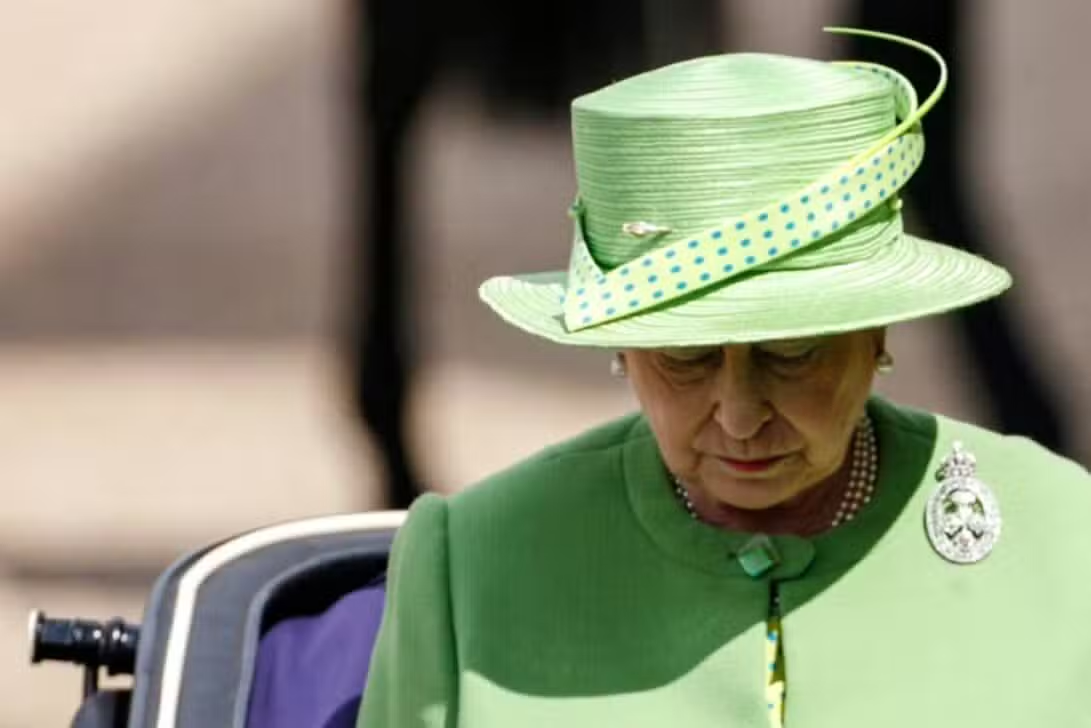
In 2000, Queen Elizabeth II participated in a religious ritual at Sandringham Palace, Norfolk, to address paranormal phenomena reported in the room where her father, King George VI, died in 1952. Described as an “unconventional exorcism,” the ceremony was held at the request of the Queen Mother after staff reported unusual activities. Biographer Robert Hardman revealed the episode on the podcast Queens, Kings and Dastardly Things, emphasizing the monarch’s spiritual faith, though not superstitious. The event, which included prayers and a communion, aimed to bless the space and stop the disturbances, without dramatic practices. Published by the Daily Mail, the story sparked curiosity about the British royal family’s beliefs and their properties.
The account of the Sandringham ritual originates from reports by royal biographer Kenneth Rose, who documented the case in his diaries. Elizabeth II’s presence at the event was considered unusual, given her skepticism toward supernatural theories. Nevertheless, her strong spirituality led her to participate, alongside the Queen Mother. The room in question, tied to King George VI’s death, held emotional significance for the royals, and the reports of hauntings unsettled the palace staff.
- Reported phenomena: Staff described unexplained sounds and sensations in the room.
- Queen Mother’s response: She summoned a priest to perform a blessing ritual.
- Lack of dramatization: The procedure was discreet, focusing on prayers and communion.
- Speculations: There were rumors the spirit could be George VI or even Princess Diana.
Elizabeth II’s participation in the ritual was seen as a way to support the staff and honor the family’s spiritual traditions.
Origin of the paranormal reports
Rumors of supernatural activity in Sandringham began circulating among staff in the late 1990s. The room where George VI died was rarely used, but reports of discomfort led the Queen Mother to take action. According to Kenneth Rose, complaints included nighttime noises and a sense of presence in the space. The decision to hold a religious ritual was practical, aiming to calm the employees and restore peace to the palace. Elizabeth II, then 74, lent weight to the matter by attending, despite not fully believing in ghosts.
The room’s significance stemmed from George VI’s death in 1952, making it a sensitive spot for the royals. Additionally, Diana’s death in 1997 fueled speculation that the spirit might be hers, though nothing was confirmed. Hardman noted the ritual was conducted discreetly, without the theatrics of cinematic exorcisms, reflecting the monarchy’s pragmatic approach.

The spirituality of the British royalty
Elizabeth II was known for her Anglican faith, serving as the supreme leader of the Church of England. Hardman emphasized that, while not superstitious, she maintained a strong spiritual sense, shared by her son, King Charles III. This spirituality guided her decision to join the ritual, which aimed not to expel demons but to bless the space. The event was described as a simple ceremony, led by a local priest with prayers and communion, a common Anglican practice for addressing spiritual unrest.
- Anglican faith: Elizabeth II was devout but avoided exaggerated supernatural beliefs.
- Pragmatism: Her presence aimed to reassure the palace staff.
- Discretion: The ceremony was conducted quietly, preserving royal privacy.
- Charles III: The current king also shows interest in spiritual matters.
The monarchy’s approach reflects a balance between respecting religious traditions and maintaining rationality, even when faced with paranormal reports.
Sandringham and its supernatural stories
Sandringham Palace in Norfolk is one of the royal family’s most cherished residences, traditionally used for Christmas celebrations. With over 150 years as a royal property, it has accumulated stories beyond the 2000 episode. Author John West, in Britain’s Ghostly Heritage, recounts that Charles III, then Prince of Wales, had a startling experience in the palace library, fleeing with a staff member. These accounts reinforce Sandringham’s reputation as a place with paranormal activity, common in historic British residences.
Other royal properties, like Anmer Hall, also have haunting tales. Paranormal historian Richard Felix noted that the royal family is unsurprised by such stories, given the historical weight of their palaces. Sandringham’s tradition of hosting Christmas since 1988, started by Elizabeth II, has created fond memories but also fueled its mystical aura. The 2000 ritual, though discreet, added an intriguing chapter to the residence’s history.
- Anmer Hall: Reports of a Catholic priest executed haunting the site.
- Sandringham’s history: Built in 1862, it serves as a private royal retreat.
- Royal Christmas: The property has hosted family celebrations since the 1980s.
- Other palaces: Residences like Balmoral also have supernatural stories.
Sandringham’s mystique continues to captivate, with the 2000 ritual being just one of many episodes involving the royals and the supernatural.
Reactions to the exorcism report
Hardman’s revelation on the Queens, Kings and Dastardly Things podcast sparked public and media interest. The Daily Mail story highlighted curiosity about the monarchy’s spiritual side, a rarely discussed topic. Buckingham Palace’s lack of comment reinforces the royal family’s reserved stance on personal matters. However, the narrative of an exorcism, even an unconventional one, drew attention for its uniqueness, particularly involving the pragmatic Elizabeth II.
On social media, readers expressed surprise and fascination, with many speculating about the spirit’s identity. The possibility of it being Diana, though unlikely, fueled debates due to her 1997 death’s impact. The British press, known for exploring royal stories, treated the case as a historical curiosity, without questioning Hardman’s credibility, a respected biographer with access to royal archives.
- Public interest: The story went viral due to its royal and supernatural connection.
- Official silence: Buckingham Palace neither confirmed nor denied the report.
- Credibility: Hardman is a trusted source with access to royal records.
- Online debate: Speculation about Diana drove engagement on social platforms.
The episode underscores the public’s fascination with stories blending monarchy, tradition, and mystery.
Elizabeth II’s legacy and the supernatural
Elizabeth II’s participation in the Sandringham ritual reflects her balanced approach to duty and spirituality. Over her 70-year reign, the queen navigated countless challenges, from political crises to personal tragedies, always maintaining neutrality and strength. Her presence at a paranormal event, though discreet, shows her willingness to address her staff’s concerns, even in unusual matters. The account also highlights the complexity of her personality, blending faith, pragmatism, and a touch of curiosity.
Sandringham, as the setting for this event, remains a symbol of royal history. The property, which witnessed George VI’s death and generations of royal celebrations, carries a legacy that mixes tradition and mysticism. The exorcism story, though minor in the context of Elizabeth II’s reign, adds an intriguing layer to her narrative, showing that even the most traditional monarchy can engage in unexpected episodes.
- Remarkable reign: Elizabeth II ruled for 70 years, from 1952 to 2022.
- Faith and duty: Her Anglican spirituality guided personal and public decisions.
- Sandringham: A place of retreat and celebrations, but also mysterious tales.
- Historical curiosity: The 2000 ritual is a unique chapter in royal history.
The Sandringham ritual story reveals a lesser-known side of the queen, reinforcing her role as a leader who balanced tradition, spirituality, and responsibility.