BRICS launches global payment system inspired by Pix to reduce dollar dependency
The BRICS economic bloc, comprising Brazil, Russia, India, China, South Africa, and new members such as Egypt, United Arab Emirates, Ethiopia, Iran, and Indonesia, launched BRICS Pay in August 2025, a digital payment system inspired by Brazil’s Pix. Unveiled during the bloc’s summit in Kazan, Russia, the platform aims to facilitate international transactions in local currencies, reducing reliance on the U.S. dollar. Built on blockchain technology, the system promises fast, secure, and low-cost transactions, connecting central banks and financial institutions across member countries. The initiative responds to Western economic sanctions and the need for greater financial autonomy in global trade. Brazil, leveraging its Pix expertise, plays a central role in the system’s creation, which could handle billions in annual transactions by 2030.
The launch of BRICS Pay marks a strategic step for the bloc, aiming to reshape global trade dynamics. The platform, currently in testing led by China and Russia, seeks to integrate existing instant payment systems like Brazil’s Pix, Russia’s SBP, and India’s UPI. It enables businesses and governments to conduct transactions without converting to dollars, lowering costs and speeding up processes.
- Key objectives of BRICS Pay:
- Reduce the dollar’s dominance in global trade.
- Enable transactions in local currencies like the real, yuan, and rupee.
- Ensure greater financial autonomy against international sanctions.
- Boost the competitiveness of member countries’ exports.
System inspired by Brazil’s Pix
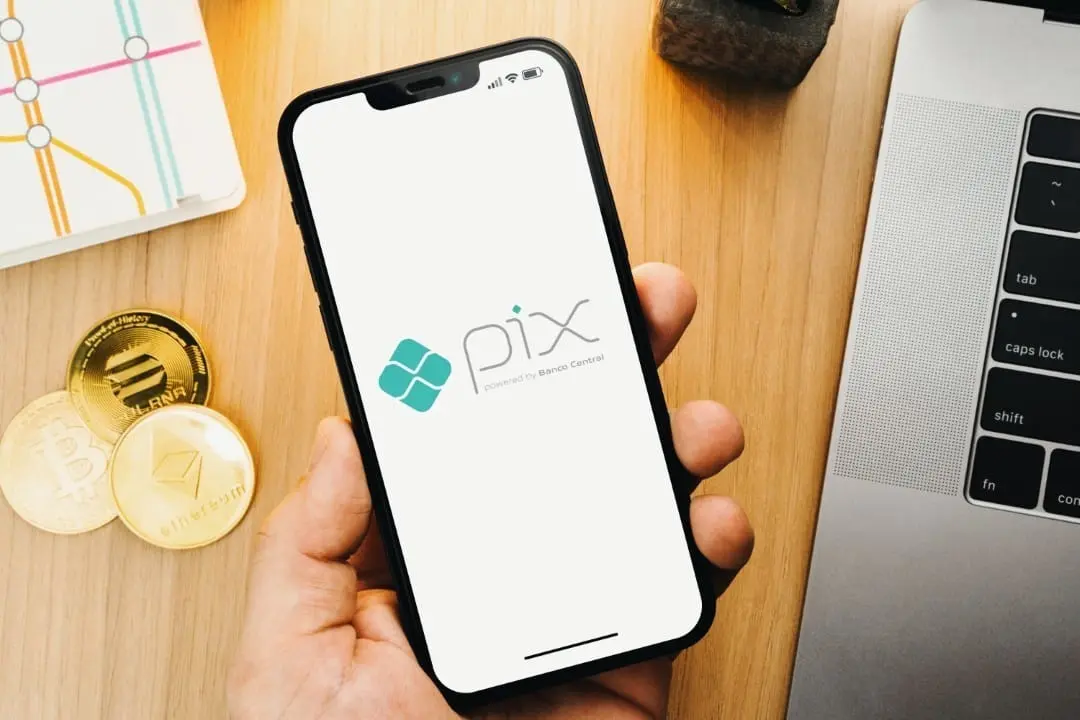
The success of Pix, launched by Brazil’s Central Bank in 2020, served as a model for BRICS Pay. In Q1 2025, Pix accounted for 49% of non-physical transactions in Brazil, totaling R$7 trillion. Brazil’s experience with instant, low-cost, 24/7 transfers inspired the BRICS to develop a similar solution for cross-border trade. Economist Carla Beni from Fundação Getulio Vargas notes that Pix’s technology can be adapted for international transactions, minimizing technical barriers.
Brazil takes a leadership role in integrating Pix into BRICS Pay. During the July 2025 summit, President Luiz Inácio Lula da Silva championed the platform as a path to greater economic sovereignty. Brazil’s expertise in instant payments is a key asset for the bloc, particularly in integrating digital currencies like Drex, Brazil’s developing digital real.
Blockchain technology as the foundation
BRICS Pay uses the Decentralized Cross-border Messaging System (DCMS), developed by Saint Petersburg State University. This technology enables secure, fast transactions, processing up to 20,000 messages per second. Unlike the SWIFT system, controlled by Western banks, BRICS Pay operates without a central authority, ensuring greater independence.
- DCMS features:
- Decentralized operation, with each country managing its own node.
- High security with multiple encryption protocols.
- Open-source code after the testing phase, with no mandatory fees.
- Ability to operate without direct user connections.
The choice of blockchain reflects the bloc’s focus on a modern, interference-resistant system. Russia, facing sanctions since 2022, and China, aiming to globalize the yuan, lead the initial testing with bilateral transactions in local currencies.
Global reactions
The launch of BRICS Pay sparked mixed reactions worldwide. Western nations, particularly the United States, view it as a threat to the dollar’s 84% share of global transactions. Former U.S. President Donald Trump threatened 100% tariffs on nations abandoning the dollar, escalating geopolitical tensions. However, Russian economist Sergey Glazyev argues the system is a step toward financial sovereignty for the Global South.
In Brazil, BRICS Pay is seen as an opportunity to expand exports, particularly in agribusiness, mining, and energy. Sectors reliant on dollar-based transactions with China and India could benefit from direct conversions to yuan or rupees, reducing currency exchange losses. Professor Marco Aurélio dos Santos Sanfins from the Federal Fluminense University highlights that the system could mitigate the impact of external economic sanctions.
Integration with national systems
BRICS Pay’s success hinges on integrating existing instant payment systems in member countries. Alongside Pix, the bloc plans to connect Russia’s SBP, India’s UPI, China’s IBPS, and South Africa’s PayShap. This interoperability poses technical challenges, but experts believe digital currencies like Brazil’s Drex could streamline the process.
Leia Também

Recordes de calor são superados na Alemanha, Dinamarca e República Tcheca em onda que assola a Europa

Novo tremor de magnitude 4,8 atinge a Venezuela na costa de Aragua após abalos devastadores

Venezuela registra 1.430 mortos após duplo terremoto devastador; seis cidadãos espanhóis confirmados entre as vítimas
- BRICS payment systems:
- Pix (Brazil): Instant transfers with 227 million daily transactions in September 2025.
- SBP (Russia): Phone-number-based transfers, used by over 200 institutions.
- UPI (India): Unified interface with strong adoption since 2010.
- IBPS (China): Supports yuan transfers across multiple channels.
Integration aims to create an agile, efficient network for real-time transactions. Brazil, set to assume the BRICS presidency in 2026, will lead efforts to overcome technical and tax-related barriers.
Benefits for global trade
BRICS Pay promises to transform global trade by cutting costs and boosting competitiveness. For Brazil, the platform could open markets like the UAE and Iran, which demand food and fuel. Eliminating dollar conversions may lower export costs and attract investment.
Economists project that by 2030, the system could handle hundreds of billions in annual transactions, challenging SWIFT. The initiative also strengthens the New Development Bank (NDB), which plans a multilateral guarantee line to reduce risks in financial operations.
Implementation challenges
Despite its potential, BRICS Pay faces significant hurdles. Harmonizing financial systems across countries with different regulations and currencies requires intense cooperation. Tax and currency parity issues are critical, according to Professor Sanfins. Western resistance could also lead to sanctions or trade retaliation.
- Key challenges:
- Technological integration of national systems.
- Harmonization of tax and currency policies.
- Opposition from Western powers like the U.S. and EU.
- Need for consensus among BRICS members.
China, the bloc’s largest economy, may seek greater influence, raising concerns among members like India. Brazil maintains a balanced stance, advocating for a multilateral platform benefiting all.
Brazil’s strategic role
Brazil emerges as a key player in BRICS Pay, leveraging Pix’s success and Drex’s development. At the 2025 summit, Foreign Minister Mauro Vieira emphasized the need for a system promoting autonomy and representation. Brazil’s 2026 BRICS presidency will be pivotal in advancing negotiations and implementation.
The initiative also counters U.S. criticism of Pix for allegedly harming companies like Visa and Mastercard. Integrating Pix into BRICS Pay reinforces Brazil’s and the bloc’s financial sovereignty.
Future of global trade
BRICS Pay represents a significant shift in global trade dynamics. By reducing dollar dependency, the bloc seeks greater stability and resilience amid geopolitical tensions. The platform could attract new members like Saudi Arabia, expanding its reach.
For Brazil, the system offers opportunities to strengthen ties with the Global South, lowering costs and boosting competitiveness. In the long term, BRICS Pay could redefine trade relations, fostering a more multipolar financial system.