Brazil: Men transport live pigs on motorcycles and spark controversy in Belford Roxo, Rio de Janeiro

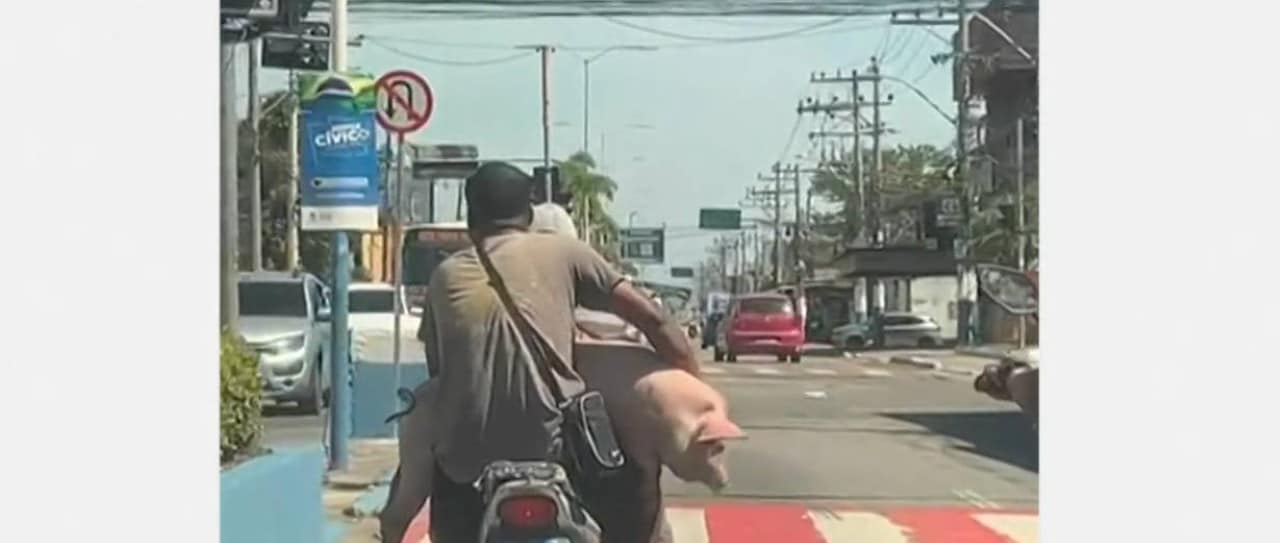
Two men were caught transporting a live pig on a motorcycle in the streets of Belford Roxo, in Baixada Fluminense, on September 5, 2025. The animal, visibly distressed, had its legs tied and was struggling while being held by the passenger on the back. The images, widely shared on social media, show the motorcycle stopped at a traffic light, with the pig trying to break free. The scene sparked outrage among residents and animal rights advocates, who reported animal cruelty. The Belford Roxo City Hall stated it was not directly involved in the incident but is analyzing the footage to take appropriate measures. The case also raises questions about traffic violations, as the motorcycle occupants were not wearing helmets, violating the Brazilian Traffic Code (CTB).
The video’s spread ignited debates about improper animal transport and the lack of enforcement in urban areas. The incident occurred on a busy city street, increasing its visibility. Below, details on the committed infraction and potential legal consequences.
- Traffic violation: Transporting animals irregularly is prohibited by the CTB.
- Animal cruelty: The pig was visibly suffering, with its legs tied.
- No helmets: Both motorcycle occupants disregarded safety regulations.
- Public reaction: Residents expressed outrage on social media.
Community reactions and reports
The video’s release on social media triggered widespread indignation in Belford Roxo. Local residents expressed shock at seeing the animal in distress, with many questioning the lack of enforcement. Animal protection organizations, such as the Baixada Fluminense Animal Protection Society, called for investigations. According to activists, transporting live animals on inadequate vehicles is a recurring practice in the region but rarely punished. The case was compared to a similar incident in Nova Iguaçu in November 2024, where men were caught transporting a horse on a motorcycle.
The community’s outrage extended beyond social media. Some residents filed formal complaints with Belford Roxo’s Municipal Environmental Secretariat, demanding action against those responsible. The city hall confirmed it is reviewing the footage to identify the men and assess appropriate measures.
Legal aspects of animal transport
Transporting animals in vehicles requires specific conditions to ensure their welfare and safety. According to the Brazilian Traffic Code, transporting animals loosely or inappropriately is considered a medium-level infraction, subject to a R$130.16 fine and four points on the National Driver’s License (CNH). Additionally, Federal Law No. 9.605/1998, which addresses environmental crimes, imposes penalties for animal cruelty, with sentences of up to five years in prison in severe cases.
In the Belford Roxo case, the situation is aggravated by the lack of helmets, constituting another traffic violation. Traffic law experts note that the combination of infractions could lead to vehicle seizure.
- Fine for irregular transport: R$130.16 and 4 points on the CNH.
- Animal cruelty: Up to 5 years in prison.
- No helmet: Serious infraction, with a R$195.23 fine.
- Safety risks: Improper transport can cause accidents.
Response from local authorities
Belford Roxo City Hall stated it was not directly involved in the incident but confirmed that the footage is under review. The Municipal Environmental Secretariat will lead the investigation to identify those responsible and determine if animal cruelty occurred. The Municipal Guard was also tasked with checking security camera footage from the area.
The city faces challenges in enforcing regulations like this, particularly in peripheral areas where irregular animal transport is more common. Data from Belford Roxo’s Traffic Secretariat show that in 2024, 127 fines were issued for improper load transport, including animals, but few cases led to criminal penalties. The city hall pledged to strengthen enforcement following the case’s repercussions.
Debate on animal welfare
The incident reignited discussions about animal welfare in Baixada Fluminense. Animal protection organizations argue that the lack of educational campaigns contributes to improper practices. Belford Roxo lacks specific programs focused on raising awareness about animal transport, hindering cultural change.
Veterinarians highlighted the risks of transporting animals on motorcycles. The stress caused to the pig, with its legs tied and no protection, can lead to severe injuries and prolonged suffering. Transporting animals in inadequate vehicles exposes them to extreme conditions like heat, vibrations, and fall risks, further compromising their safety and health.
- Physical risks: Injuries from falls or collisions due to lack of stability.
- Extreme stress: Animals in panic can suffer severe psychological trauma.
- Lack of protection: Without proper cages, animals are exposed to impacts.
- Legal consequences: Animal cruelty can be classified as an environmental crime.
Enforcement context in the region
Enforcement of traffic violations and animal cruelty in Baixada Fluminense faces structural challenges. The limited number of traffic agents and lack of regular checkpoints on secondary roads allow practices like irregular animal transport to go unnoticed. In 2023, Baixada Fluminense recorded over 300 animal cruelty complaints, but only 15% resulted in effective penalties, according to the Rio de Janeiro Environmental Protection Police Station.
Belford Roxo’s city hall announced plans to intensify checkpoints on urban and rural roads following the case. Partnerships with animal protection NGOs are also being considered for educational campaigns.
Suggested preventive measures
To prevent similar cases, experts propose practical actions for authorities and the public:
- Educational campaigns: Raise awareness about animal protection laws.
- Enhanced enforcement: Increase the number of agents on the streets.
- Anonymous reporting: Facilitate channels for reporting animal cruelty.
- Police training: Equip officers to quickly identify violations.
- Specific regulations: Create stricter local rules for animal transport.
Impact on local society
The case sparked debates on social media and in neighborhood associations, with residents demanding concrete action from the city hall. The outrage reflects growing awareness of animal rights but also highlights the authorities’ slow response to these demands. In Belford Roxo, the lack of infrastructure to monitor animal transport in less urbanized areas is a recurring issue, according to community leaders.
The expectation is that the case will serve as a wake-up call for structural changes. Public pressure may accelerate the implementation of educational and enforcement measures, but experts warn that cultural change is a slow process.